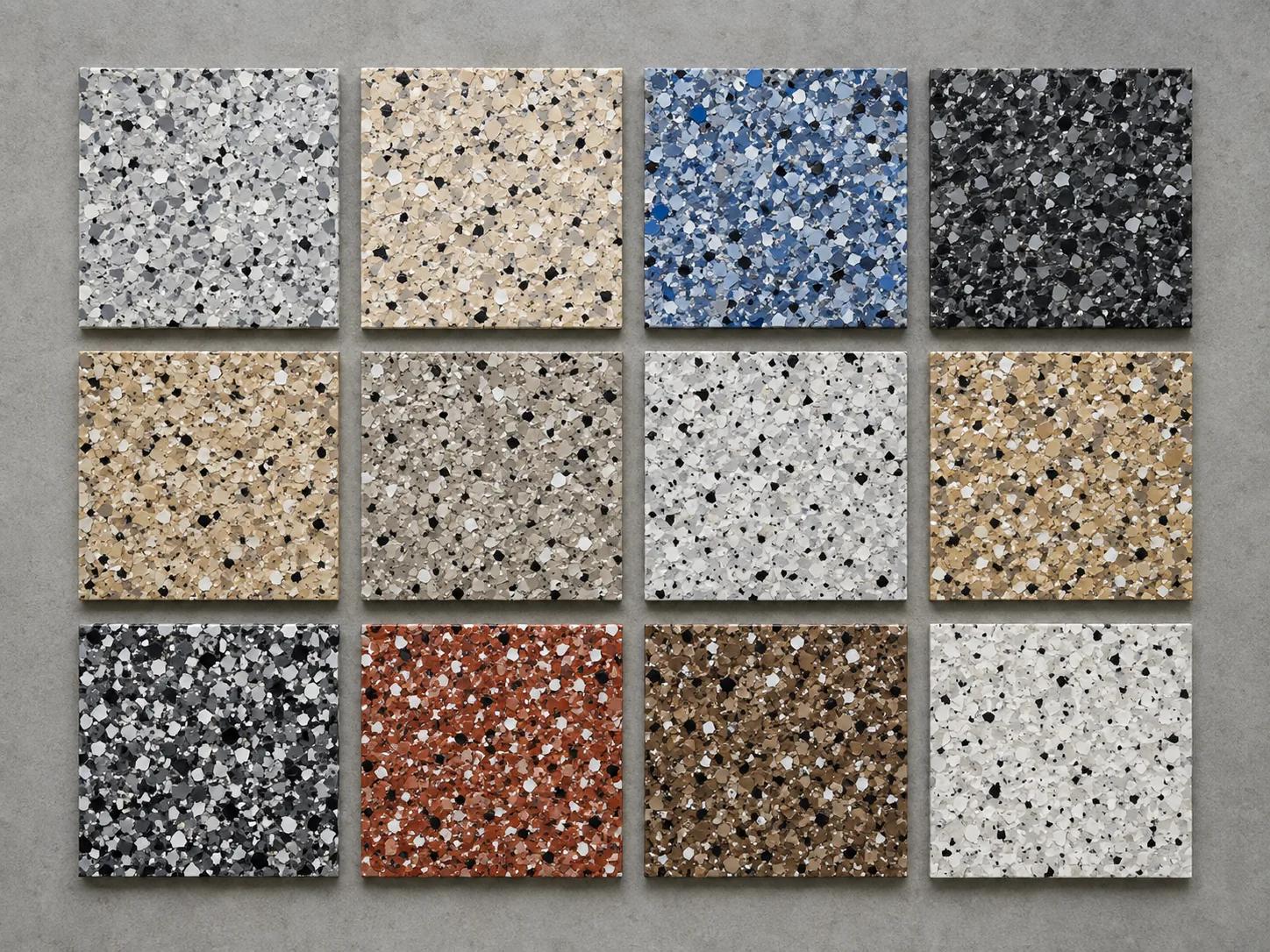
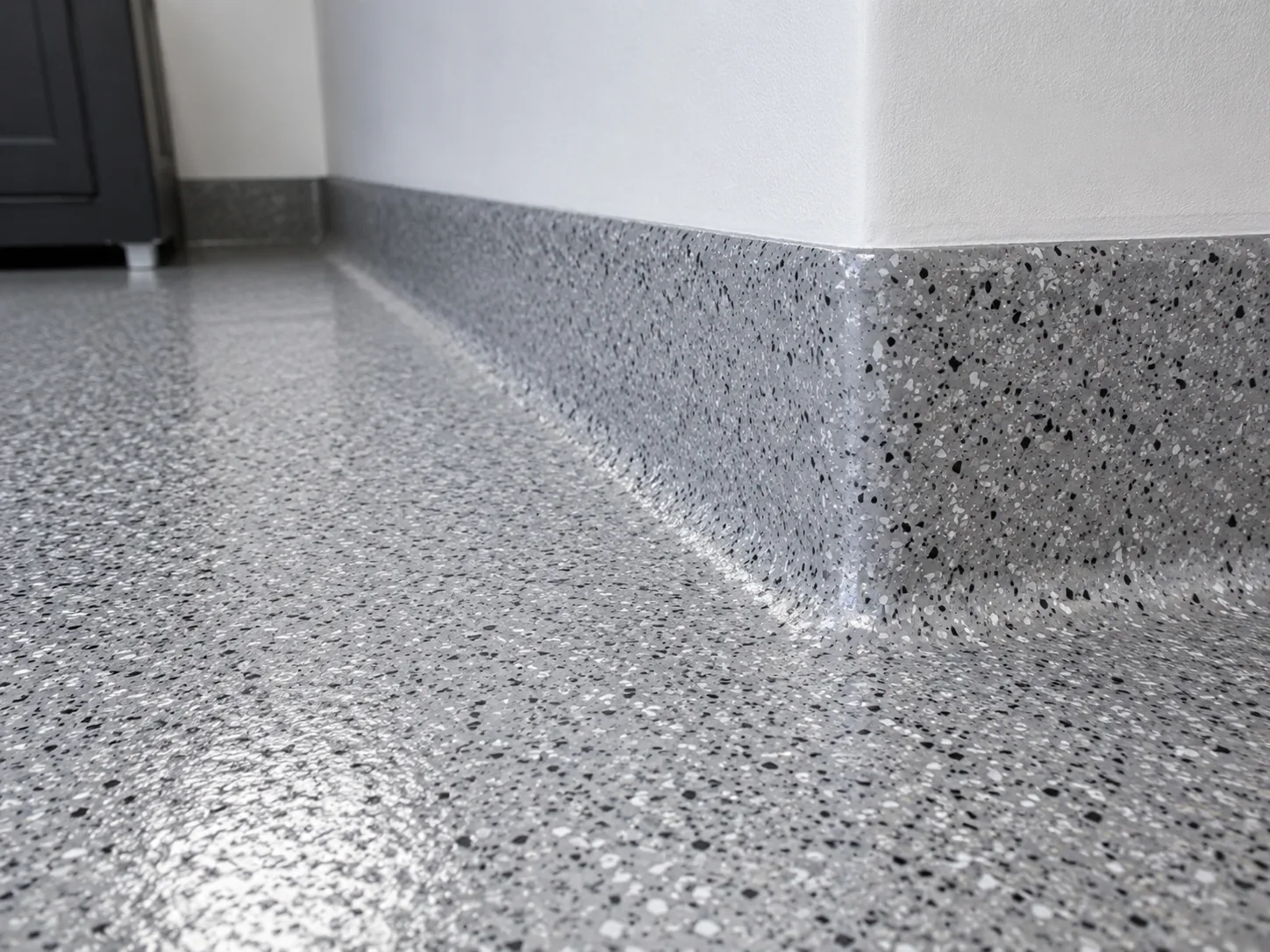
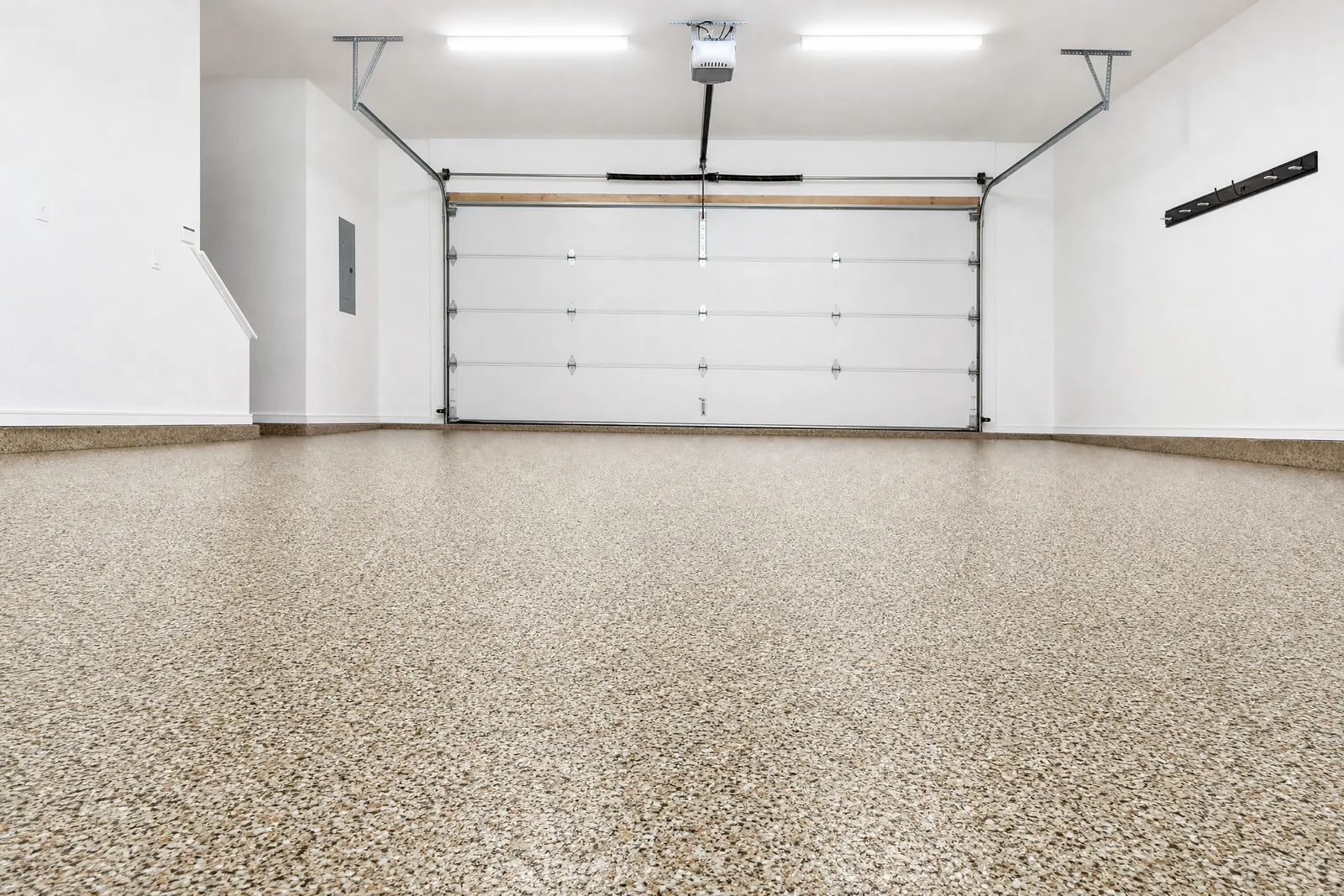
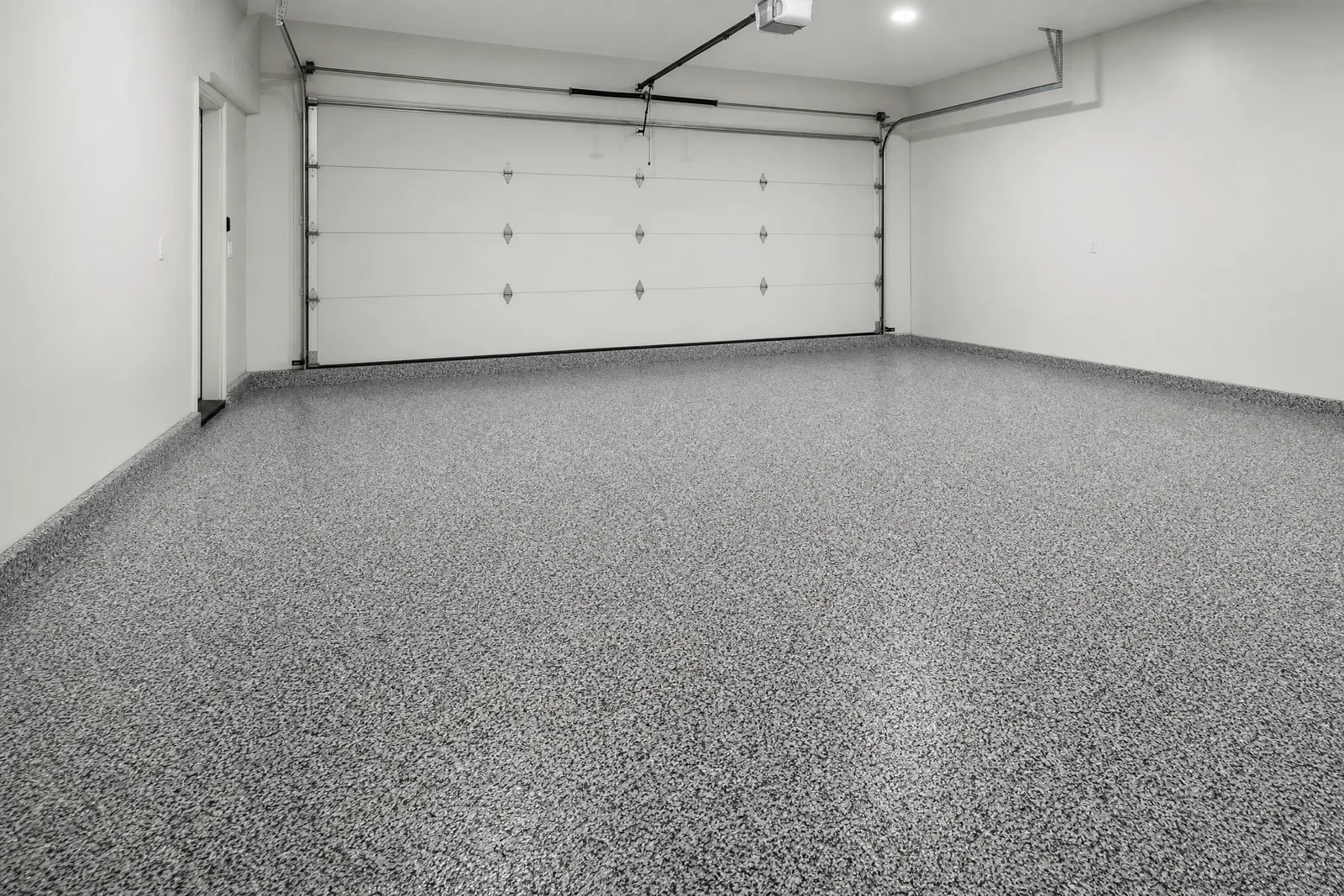
Full-broadcast flake blends
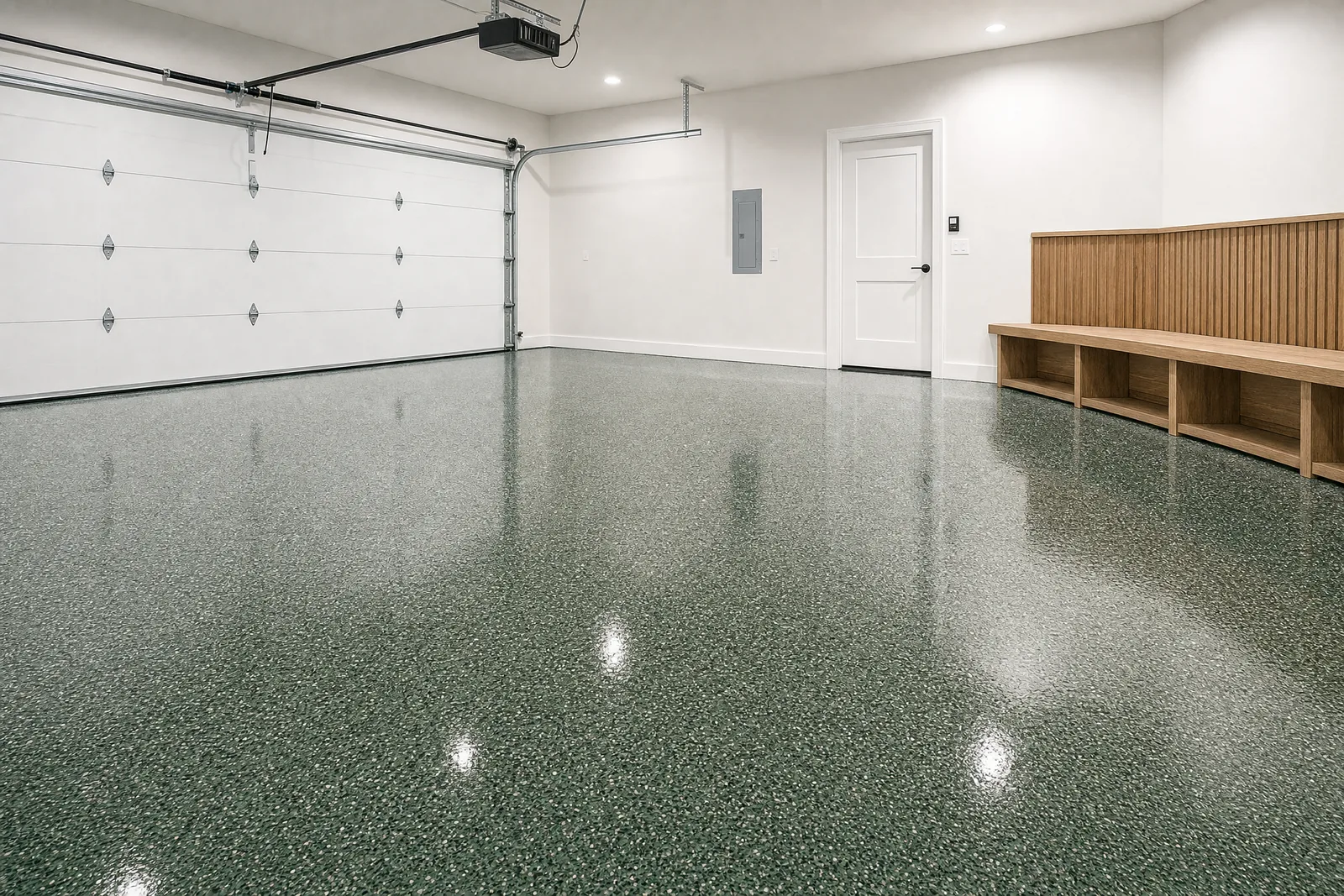
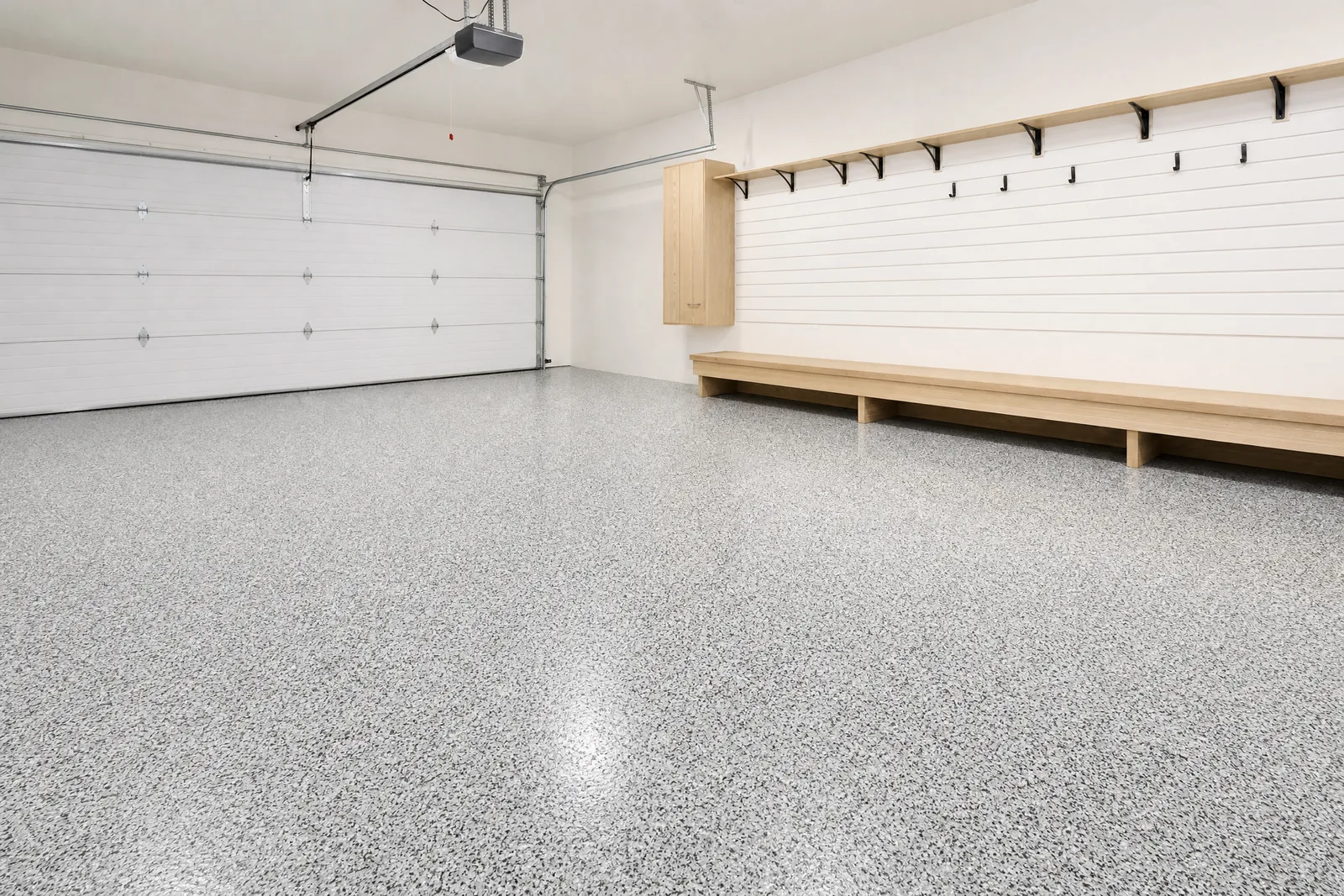
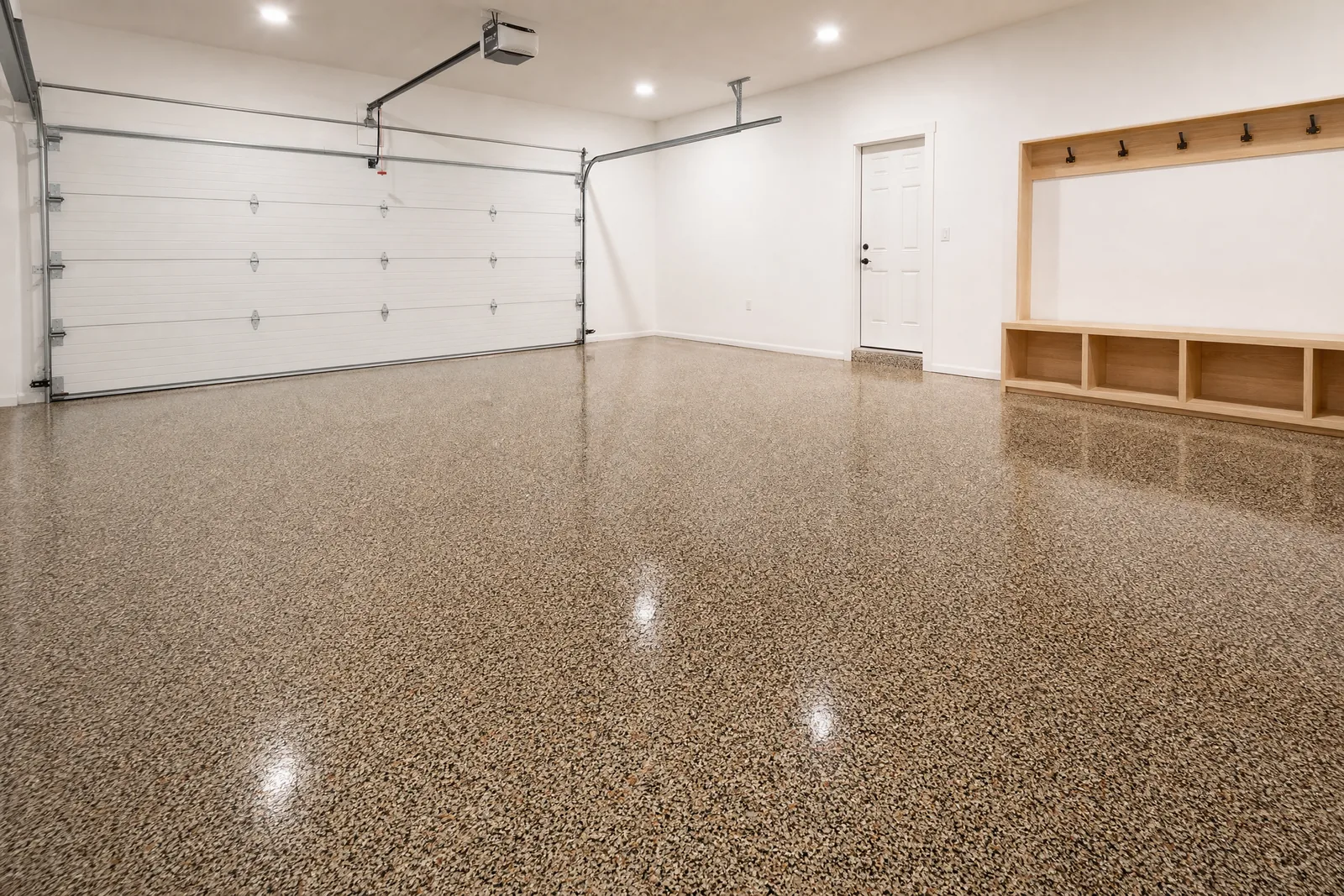
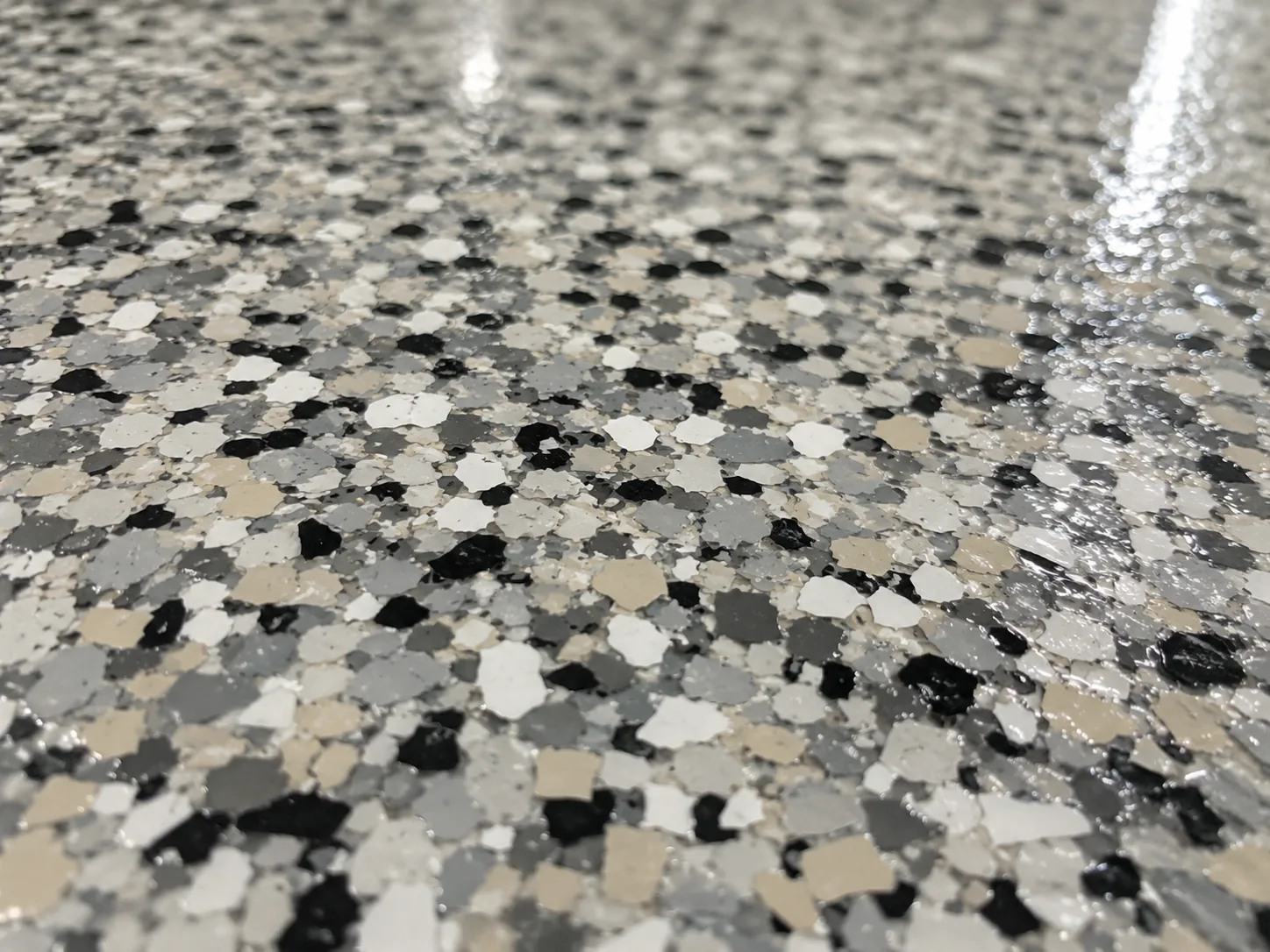
The residential default. Blends with black and mid-grey hide dust best; lighter blends brighten a dark garage but show more.
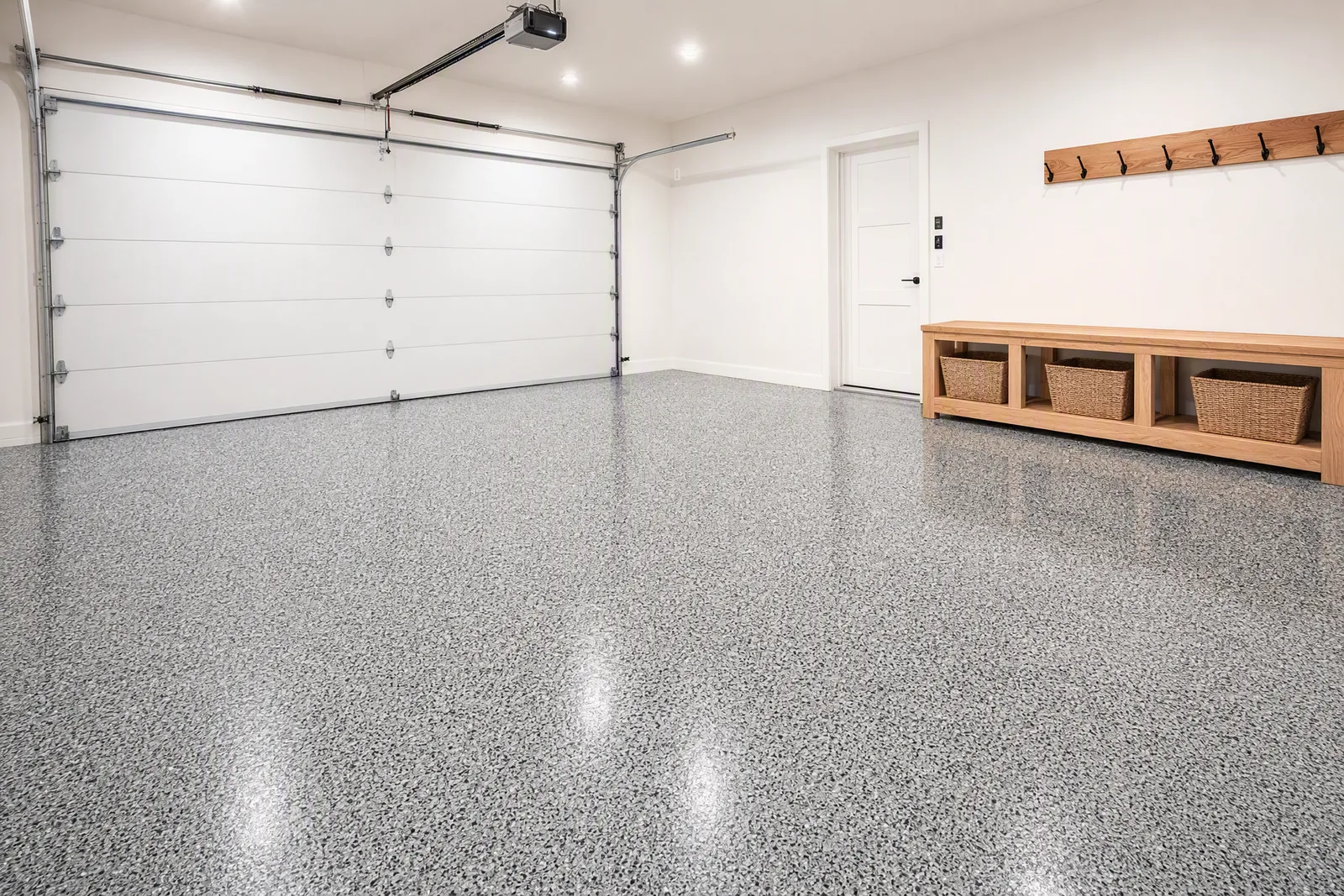
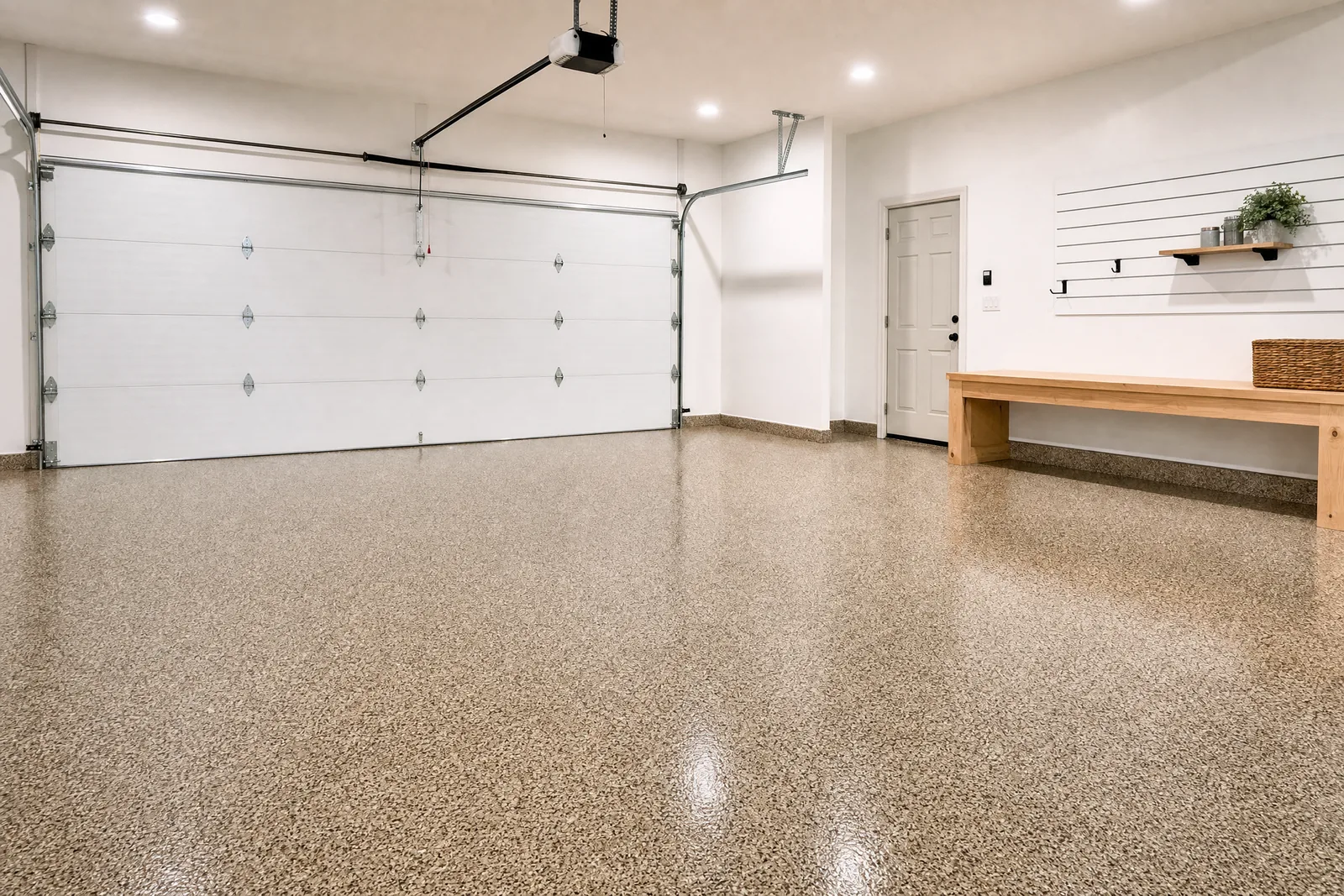
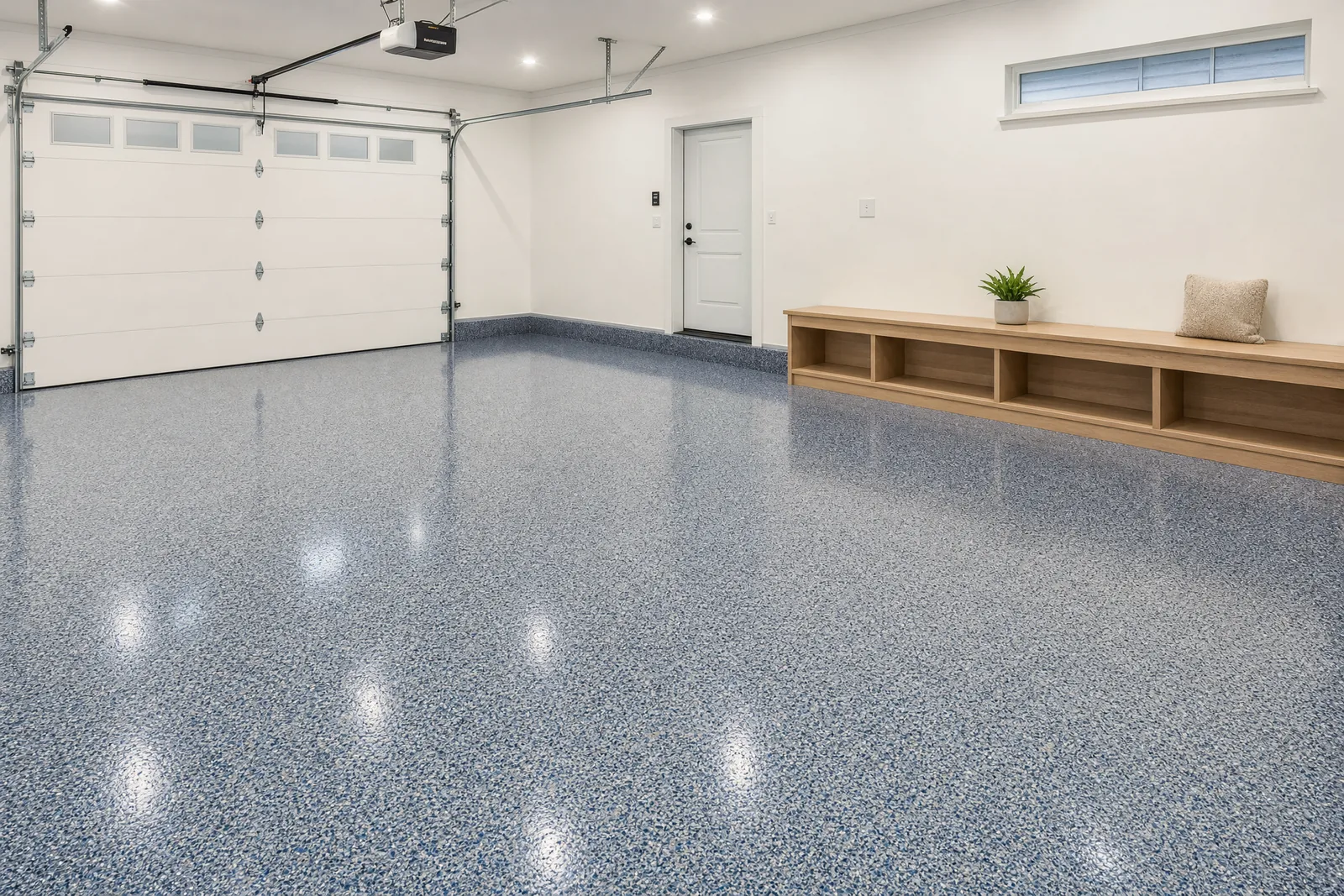
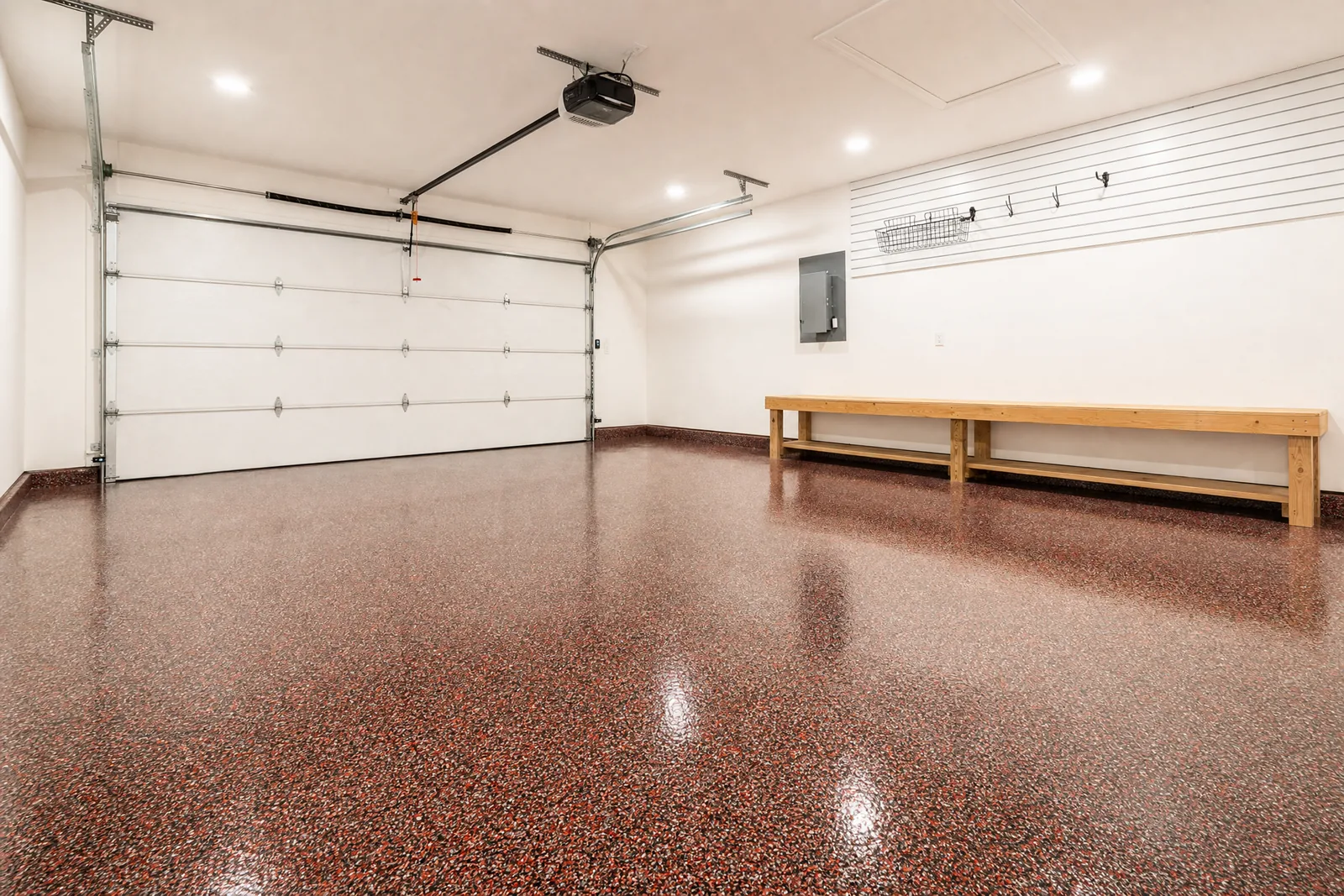
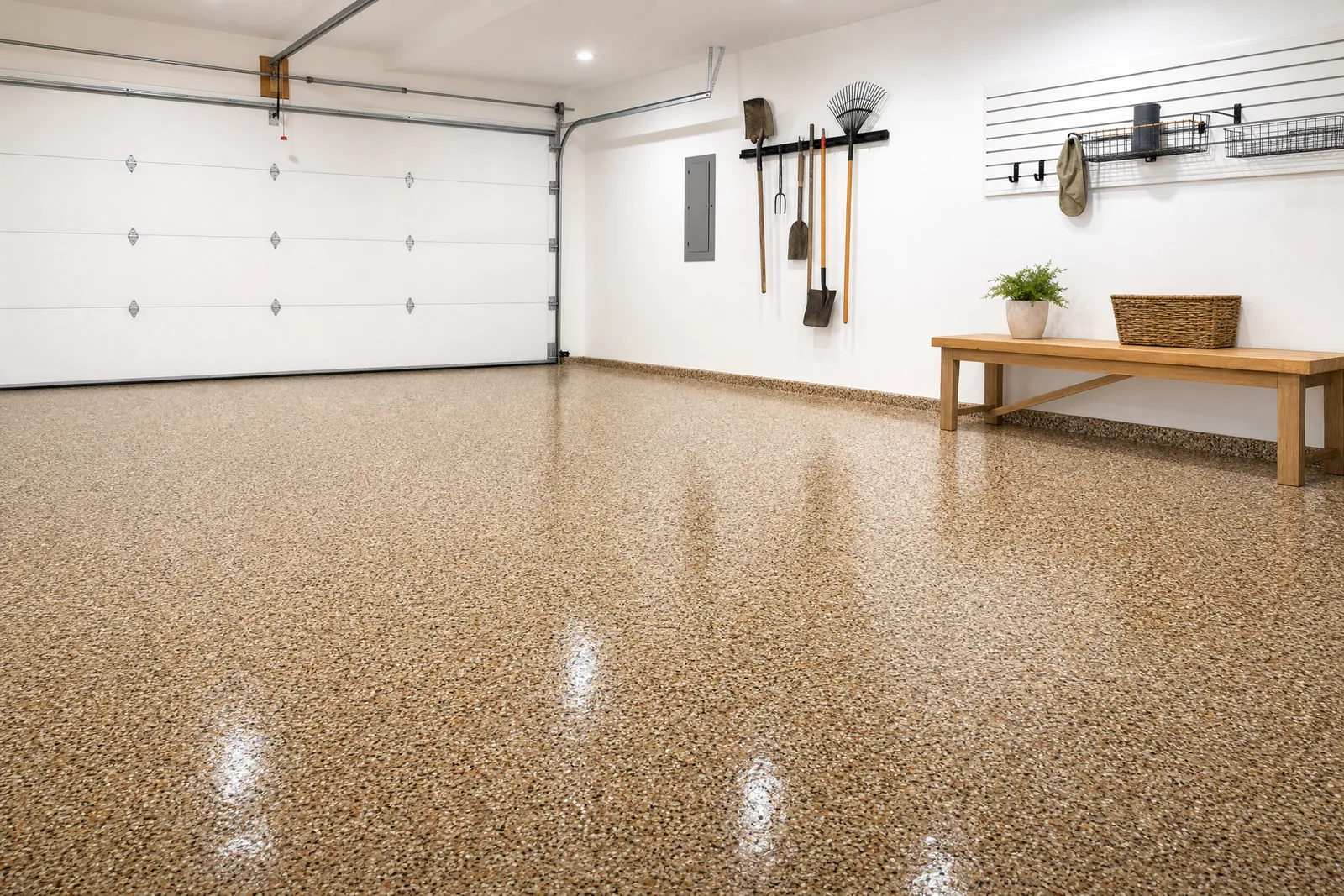
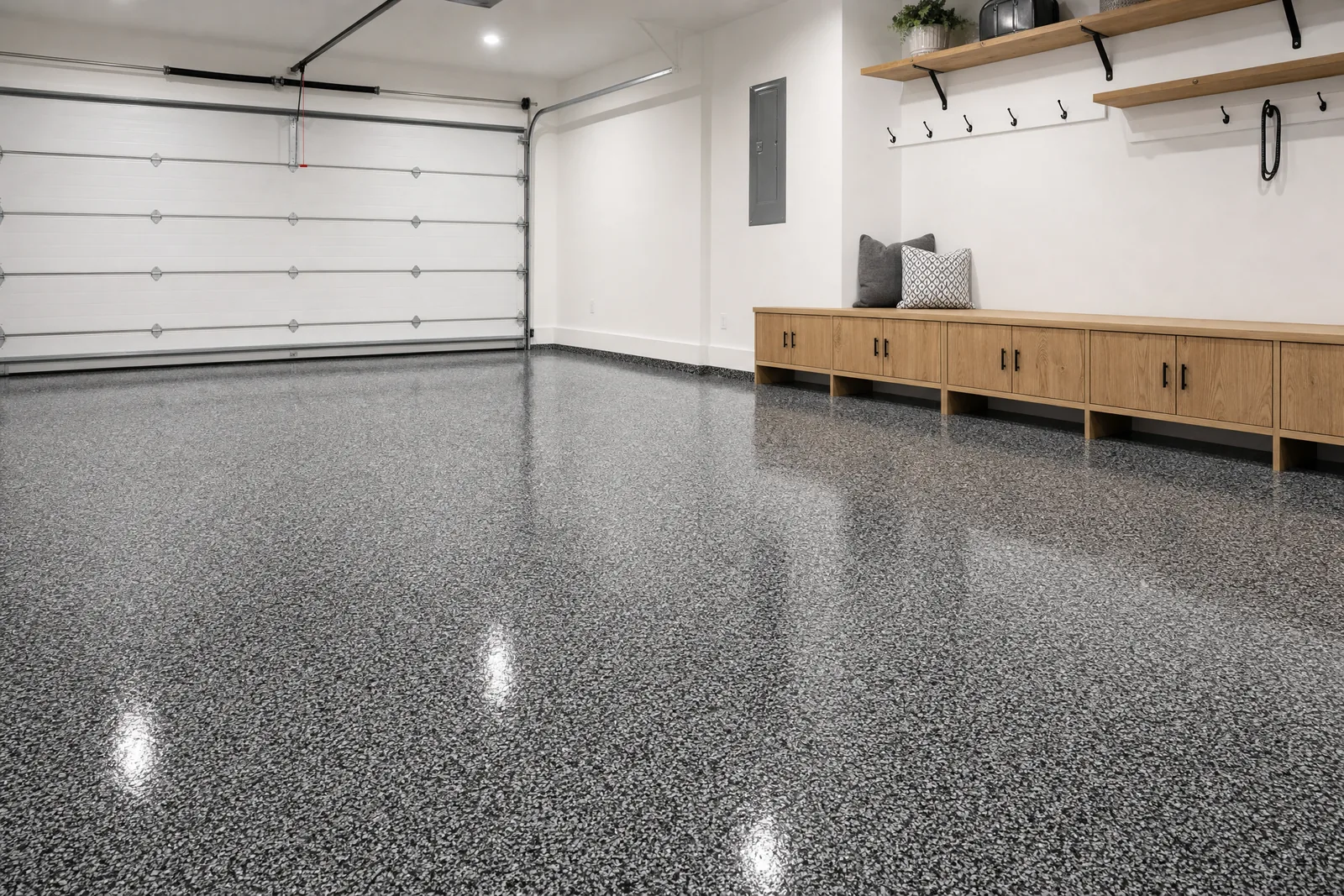
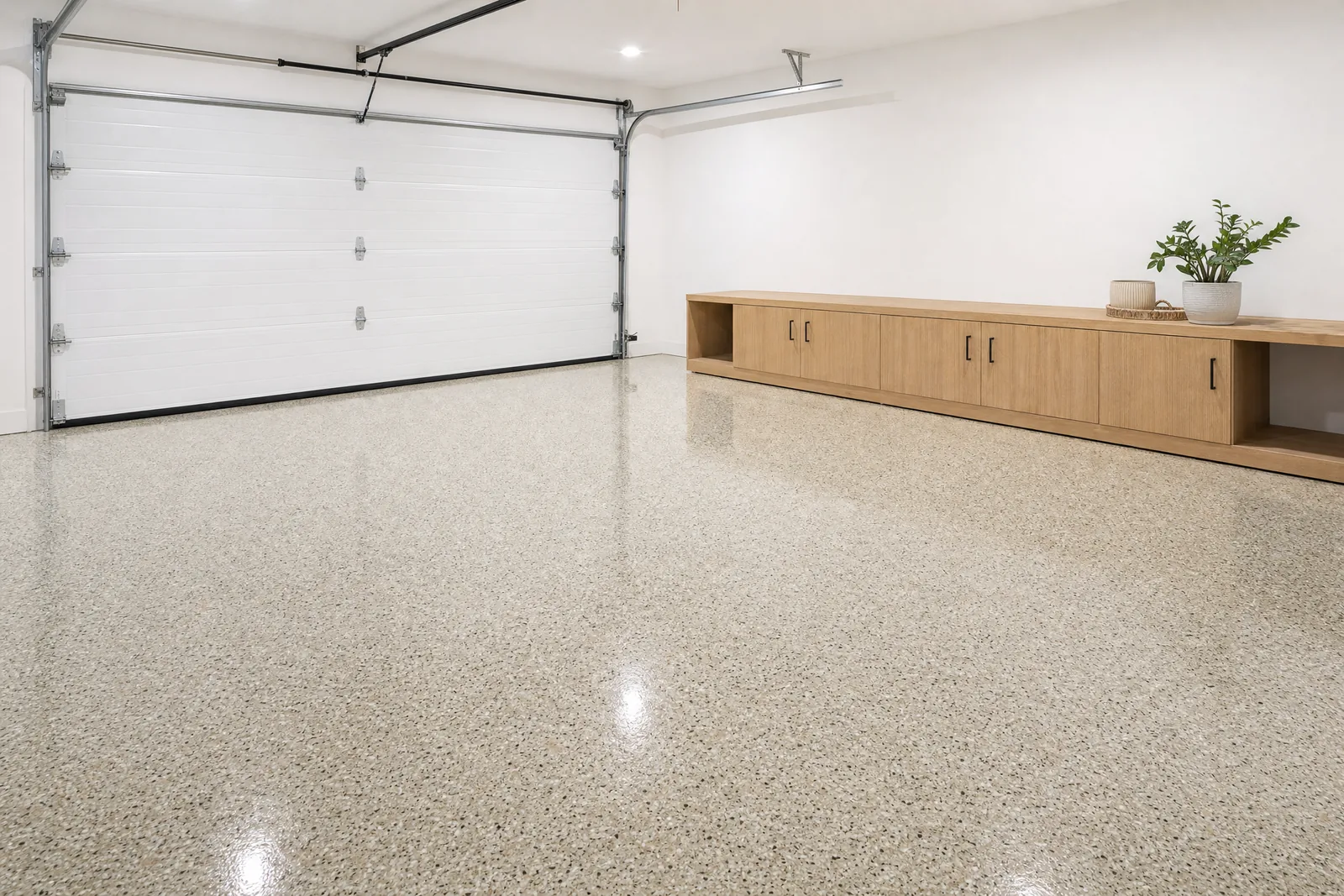
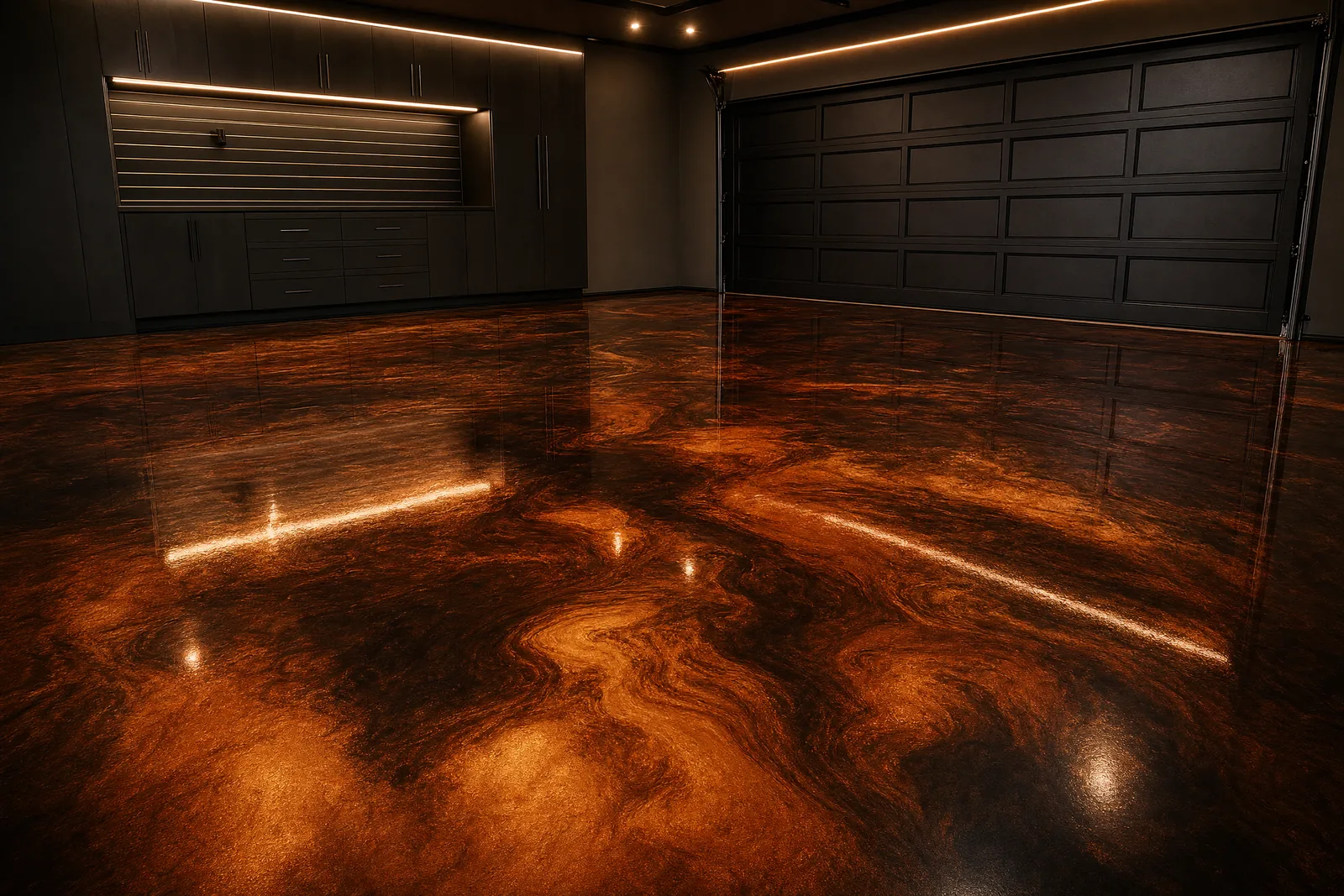
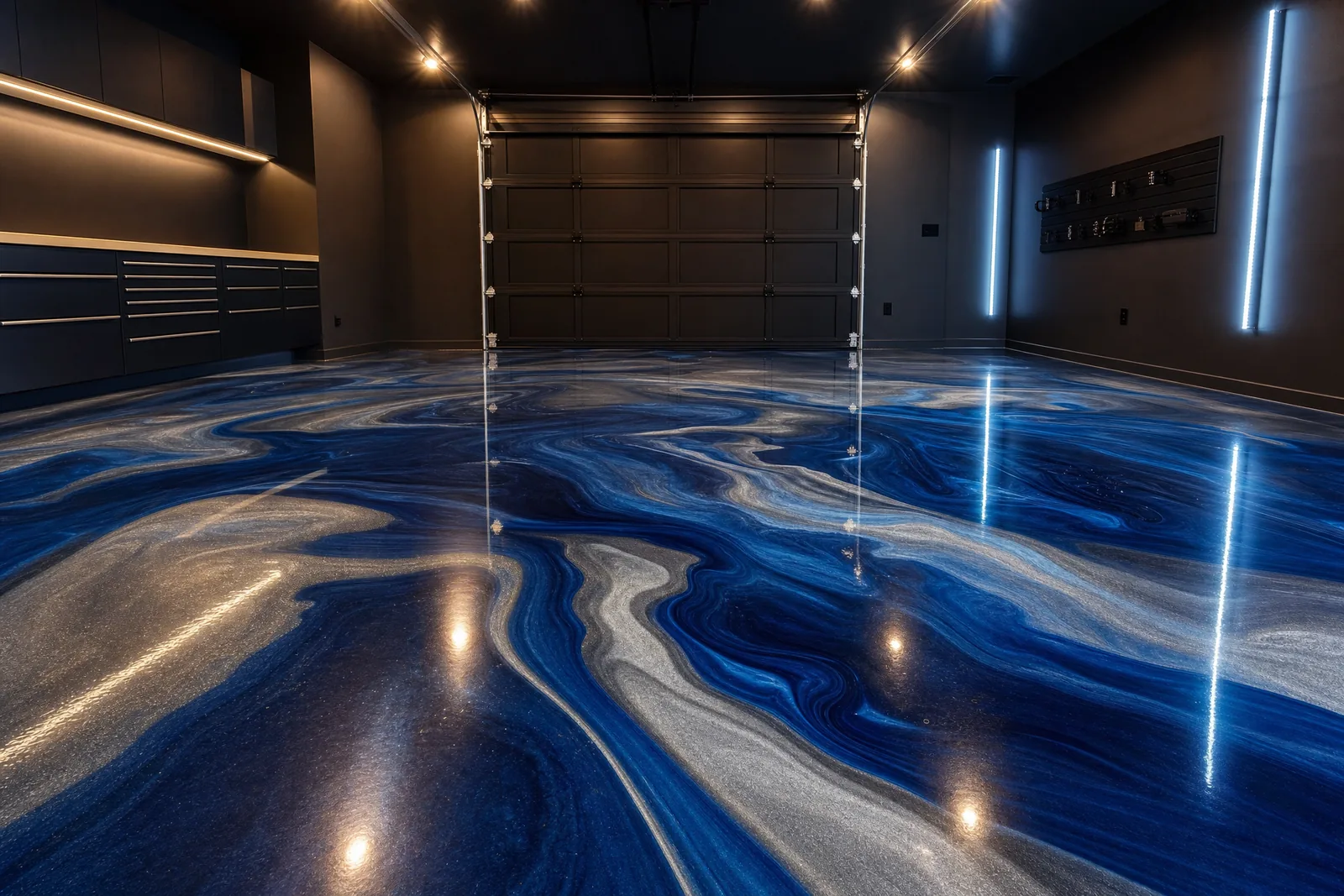
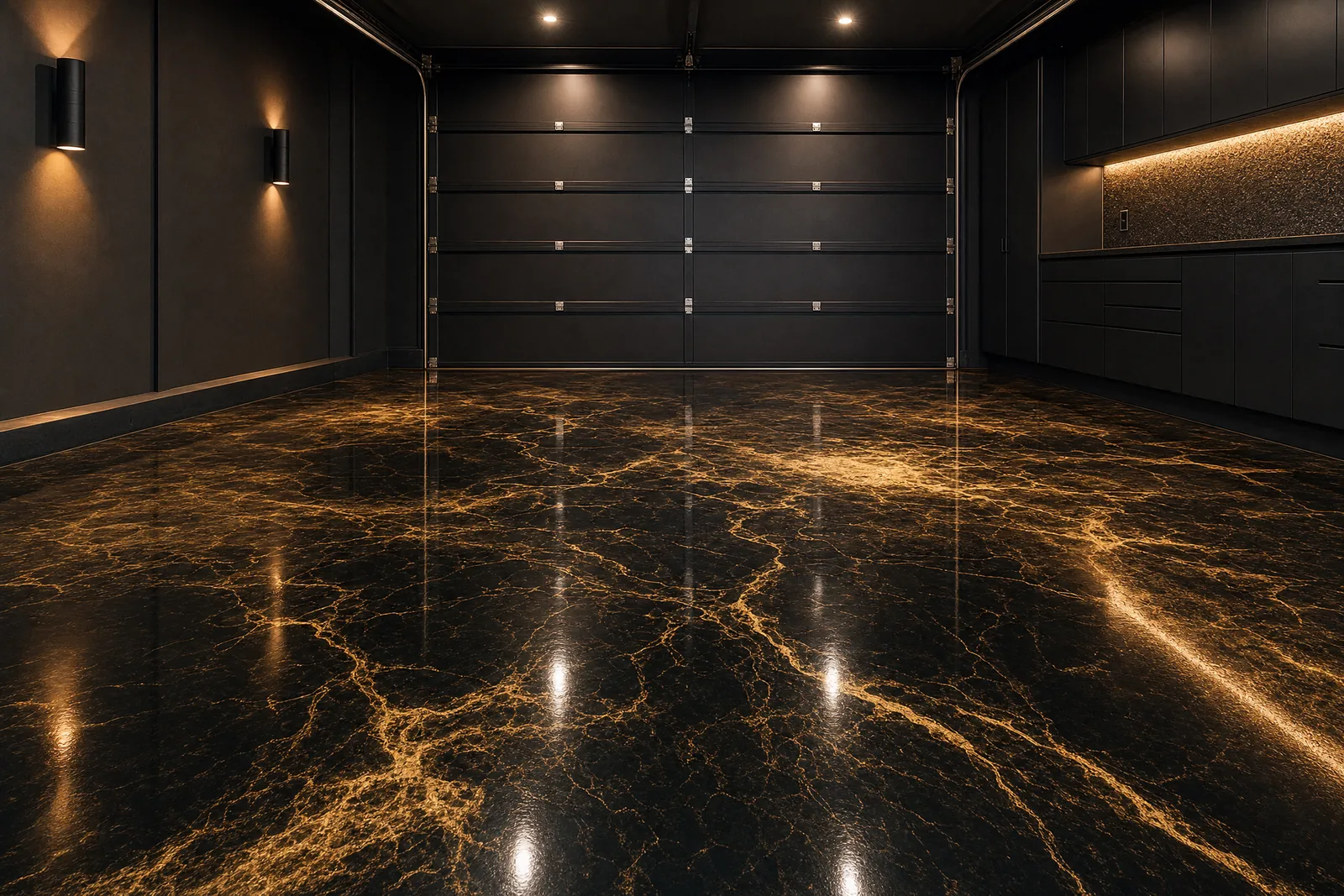
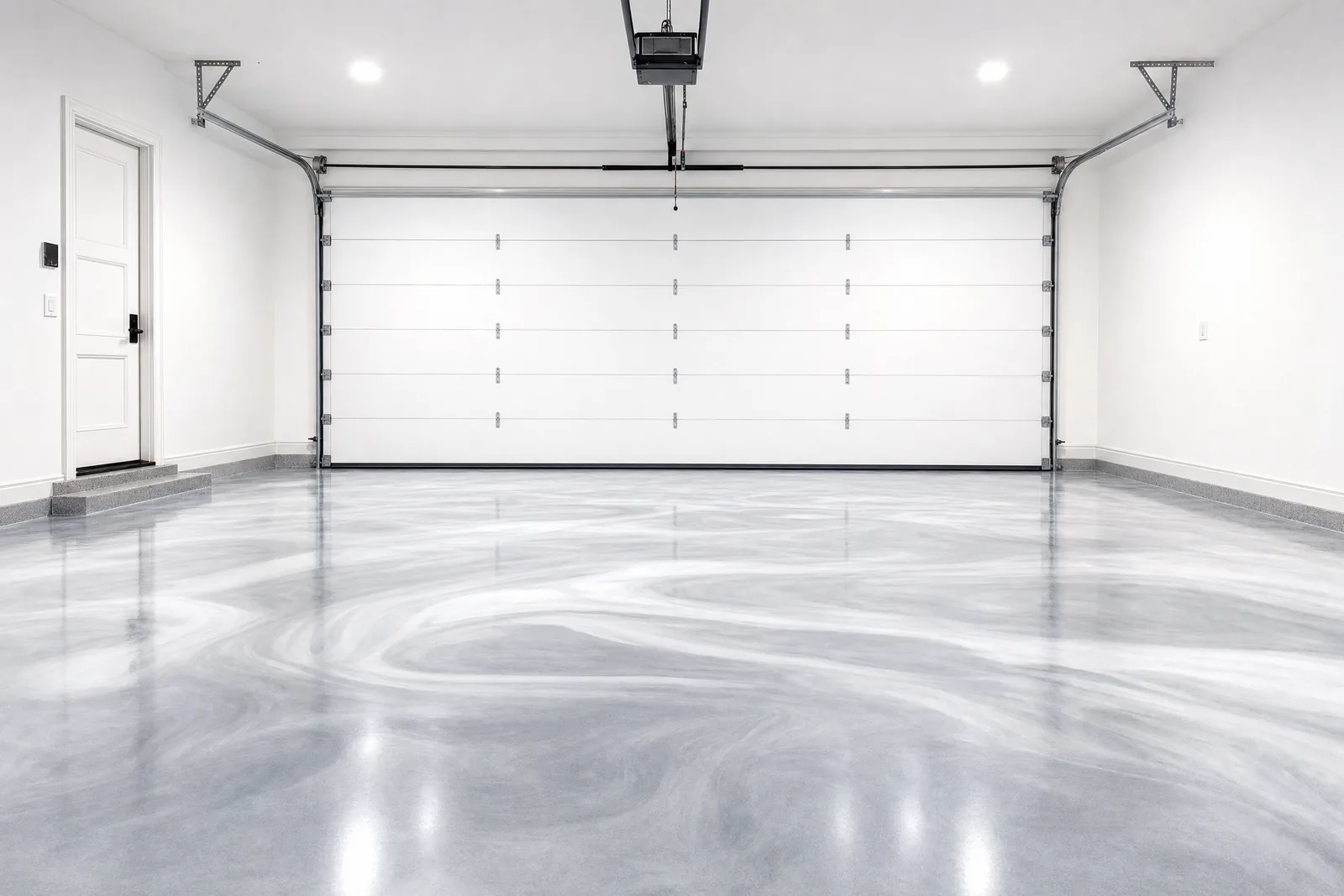
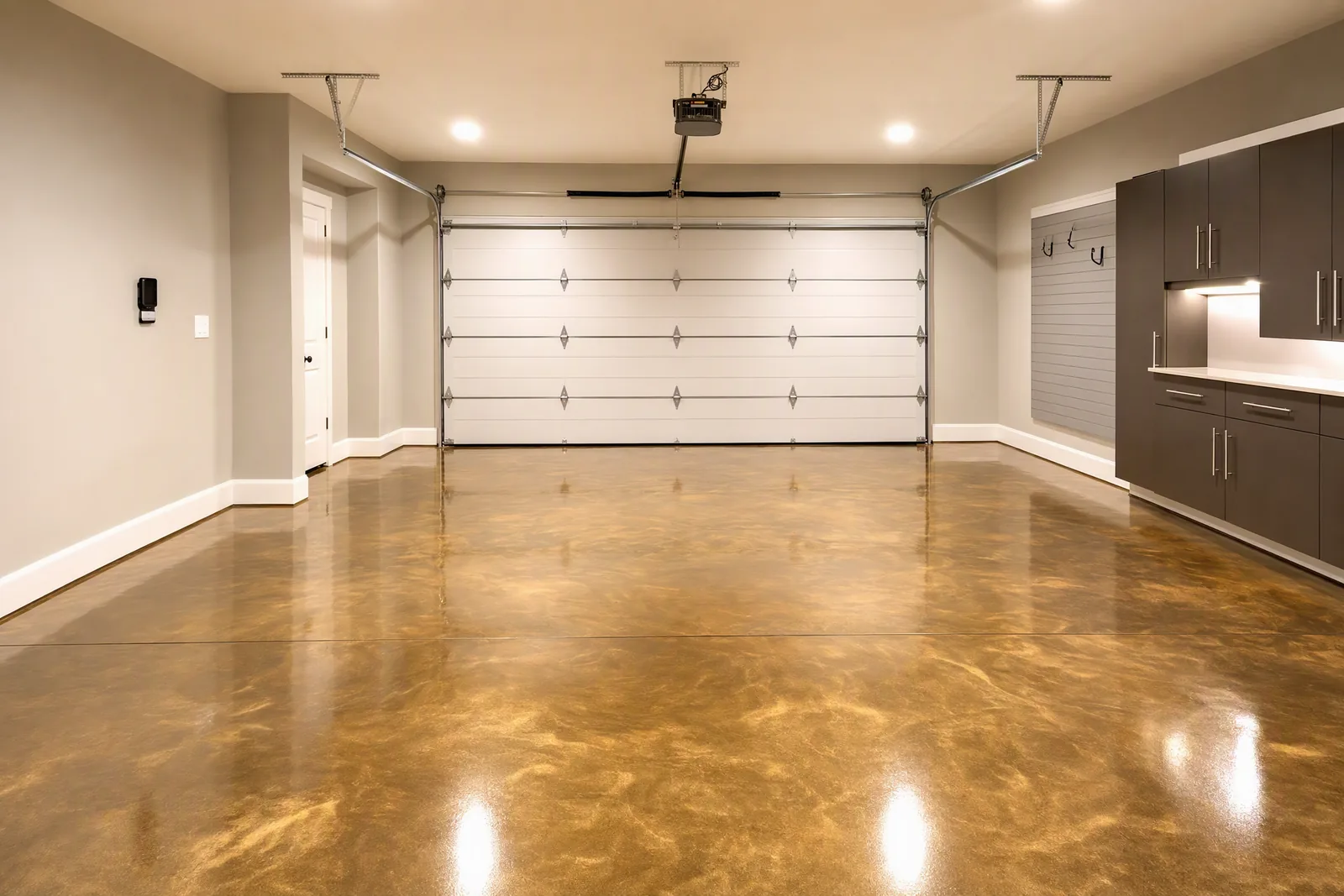
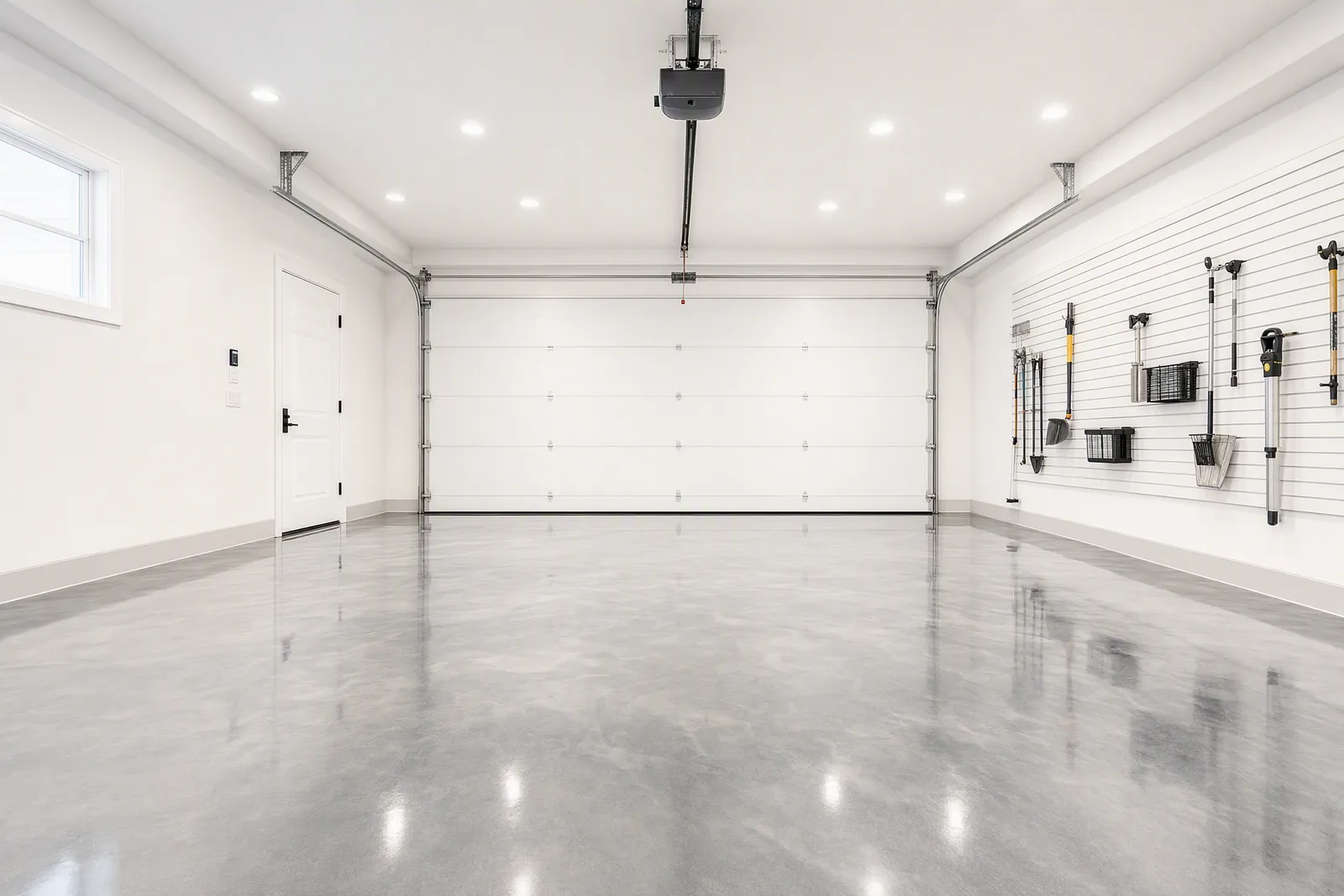
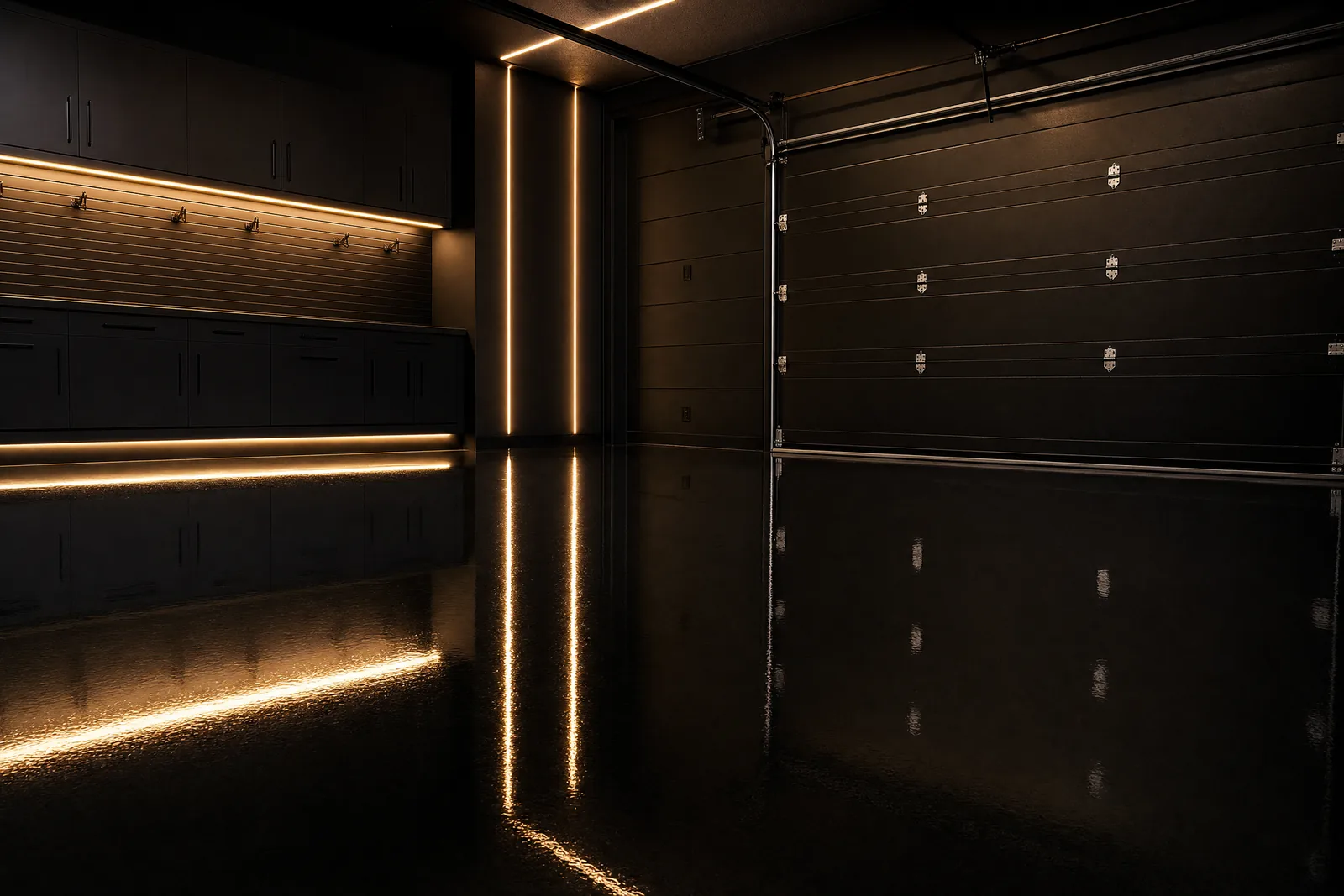
Metallic finishes
No two installs are identical. Choose the palette and the character; the pattern emerges during cure.
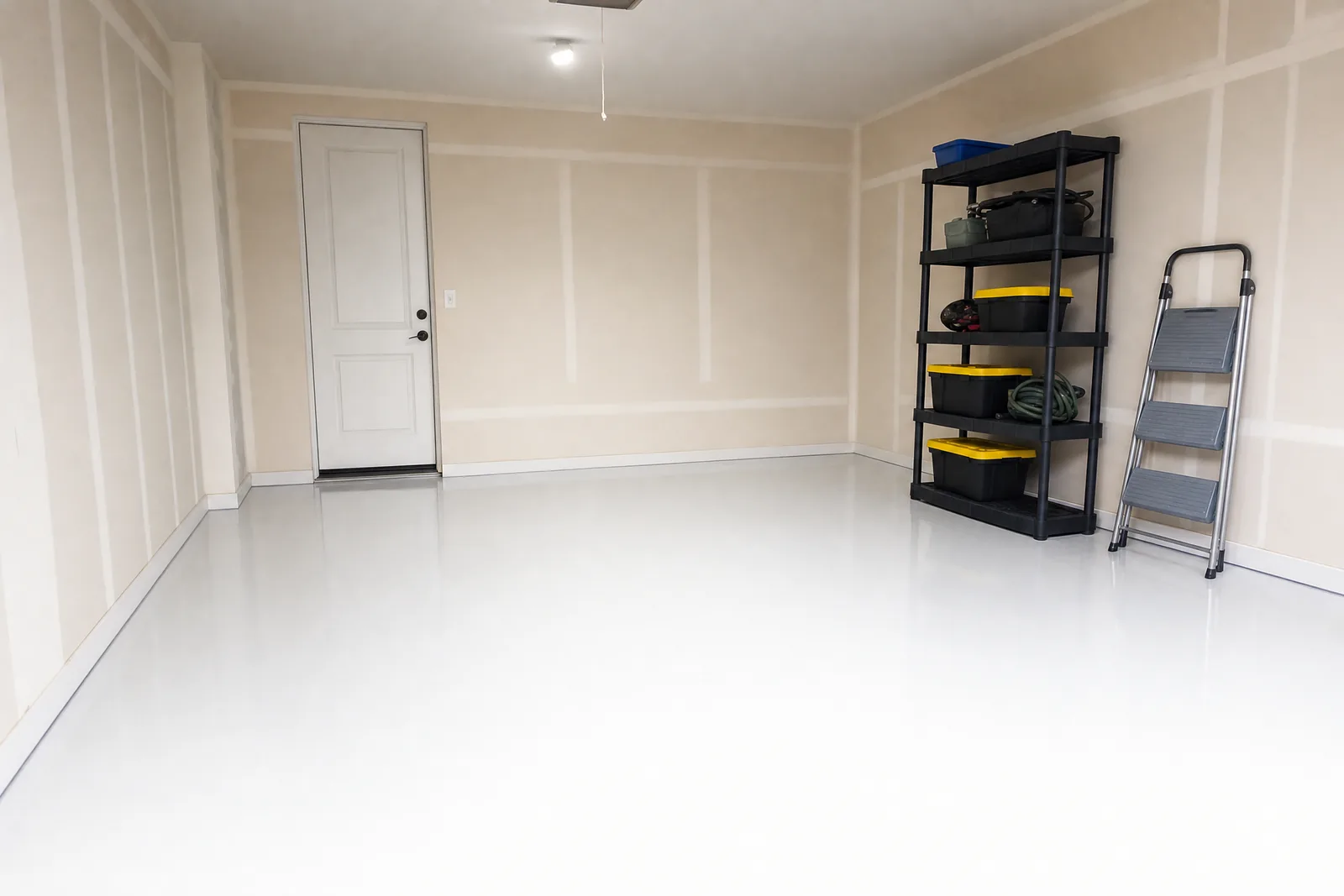
Solid colors
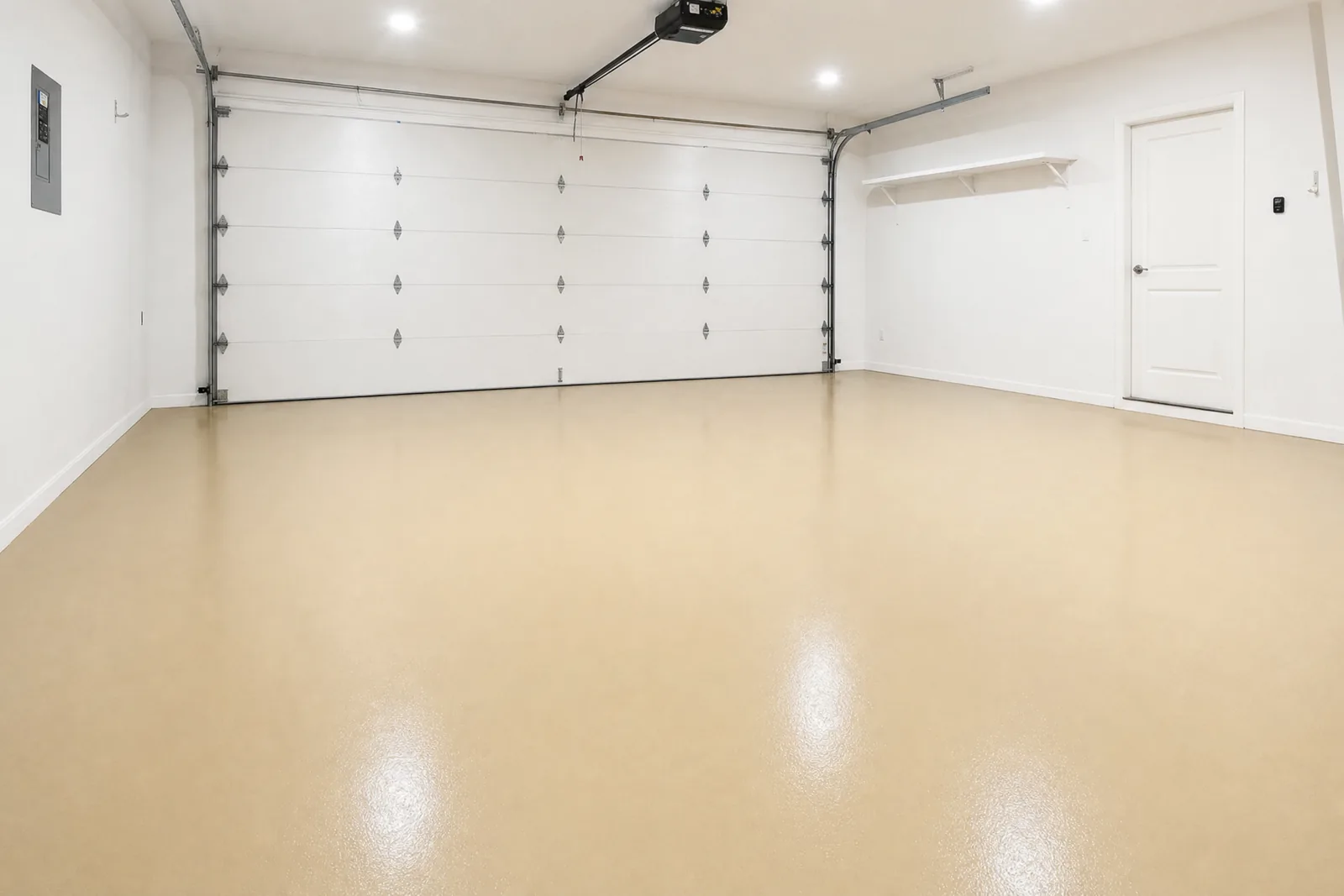
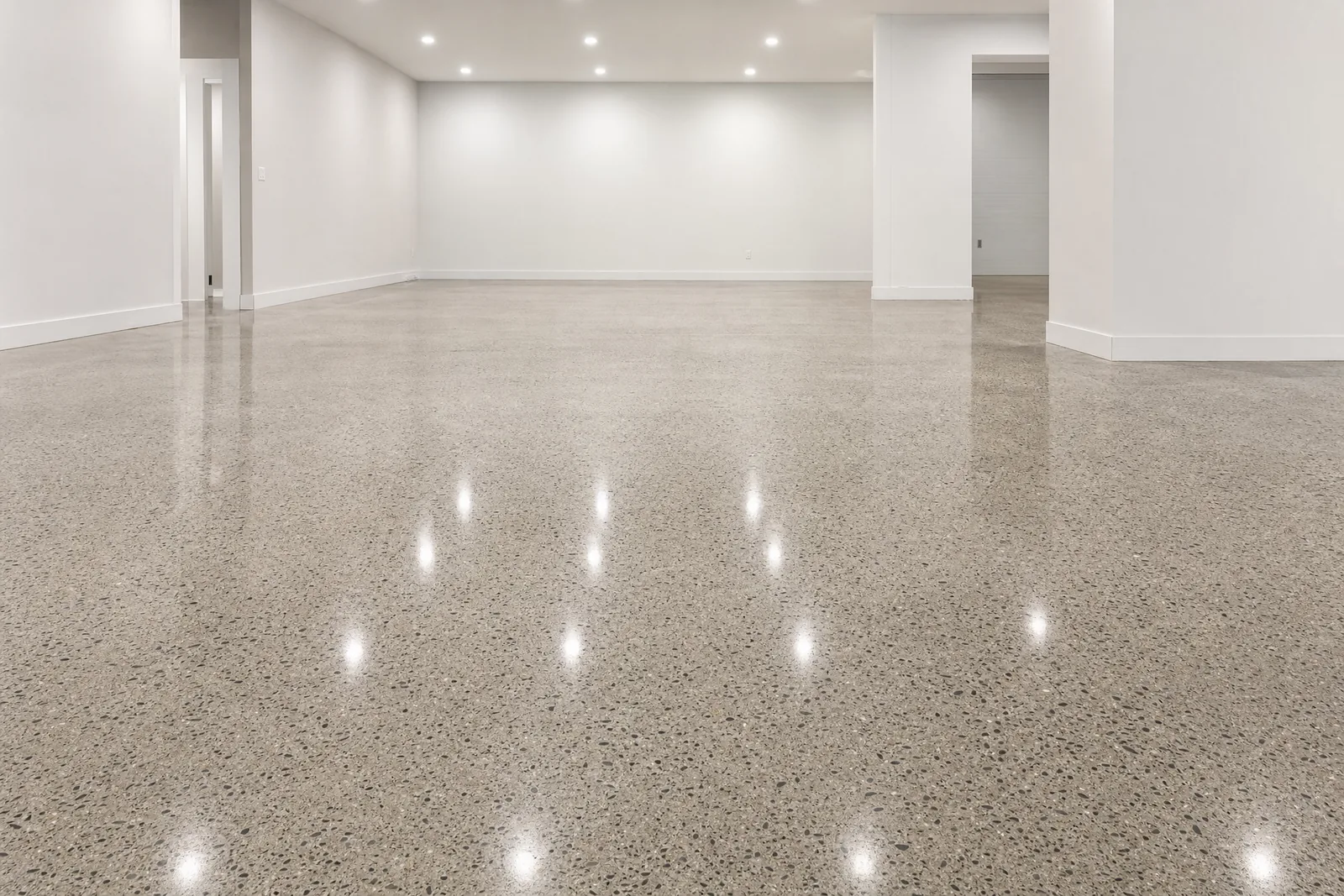
Quartz and polished
Designs
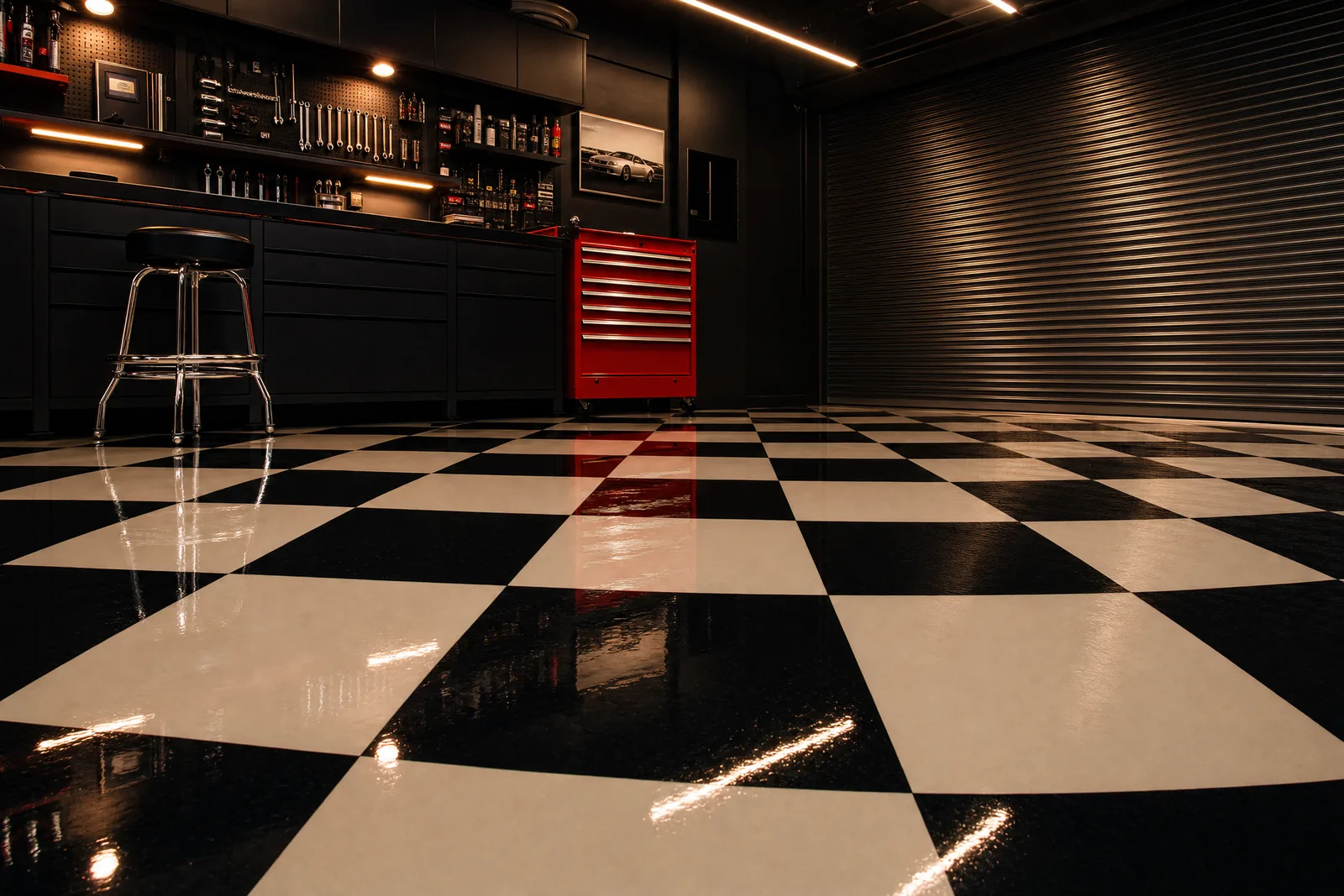
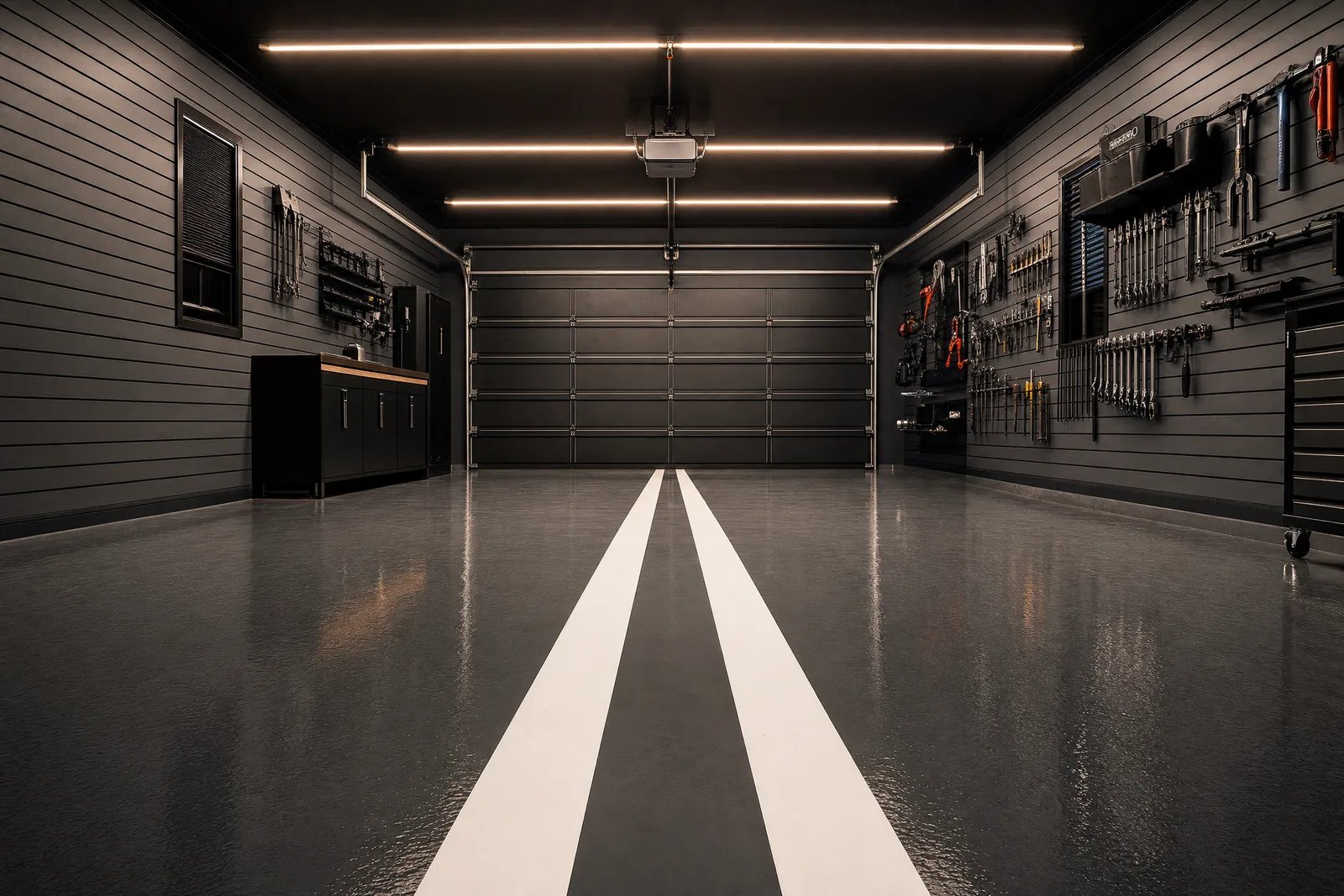
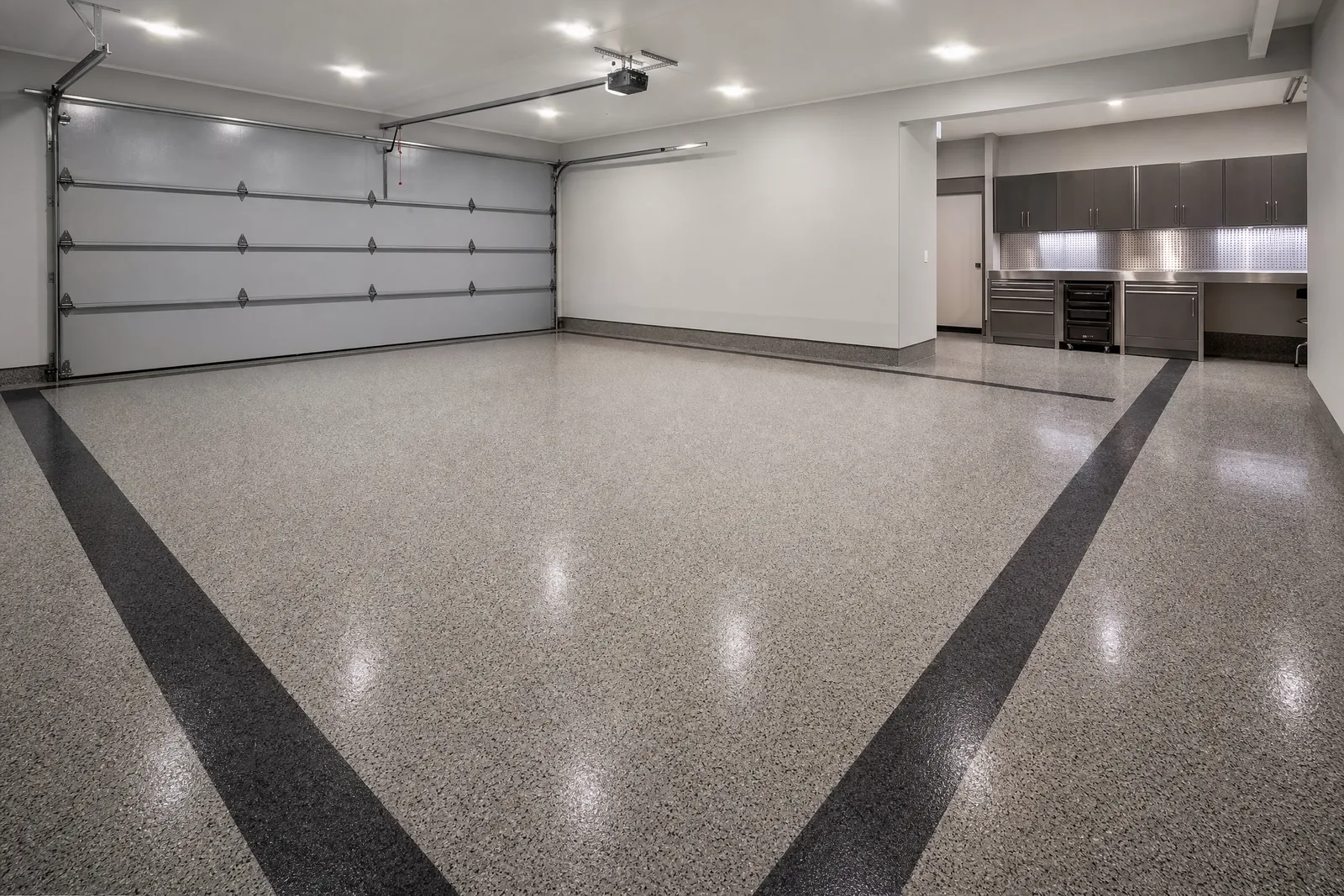
Custom layouts cost more and take longer, and not every crew can execute them cleanly. These are all systems we install.
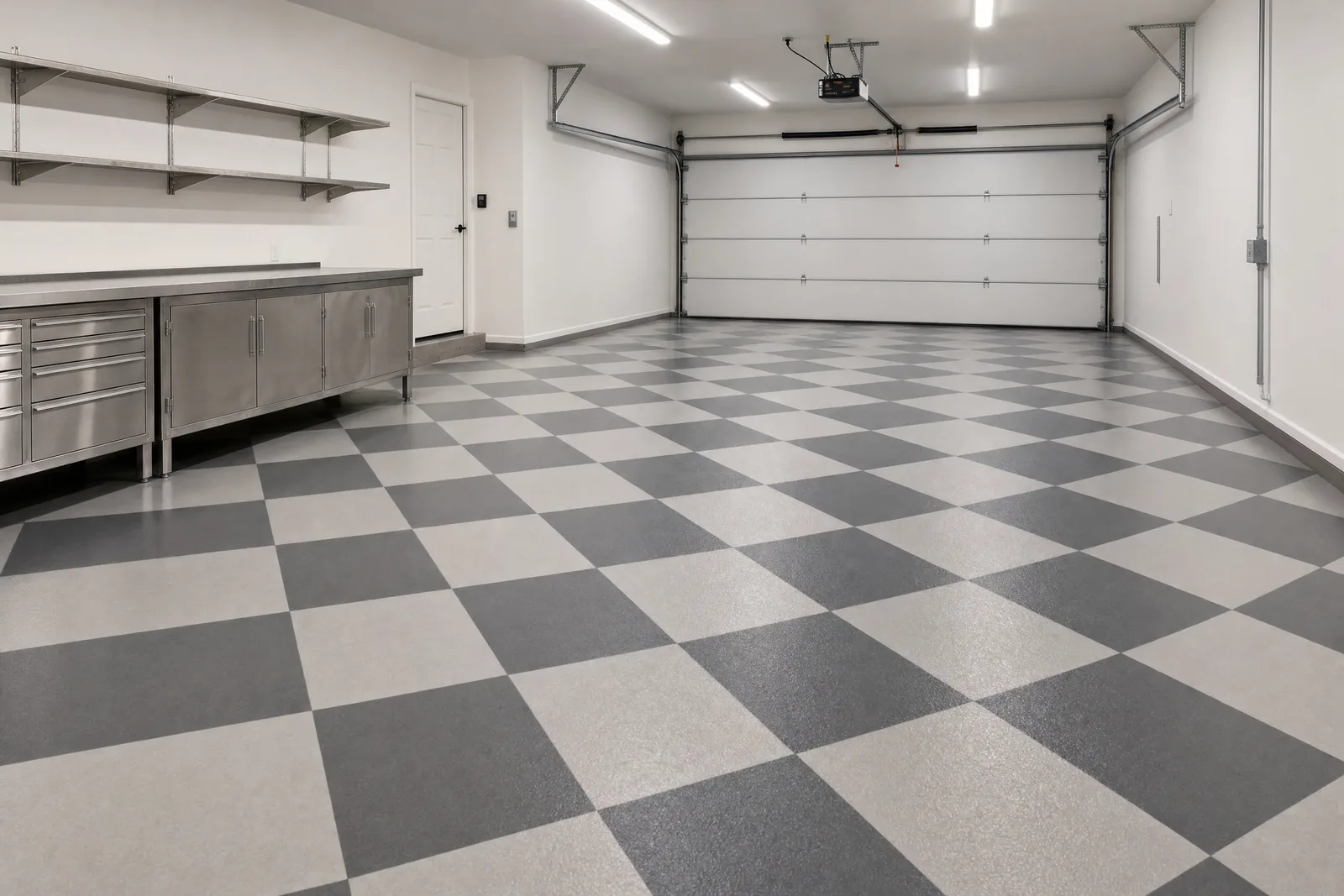
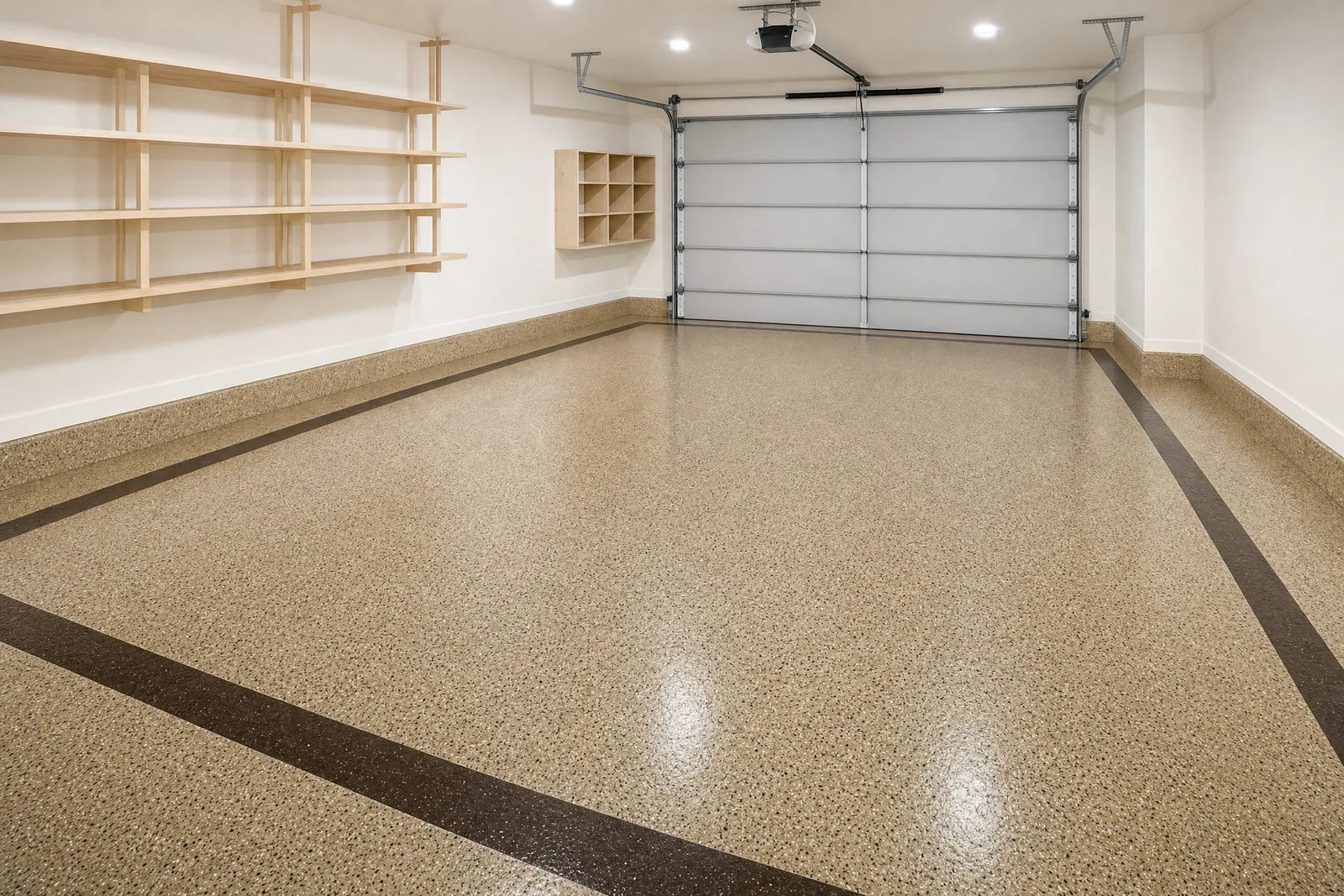
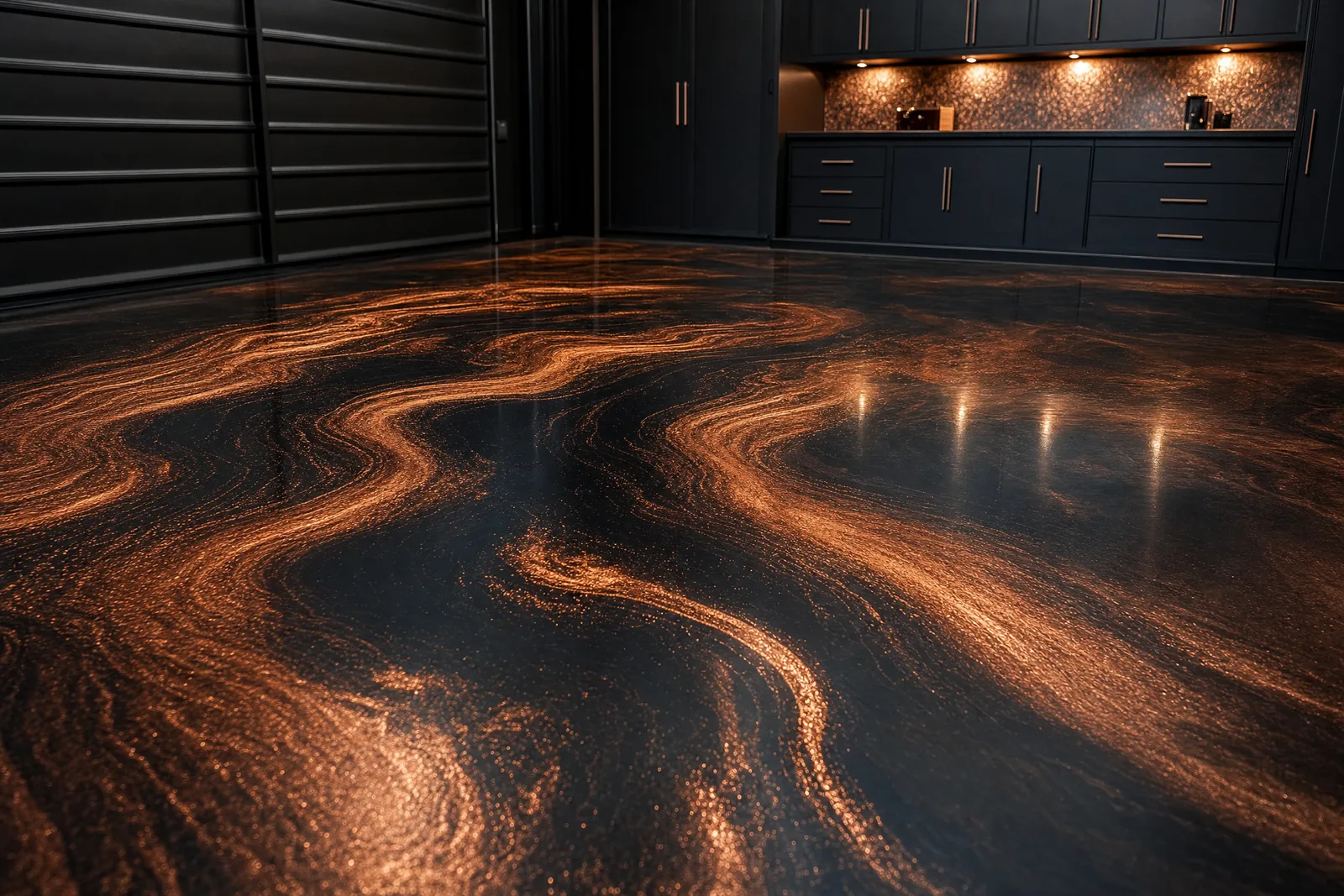
Screens lie about colour. We bring physical sample boards to every quote and leave them with you overnight so you can see them in your own garage light. On a surface this large the difference between two similar blends is much bigger in person.
Choosing in the right order
People usually start with which one looks best in a photograph, which is the last question that should be asked. A sequence that produces fewer regrets:
- How much dust will you tolerate seeing? This narrows the field more than anything else. Mid-tones with black hide it; light solids show everything.
- How much light does the space have? A north-facing garage with one bulb needs a lighter floor than a bright three-car with clerestory windows.
- What is already in the room? Cabinet colour, wall colour, door colour. The floor is the largest surface and will dominate.
- What do you actually like? Now, with the field narrowed to a handful.
Dust visibility, ranked
| Blend | Hides dust | Notes |
|---|---|---|
| Grey / black / white | Excellent | The most popular blend we install, for this reason |
| Black / silver | Excellent | Reads more modern; slightly darker overall |
| Brown / tan / black | Very good | Warm alternative to the greys |
| Blue / grey | Good | Distinctive without being loud |
| Earthtone | Good | Warmest option that still hides well |
| Tan / brown | Moderate | Shows dark debris more than light dust |
| Beige / cream | Poor | Beautiful when clean |
| White / light grey | Poor | Brightest option; needs regular sweeping |
How light the space feels
Floor colour has a real effect on perceived brightness, particularly in a garage with limited lighting. A light floor bounces light back up and can make a space feel usable where a dark one feels like a cave. The trade is dust visibility, and it is a genuine trade rather than a false one.
If your garage is dim and you want a dark floor, budget for lighting at the same time. Two LED shop fixtures cost very little and change the room more than the floor colour does.
Designs and what they cost
| Design | Added cost | Installer difficulty |
|---|---|---|
| Single border stripe | +8–15% | Low |
| Two-zone division | +10–18% | Low |
| Racing stripes | +15–25% | Moderate |
| Diamond or geometric field | +30–50% | High |
| Full checkerboard | +40–60% | High |
| Metallic | +20–40% | High — skill dependent |
The border and two-zone options are the best value on that table. They break up a large single field, they look deliberate, and any competent crew can execute them cleanly. The complex inlays are genuinely striking and genuinely demanding — ask to see a crew's own work before committing to one.
Living with your choice
A garage floor is not a wall you can repaint. It is a fifteen-to-twenty-year decision, and the blend that feels exciting in a showroom is not always the one you want to look at every day for two decades. The blends that people are still happy with after ten years are, overwhelmingly, the mid-tone multi-colour ones. Make of that what you will.
Common questions
Which blend hides dirt best?
Anything with black and mid-grey in it. The grey-black-white blend and the black-silver blend are the two best performers we install, and they're popular for exactly that reason.
Worst for hiding dirt are the light beiges, creams and solid whites — beautiful when clean, but they show every footprint.
Can I mix blends or add a border?
Yes. A border stripe in a contrasting colour is straightforward and it breaks up a large single-colour field nicely. Two-zone layouts separating a parking bay from a workbench area are also common.
More complex inlays — checkerboards, diamonds, logos — are doable but add meaningfully to cost and time because every edge is hand-cut.
Will the colour fade?
Under a polyaspartic topcoat, minimally. The chips themselves are colourfast vinyl and the topcoat is UV stable.
Under an epoxy topcoat, the clear itself ambers, which shifts the apparent colour of everything beneath it — most visibly on whites and light greys. That's a topcoat problem, not a chip problem.
Ready for a floor that survives a Sierra winter?
Free on-site measure, honest assessment of your slab, and a written quote you can hold us to.