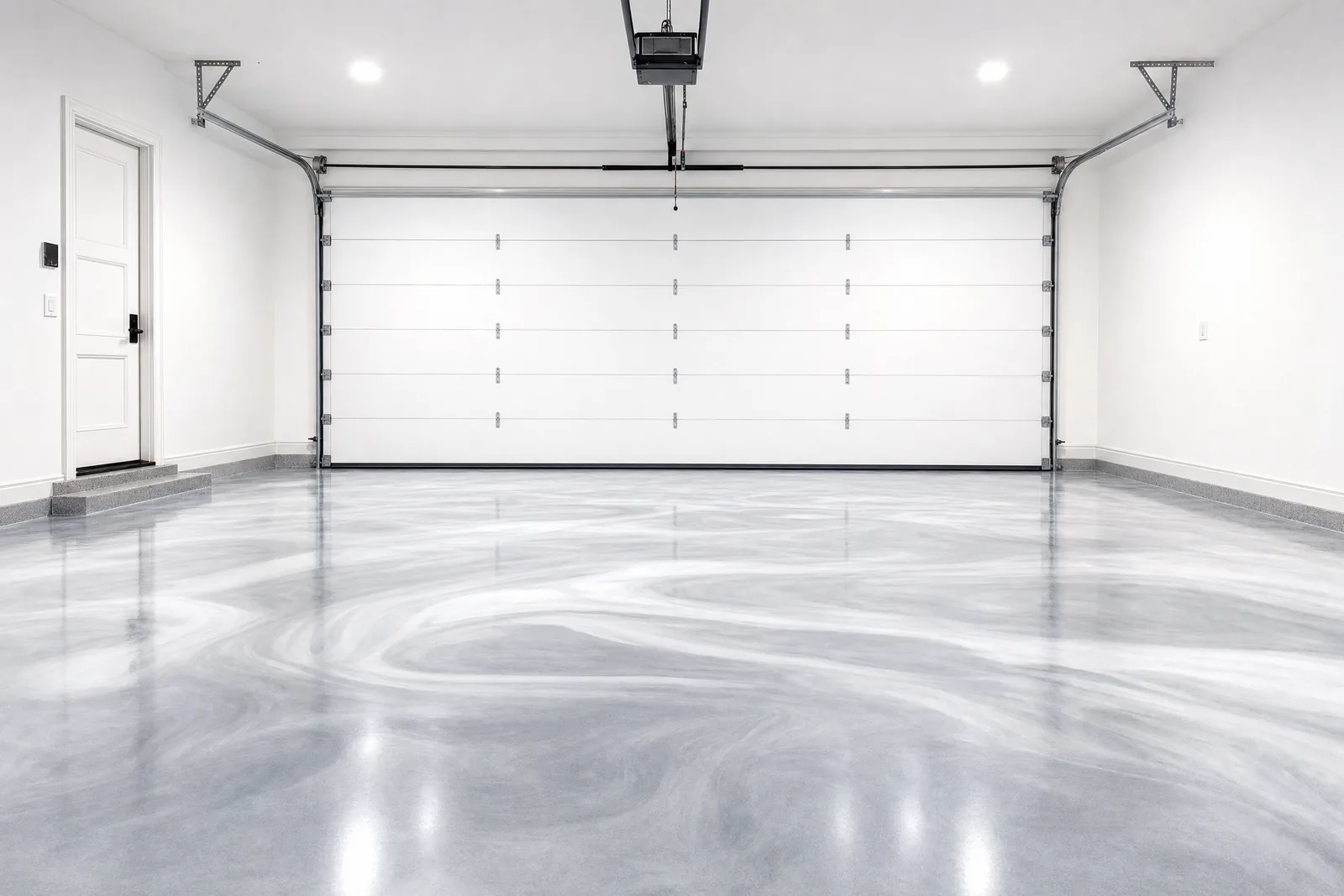
Polyurea is a fast-reacting elastomeric resin, typically used as a base coat because it bonds aggressively and stays slightly flexible — useful over a slab that moves a little with temperature. Polyaspartic is a modified polyurea with a deliberately slowed reaction, which makes it workable enough to use as a topcoat.
So the common marketing phrase "polyurea polyaspartic system" usually describes a real thing: polyurea down, polyaspartic on top. The parts are doing different jobs.
Why it matters in this climate
| Property | Epoxy | Polyaspartic |
|---|---|---|
| UV stability | Ambers, turns yellow-brown | Stable, holds color |
| Hot tire resistance | Moderate; softens | High |
| Cure time to vehicle | 3–7 days | 24–48 hours |
| Application window | Forgiving | Short; needs an experienced crew |
| Low-temperature cure | Stalls below ~55°F | Cures near freezing |
| Cost | Lower | Higher per gallon |
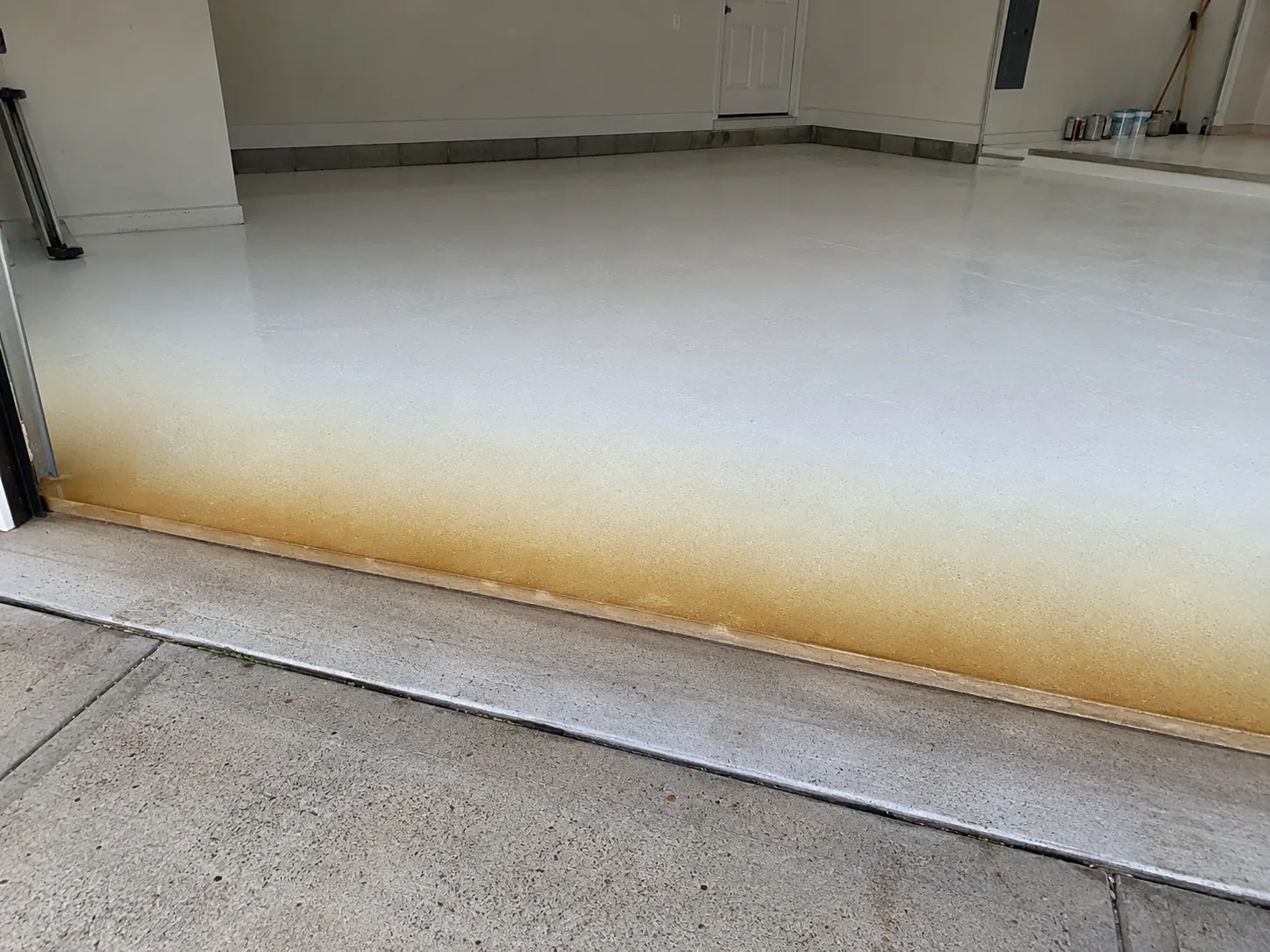
The UV row is the one that matters most in Reno. Any part of your floor that sees direct sun through an open garage door will discolor if it's topped with epoxy. It's not a defect in the product, it's inherent to the chemistry. Polyaspartic doesn't do it.
The tradeoff nobody mentions
Polyaspartic's fast cure is an advantage for you and a difficulty for the installer. Working time can be as short as 20 minutes in summer heat. A crew that hasn't worked with it will leave lap marks, roller stipple and dry edges where the material kicked before it was laid off. This is a genuine reason to ask how long a contractor has been installing polyaspartic specifically, not just "floor coatings."
We schedule polyaspartic work for mornings between May and September. Applying a fast-cure topcoat to a slab that's already at 95°F is asking for trouble, and any contractor willing to do it in the afternoon heat is telling you something.
Reading a product data sheet
The phrase "polyaspartic system" is used loosely enough to be nearly meaningless in marketing copy. What is not loose is the technical data sheet, and any contractor should hand you one without hesitation. Four lines on it tell you most of what you need.
| Line on the data sheet | What to look for |
|---|---|
| Solids by volume | Higher is better. 85–100% is a professional product; below 60% means most of what you are buying evaporates |
| Recommended DFT per coat | Dry film thickness. Tells you how many coats are needed to reach a real build |
| Pot life at 77°F | Short pot life means the crew needs genuine experience, especially in summer |
| UV stability / aliphatic | Must say aliphatic if any part of the floor sees sunlight |
If a contractor will not share the data sheet for the product going on your floor, that is information in itself. There is no competitive reason to withhold it.
Application in Reno heat
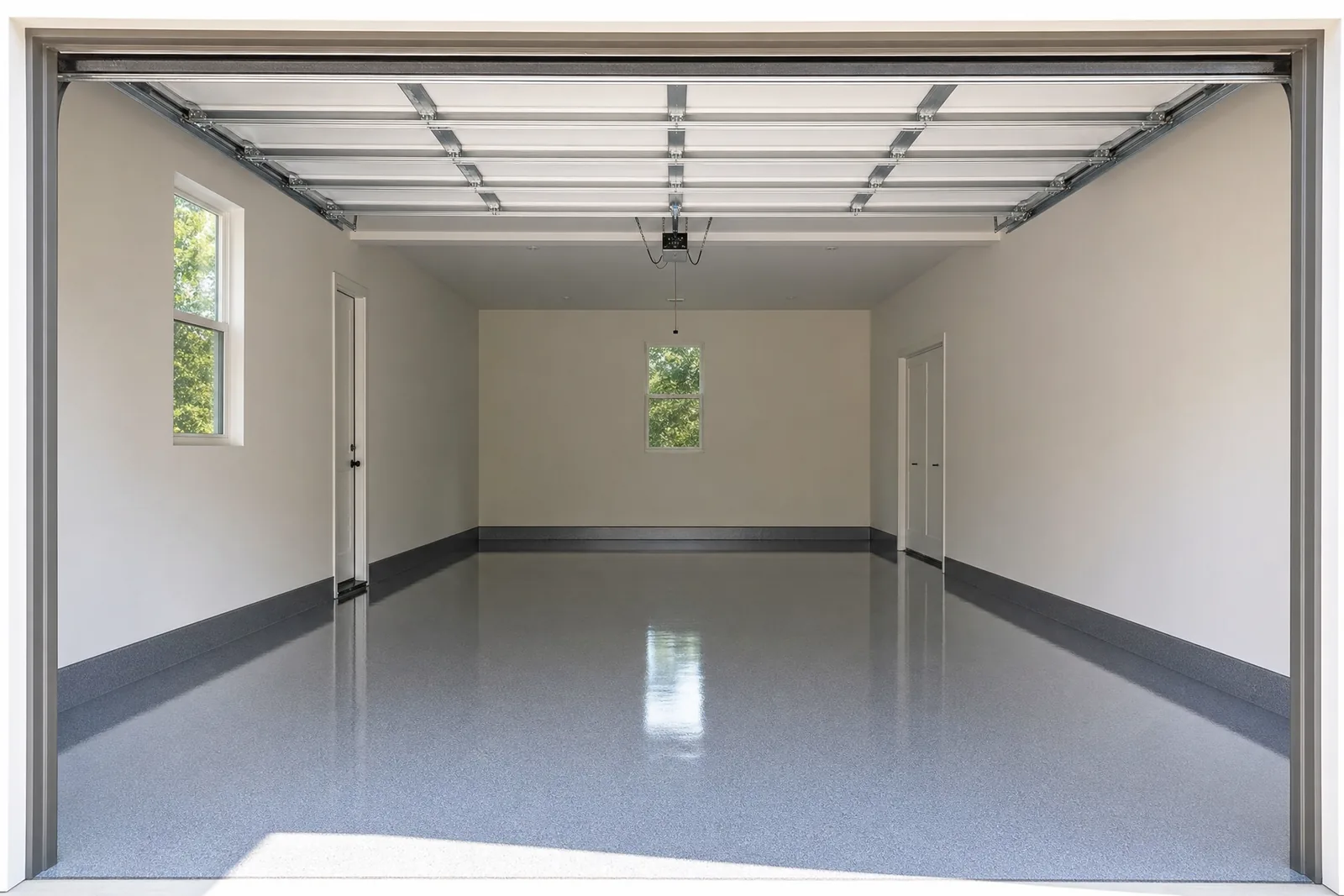
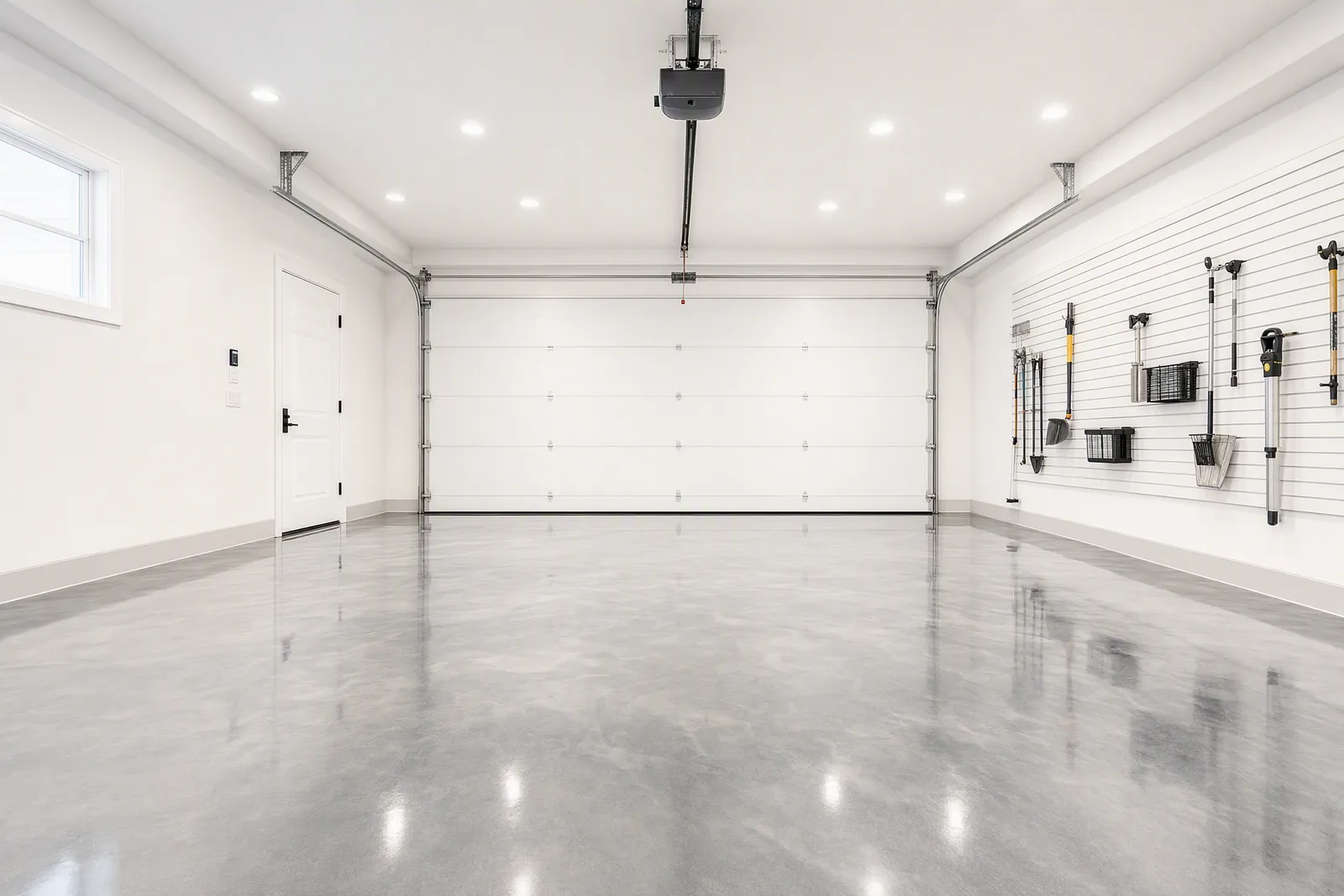
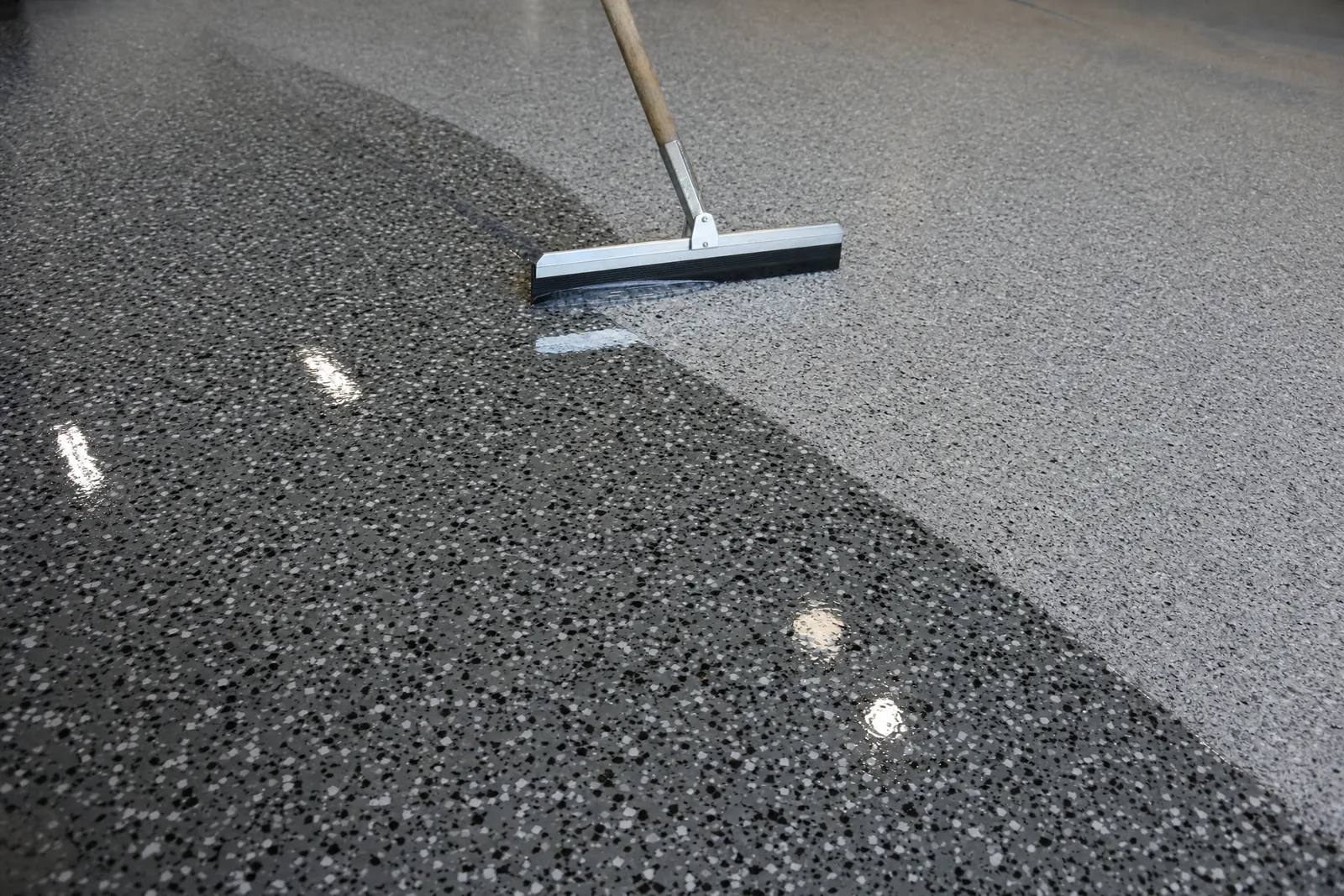
Polyaspartic's pot life halves roughly every 18°F of temperature rise. A product with a 30-minute working time at 77°F has closer to 12 minutes at 95°F, and a garage slab in July can easily sit above that well into the evening.
Practically this means: we schedule polyaspartic topcoats for mornings between May and September, we mix in smaller batches than the label suggests, and we work in sections with a wet edge maintained between them. Crews that do not adjust for temperature produce floors with lap marks and roller stipple — visible defects that cannot be fixed without recoating.
If you are getting quotes in summer and a contractor offers an afternoon start, ask what their plan is for pot life. A good answer exists. No answer is the problem.
Where polyurea earns its place
Polyurea base coats are more flexible than epoxy, which matters over slabs that move slightly with temperature — and slabs in this area move more than most, given the daily swing between a 110°F afternoon and a 75°F night. That flexibility lets the coating accommodate minor movement rather than cracking with it.
The tradeoff is film build. Polyurea builds thinner per coat than epoxy, so a polyurea base plus polyaspartic topcoat system needs more coats to reach the same thickness, which is part of why it costs more. On a garage with a sound, stable slab, an epoxy base is perfectly adequate and cheaper. On a slab with a history of movement, polyurea is worth the difference.
Common questions
Is polyaspartic worth the extra cost?
In this climate, generally yes — mostly for UV stability and hot tire resistance, which are the two things that actually kill garage floors here.
The place it's harder to justify is a fully enclosed space that never sees sunlight or vehicles, like a finished basement. There, a good epoxy topcoat performs nearly as well for less money.
Can polyaspartic go over existing epoxy?
Yes, and it's a common repair. If the existing epoxy is sound and well bonded, we abrade it mechanically and apply polyaspartic over the top. That gets you UV stability and abrasion resistance without tearing out a floor that's fundamentally fine.
If the epoxy is peeling anywhere, this doesn't apply — the whole thing comes off first.
How fast can you actually finish?
A two-car garage: grind and prep in the morning, base and broadcast midday, topcoat in the afternoon, walk on it that evening, park on it a day or two later. That's a realistic single-day turn and it's the main practical advantage of the chemistry.
We won't compress it further. Crews that promise a few hours are skipping prep.
Ready for a floor that survives a Sierra winter?
Free on-site measure, honest assessment of your slab, and a written quote you can hold us to.