Fastest way is to call 775-362-7367. If it's easier to send details, the form on this page reaches us directly and we usually reply the same day.
What happens next
- We call you back to understand the space and answer quick questions.
- On-site measure at a time that suits you, usually within a few days. We look at slab condition, not just square footage.
- Moisture check. A plastic-sheet indicator test at minimum. If the slab warrants quantitative testing we'll say so and explain what it costs.
- Sample boards. We leave physical samples with you overnight so you can see colours in your own light.
- Written quote with the system specified line by line — prep method, broadcast coverage, topcoat product. Not a single number with no detail behind it.
Useful things to have ready
- Rough dimensions of the space
- Age of the slab, if you know it
- Whether there's an existing coating, and its condition
- Any cracks, spalling or areas that stay damp
- Whether irrigation runs against that side of the house
Send us the details
What a good quote looks like
Whether or not you use us, here is what you should be receiving from anyone quoting your floor. If a quote is missing three or more of these, you cannot meaningfully compare it to anything.
- Measured square footage, not estimated
- Preparation method named — grinding, and to what profile
- Whether the perimeter is hand ground
- Crack and spall repair scope, itemised
- Moisture test result and whether mitigation is needed
- Broadcast coverage — full or partial, and the flake weight allowed
- Topcoat product by name, with the data sheet available
- Number of coats and target film thickness
- Cure times before foot and vehicle traffic
- Warranty term and, specifically, what it excludes
- Deposit and payment schedule
Questions to ask us
We would rather be interrogated than take a job where expectations are unclear. Things worth asking:
- How long has this specific crew been installing polyaspartic?
- Can I see photographs of your own work, not manufacturer images?
- Can I speak to a customer from two or three years ago?
- What happens if you find something unexpected once the grinding starts?
- Who do I call if there is a problem in year four?
If you are getting multiple quotes
Good. Get three. But compare scope before price, because the cheapest quote is usually cheapest for a reason that is invisible until year two. The single most useful thing you can do is ask each contractor the same four questions — grind or etch, full or partial broadcast, which topcoat, what did the moisture test read — and write the answers down. The differences will be stark.
Photographs help
If you want a useful ballpark before anyone visits, send photos with your enquiry. Four shots cover almost everything we need:
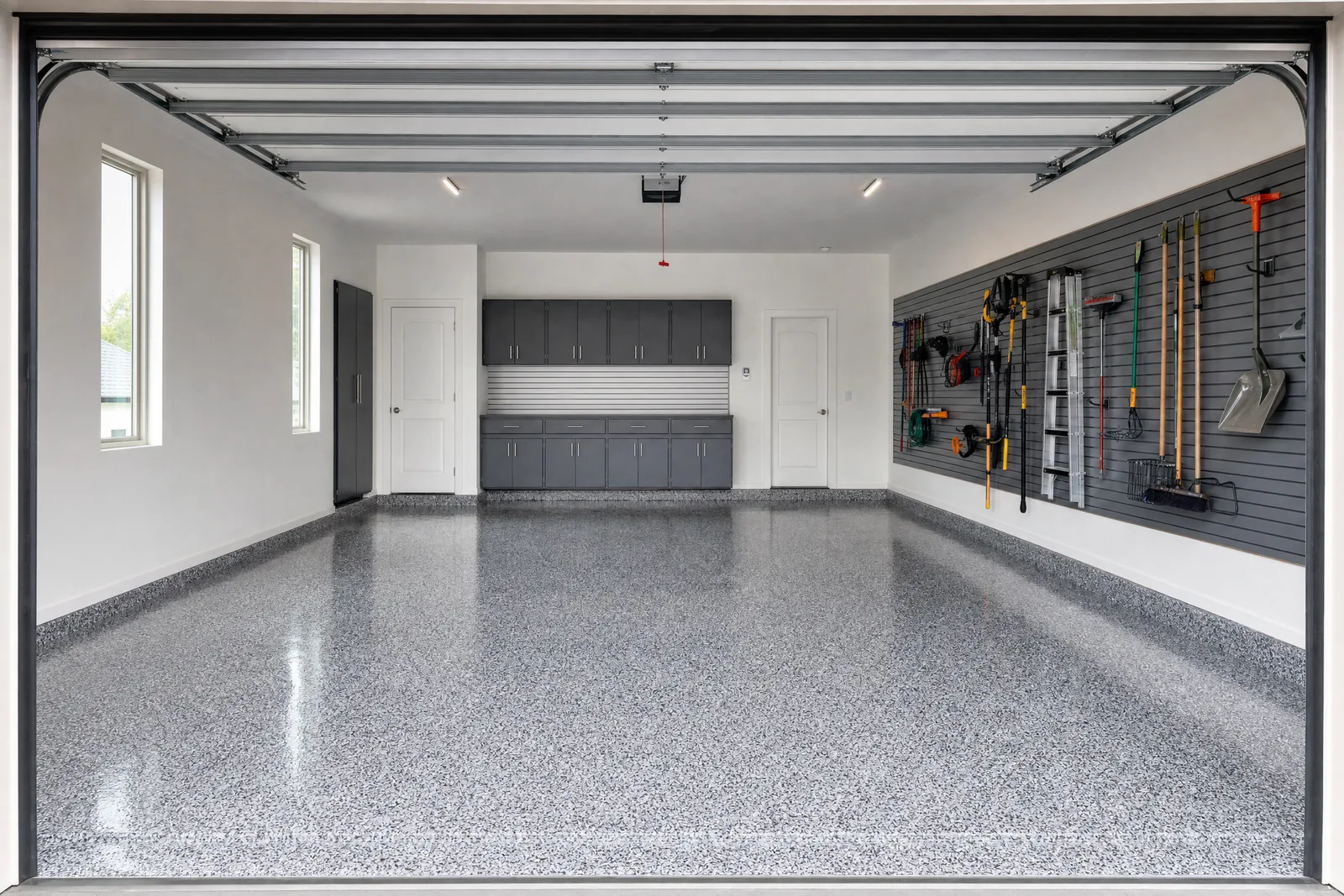
- Wide shot from the doorway looking in, showing the whole floor
- Wide shot from the back looking out toward the door
- Close-up of any cracks with something for scale — a coin or a phone
- Close-up of the threshold, which is where spalling shows first
With those we can usually give you a range within a few hundred dollars, which is enough to know whether it is worth a visit. We still measure and assess properly before quoting firm.
Timing your project
Two situations worth planning around. If you are selling, do the floor early enough that it has fully cured before photography and showings — and remember the garage needs to be empty for a day, which is easier before you have staged the house than after.
If you are having other work done — cabinets, storage systems, drywall, electrical — the floor should go in last. Grinding a floor in a finished space is a masking problem, and installing cabinets over a fresh floor risks damage before it has reached full cure. Last in, first protected.
After you send the form
You will get a call back, usually the same business day during working hours. Nobody will chase you afterwards. If you decide against it or go elsewhere, that is genuinely fine and you will not hear from us again unless you get in touch.
Common questions
How soon can you schedule?
Typically one to three weeks out for residential work, longer in spring and autumn when demand peaks. Commercial jobs depend on how much after-hours work is involved.
We'll give you a real date rather than a vague window, and we'll tell you if we're booked out further than you want to wait.
Do you charge for the quote?
No. The visit, the measure, the written quote and the sample boards are all free.
Quantitative moisture testing (72-hour calcium chloride or RH probes) carries a cost on some jobs. We tell you before doing it and credit it against the install if you go ahead.