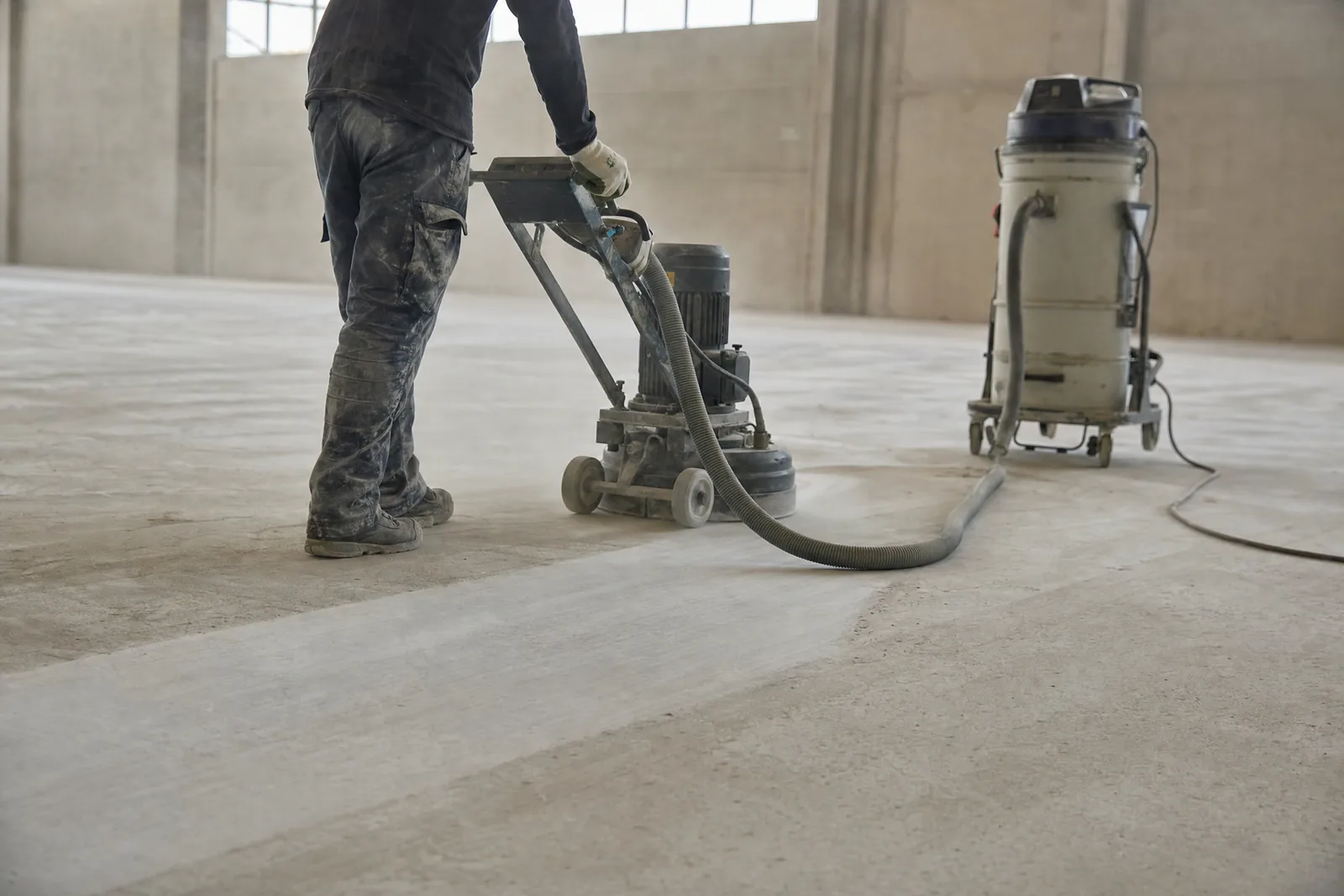
Concrete straight from the finisher has a dense, closed surface. The troweling that makes it smooth also seals the top layer, and often leaves behind laitance — a weak film of fine cement paste. Coating over that means bonding to a layer that is itself barely attached to the slab.
Grinding removes laitance and opens the pore structure so resin can key into it mechanically. The industry measures the result as a Concrete Surface Profile (CSP), from CSP 1 (barely textured) to CSP 9 (heavy scarification). Most coating manufacturers specify CSP 2 to CSP 3 for a standard build, and that is what a diamond grind produces.
Why not acid etching
Acid etching is what comes in a big-box kit, because you can't ship a grinder in a box. It uses muriatic or phosphoric acid to eat at the surface. Three problems:
- It produces an inconsistent and generally inadequate profile, often below CSP 1.
- Residue must be neutralized and thoroughly rinsed, which introduces a large amount of water into the slab immediately before you coat it.
- It does nothing to remove existing sealers, curing compounds or oil contamination, all of which block adhesion regardless of profile.
Every major manufacturer's technical data sheet specifies mechanical preparation. Etching persists because it's cheap and fast, not because it works.
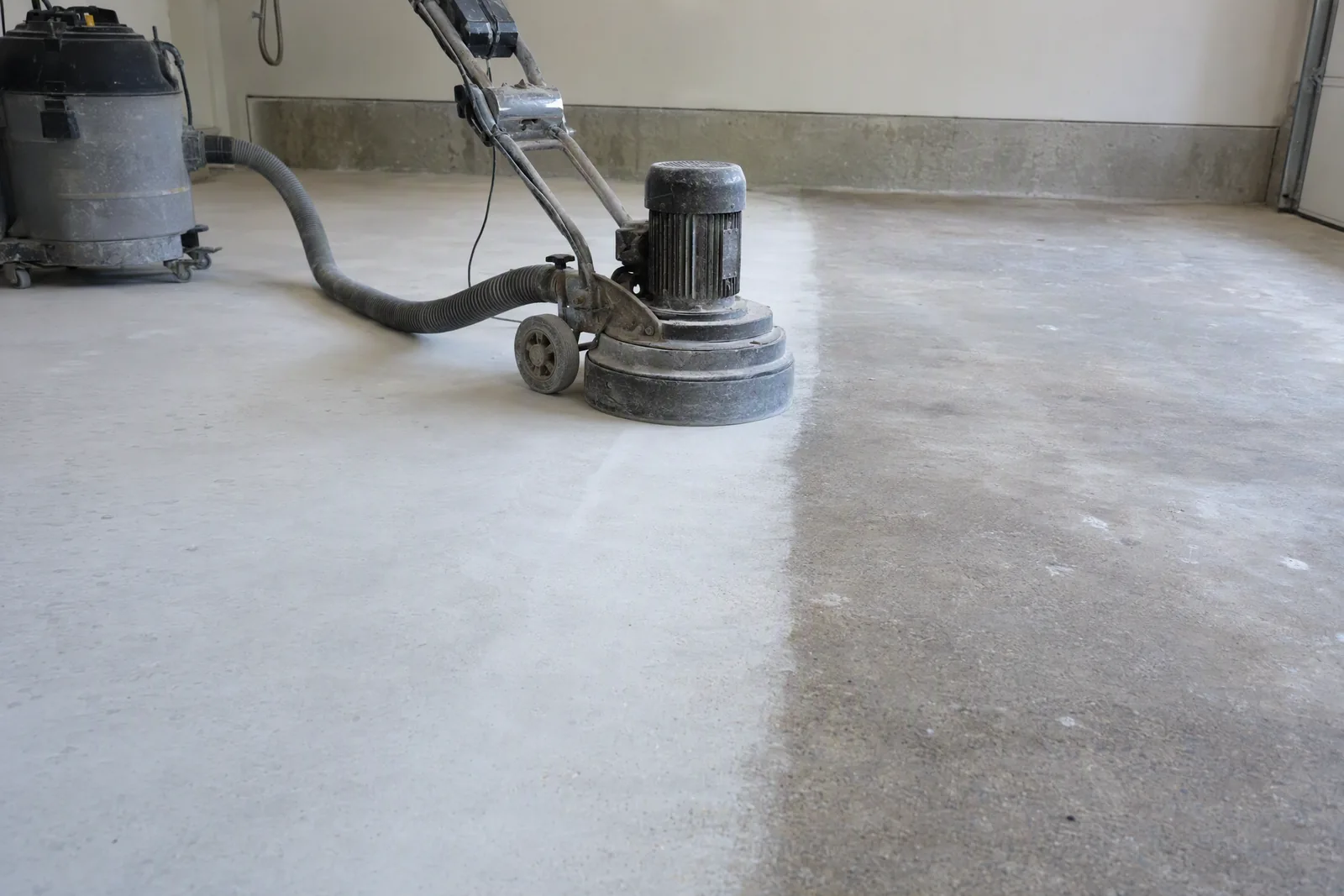
Dust
Dry grinding concrete produces respirable crystalline silica, which is a genuine health hazard and regulated as such. Every machine we run is connected to a HEPA-filtered dust extractor. We also mask the door into the house. You should expect this from any contractor; if a crew shows up without extraction, that tells you what standard they work to generally.
Edges and corners
A walk-behind grinder can't reach the last inch against a wall. Edges get done with a hand grinder, and it's slow, awkward work that is frequently skipped. An unground perimeter is exactly where a coating starts lifting, because it's also where water and cleaning solution collect.
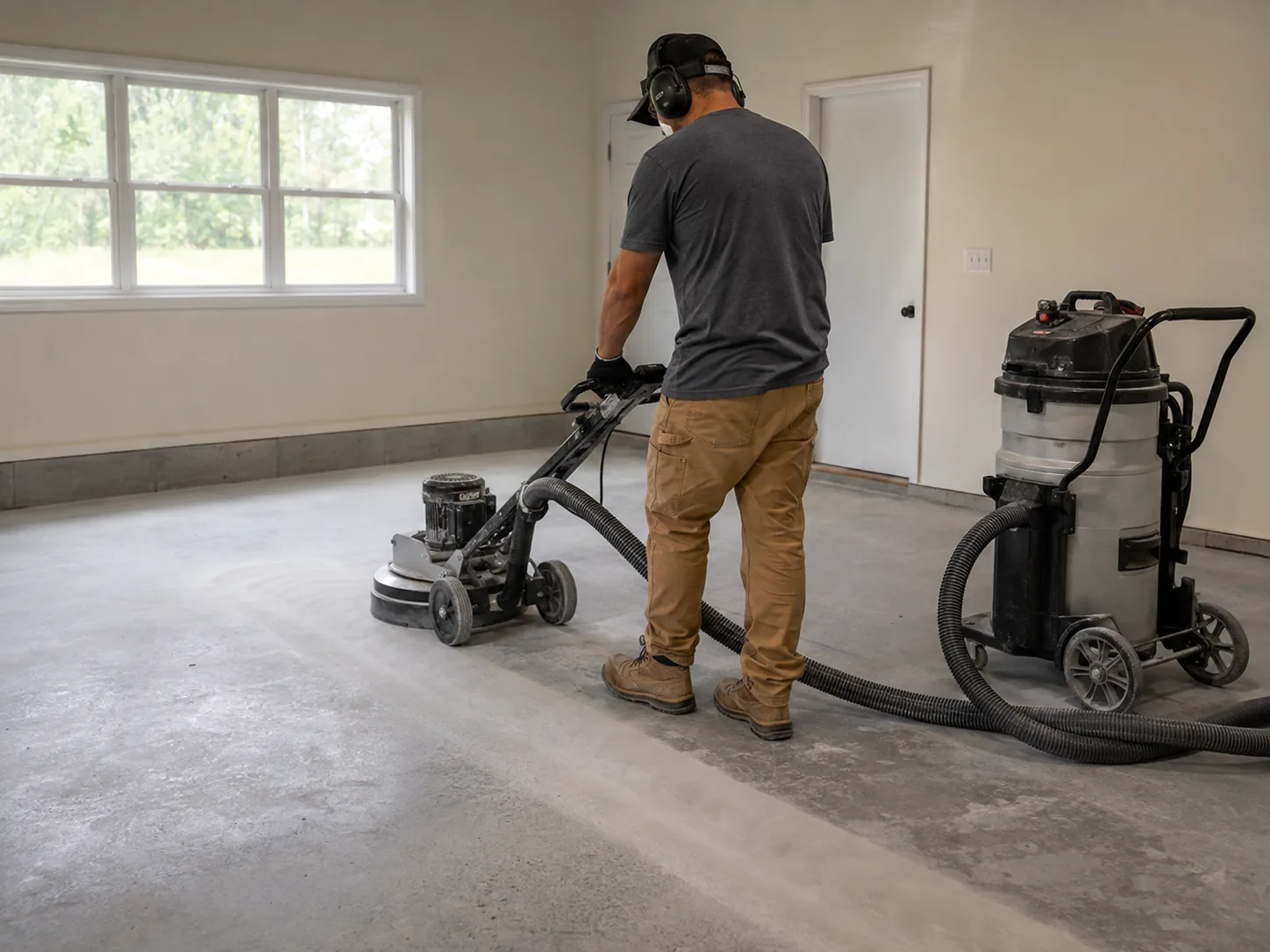
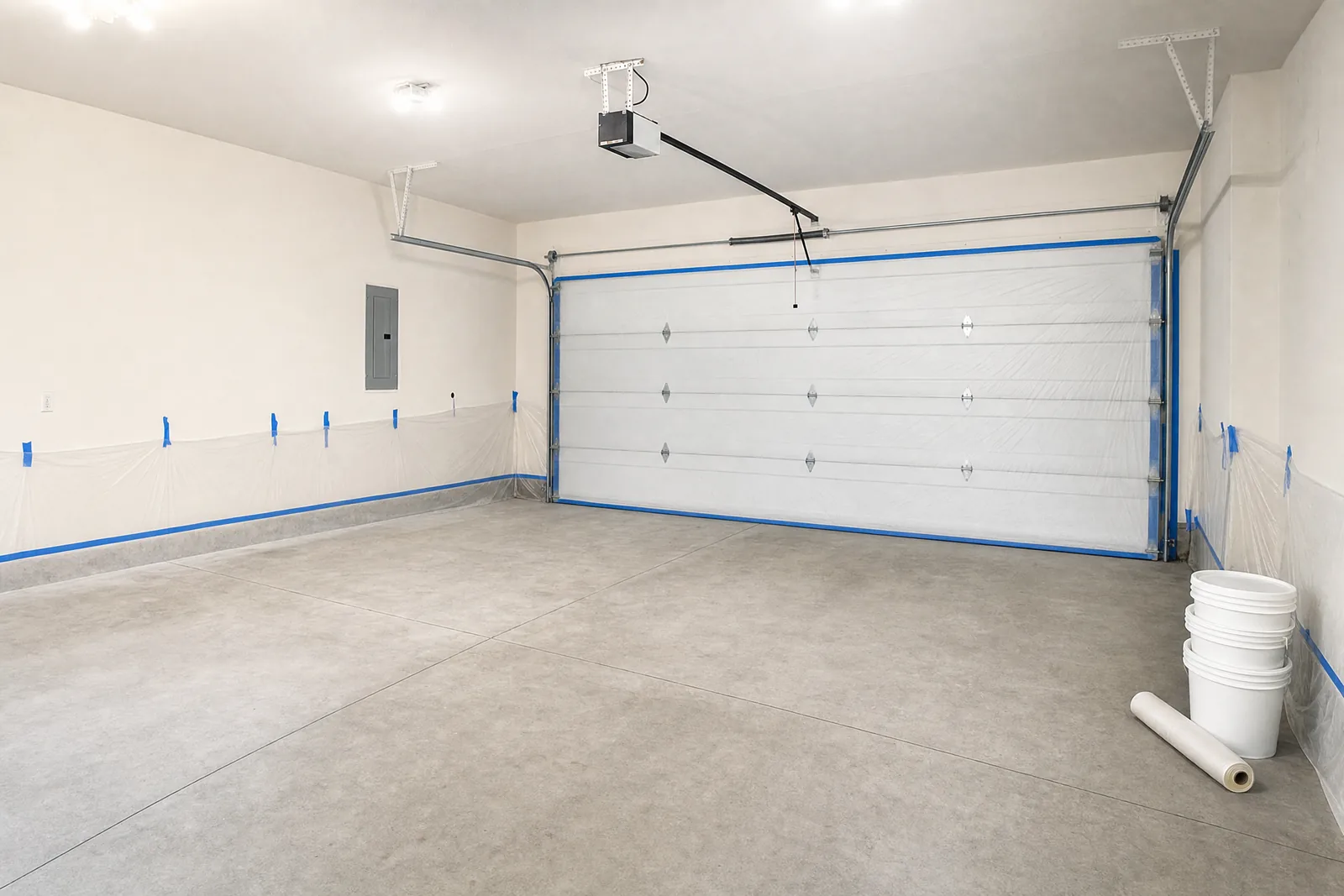
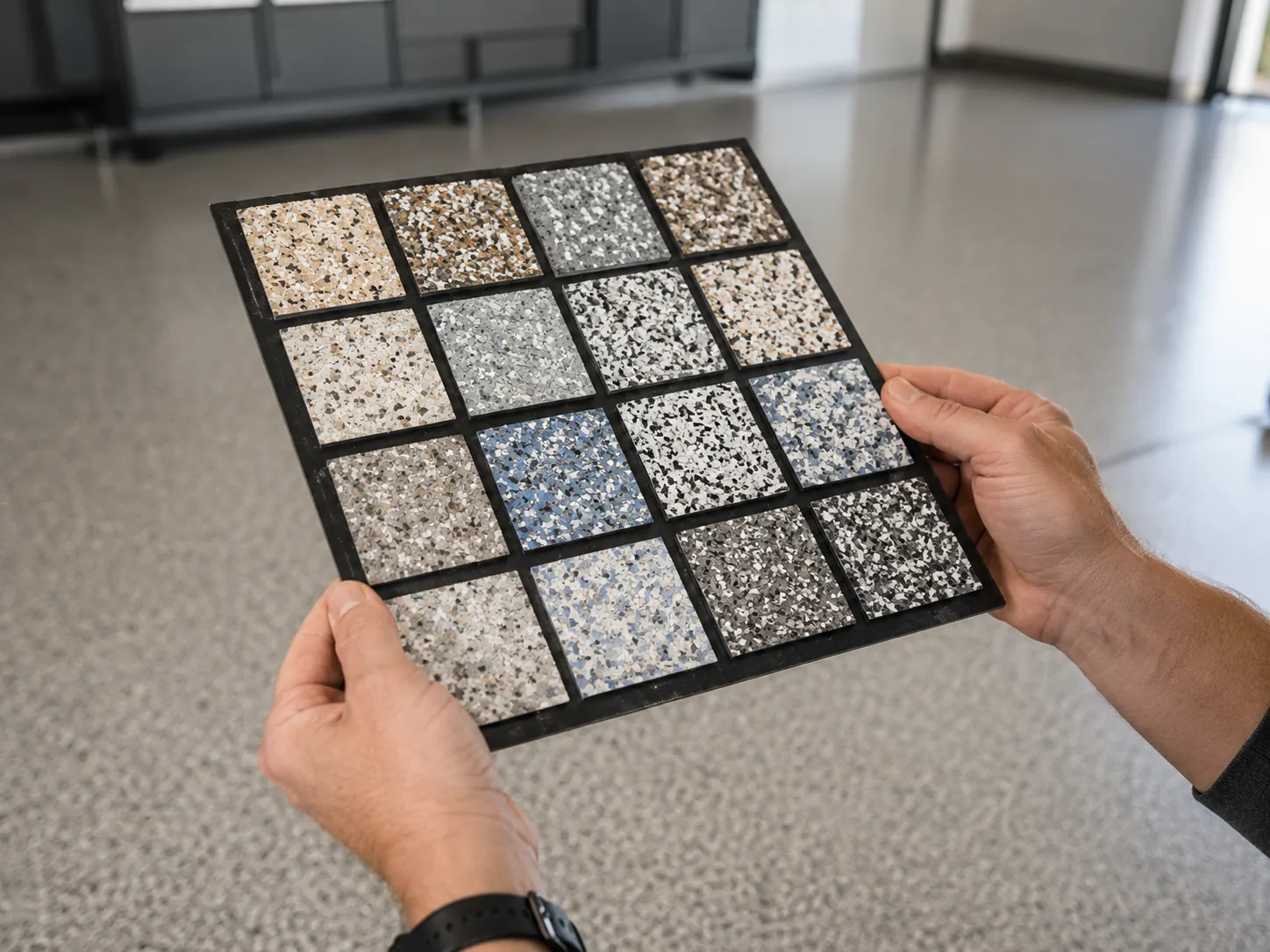
Concrete Surface Profile, explained properly
The International Concrete Repair Institute publishes a scale of nine reference profiles, from CSP 1 through CSP 9, each represented by a physical rubber comparator chip that contractors hold against the prepared floor. It is the industry's shared vocabulary for "how rough is rough enough," and coating manufacturers specify against it in their technical data.
| Profile | Produced by | Suits |
|---|---|---|
| CSP 1 | Acid etching | Thin sealers only; below spec for most coatings |
| CSP 2 | Light grinding | Coatings under 10 mils |
| CSP 3 | Medium grinding | Most residential flake systems — our default |
| CSP 4–5 | Light shot blasting | High-build commercial systems |
| CSP 6–9 | Scarifying, scabbling | Heavy repair mortars and overlays |
Note the top row. Acid etching, at its best, produces CSP 1 — below the minimum specified for essentially every garage floor coating on the market. That is not an opinion about etching; it is what the manufacturers' own documents say.
Tooling and why it changes mid-job
Diamond tooling comes in bond hardnesses that are counter-intuitive: soft-bond tooling for hard concrete, hard-bond for soft concrete. The bond wears at a rate that keeps fresh diamond exposed, and getting it wrong means either glazing over (no cutting) or burning through tooling at enormous cost.
Practically, this means a crew arriving with one set of tooling is guessing. Reno slabs vary considerably in hardness — a 1980s pour behaves differently from a 2019 one — and part of what we do in the first ten minutes on site is a test pass to determine what the slab actually needs.
The edge problem, in detail
A planetary grinder has a circular head inside a housing, and the housing means the cutting surface stops roughly one to two inches short of any wall. Every square foot of that perimeter has to be done with a hand-held edge grinder, on your knees, working backwards along the wall.
On a two-car garage that is roughly 90 linear feet of edge, and it takes about as long as grinding the entire open field. It is the least pleasant part of the job and the easiest to shortcut, which is precisely why perimeter delamination is such a common failure pattern.
Here is a check you can run yourself after any coating job, on any contractor's work: look closely at the last inch against the wall. If the coating there looks thinner, or if you can see a slightly different texture where the grinder stopped, the edges were not properly done.
Silica dust and what proper control looks like
Respirable crystalline silica from dry-cut concrete is a recognised occupational hazard and is regulated federally under an OSHA standard with a specific permissible exposure limit. It causes silicosis, which is irreversible.
Adequate control means a HEPA-filtered extractor sized to the tool, connected for the whole operation, with the filter actually maintained. What you should see on site: a large vacuum running continuously, a shroud around the grinder head, and crew wearing respirators rather than dust masks. What you should not see: a crew grinding dry into open air, or an extractor sitting unconnected because it slows them down.
This matters to you beyond the crew's health. Silica dust that escapes the extractor ends up in your house, on your belongings, and in your HVAC system.
After grinding, before coating
Grinding is not the last step. The floor then needs:
- Vacuum. Thorough, including the edges and any joints.
- Inspection. Grinding reveals things — hairline cracks that were invisible, soft areas, previous patches. This is when the real condition of the slab becomes apparent.
- Repairs. Everything the inspection found, cured and ground flush.
- Final vacuum and tack. A tack cloth or solvent wipe lifts the fine residue a vacuum leaves behind.
The inspection step is why we occasionally call a customer mid-job. A slab that looked fine under twenty years of surface staining sometimes turns out to need more work than the quote allowed, and we would rather tell you at that point than quietly coat over it.
Common questions
How much concrete gets removed?
Very little — typically under a millimetre for a standard profile. We're removing the laitance layer and opening the pores, not resurfacing the slab.
Heavier removal happens when there's an existing coating, a thick sealer, or significant contamination to get through. That's a different pass with more aggressive tooling.
Will grinding fix an uneven floor?
It can take down high spots and flatten minor undulation, but grinding is not levelling. A slab with real deviation needs a self-levelling underlayment before coating, which is a separate material and a separate cost.
We'll measure and tell you which situation you're in rather than discovering it mid-job.
Is the dust dangerous?
Uncontrolled silica dust is, yes — it's a recognised respiratory hazard and there are exposure regulations covering it. That's exactly why we run HEPA extraction on every machine and mask off the house.
With proper extraction the airborne dust is minimal. You'll see a light film on surfaces near the work area, which we clean before we leave.
Ready for a floor that survives a Sierra winter?
Free on-site measure, honest assessment of your slab, and a written quote you can hold us to.