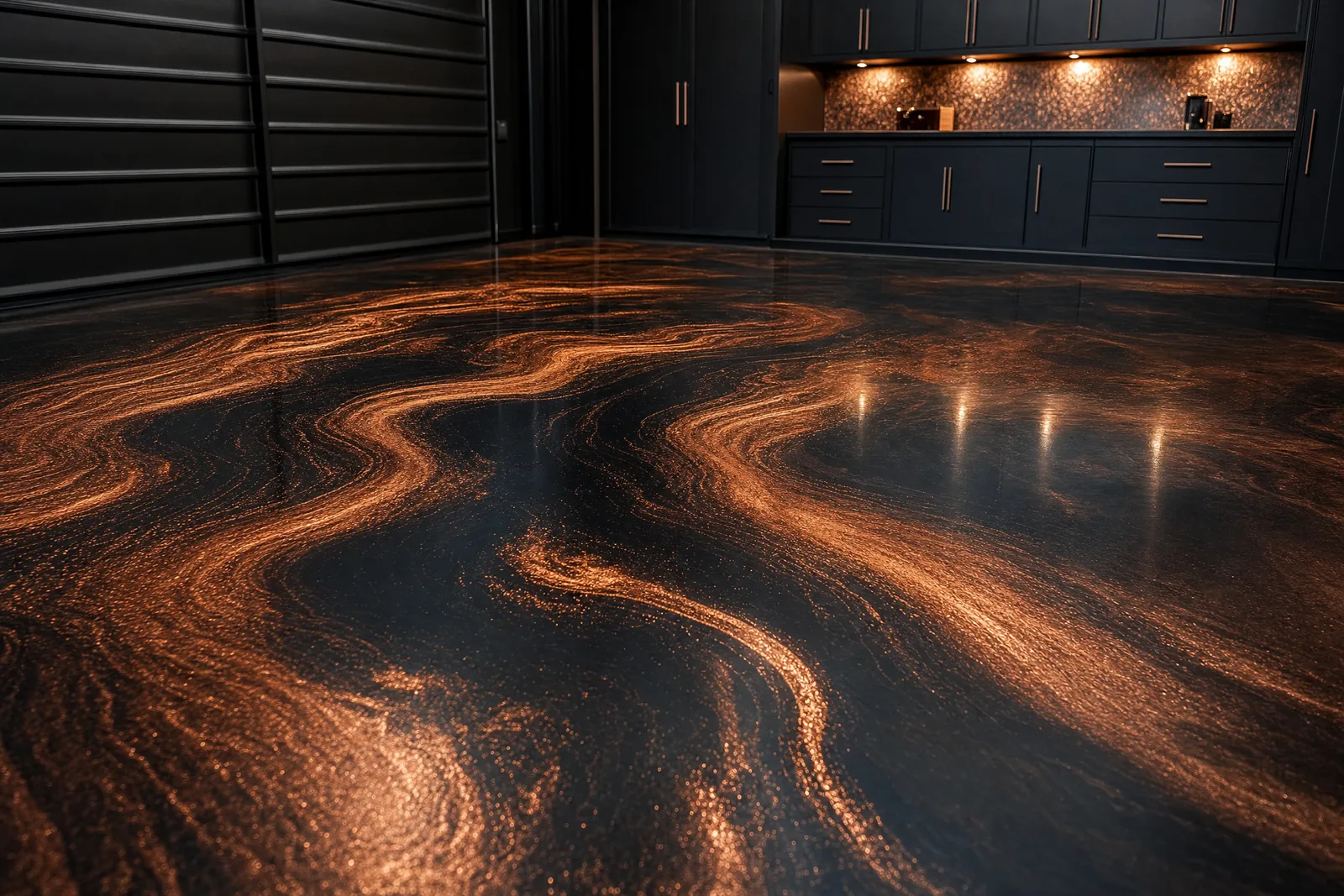
A metallic floor uses reflective mica pigment suspended in a clear or tinted epoxy. Applied over a pigmented base and then manipulated — with a roller, a squeegee, air, or solvent — the pigment separates and pools into veins and cells. The result reads like poured metal, marble or moving water depending on how it's worked.
Where it works and where it doesn't
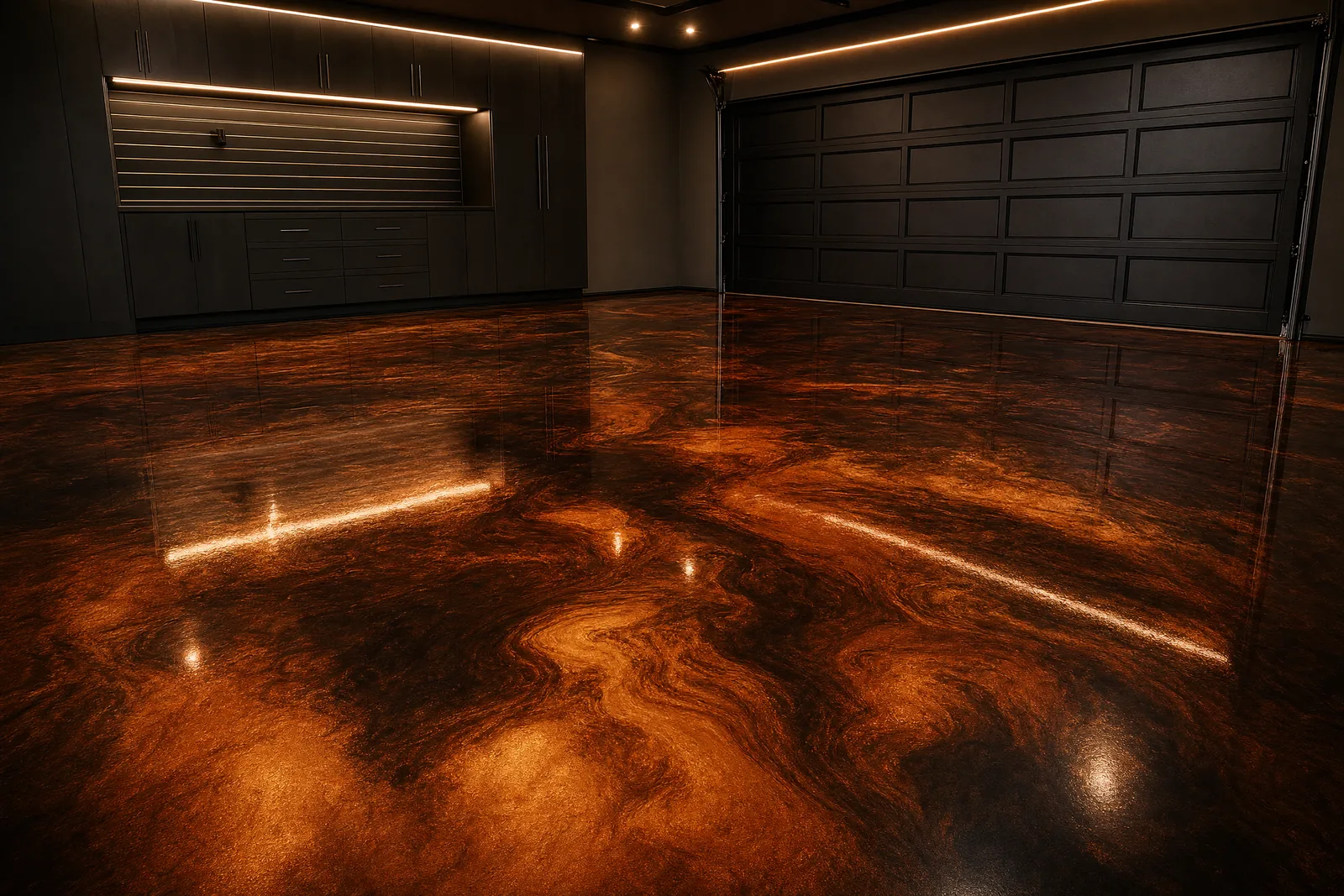
Metallic floors are a genuine showpiece in a garage with good lighting, a showroom, or a finished basement. They are less suited to a hard-working shop floor: the smooth surface has less slip resistance than a flake system, and because there's no chip texture to hide behind, every scratch and repair shows.
Installer skill matters more here than in any other system. A flake floor installed adequately still looks good. A metallic floor installed adequately looks like a mistake — muddy, with roller marks and dead zones where the pigment didn't move. Ask to see photographs of metallic floors the actual crew has installed, not manufacturer stock images.
Slab requirements
Metallic systems are usually applied thinner than a flake build and have no texture to disguise what's underneath. That means the slab needs to be flat and sound before you start. Significant spalling, deep pitting or an uneven pour will telegraph straight through. We'll tell you honestly at the quote if your slab isn't a good candidate.
How the pattern is actually made
A metallic floor is built in layers, and the visual result comes from what happens between them rather than from any single one.
- Base coat. A solid pigmented epoxy, usually a darker tone, establishing the background the metallic will float over.
- Metallic coat. Mica pigment suspended in clear epoxy, applied wet and generously. At this point it looks like nothing much.
- Manipulation. The installer moves the material — roller, squeegee, brush, sometimes a leaf blower or a spritz of solvent. Denser pigment sinks, lighter pigment rises, and cells and veins form where the material separates.
- Cure and topcoat. The pattern locks as it gels. A clear polyaspartic goes over the top for UV stability and abrasion resistance.
Step three is where skill lives, and it is genuinely unrepeatable. The same installer working the same colours on two identical garages produces two different floors. That is the appeal, and it is also why you cannot approve a design in advance.
Common metallic failures
Muddy, flat result
Pigment over-worked until it homogenised, or too little contrast between base and metallic. Reads as a vaguely shimmery beige rather than a pattern.
Dead zones
Areas where the installer stopped manipulating too early or the material gelled before it was worked. Shows as flat patches in an otherwise moving field.
Roller marks
Straight parallel lines cutting across organic pattern. Unmistakable once you notice, and impossible to unsee.
Telegraphed substrate
Every low spot, patch and trowel mark in the slab showing through, because there is no chip texture to hide behind.
All four are installer or assessment failures rather than product failures, which is why we push so hard on seeing a crew's own metallic work before you commit.
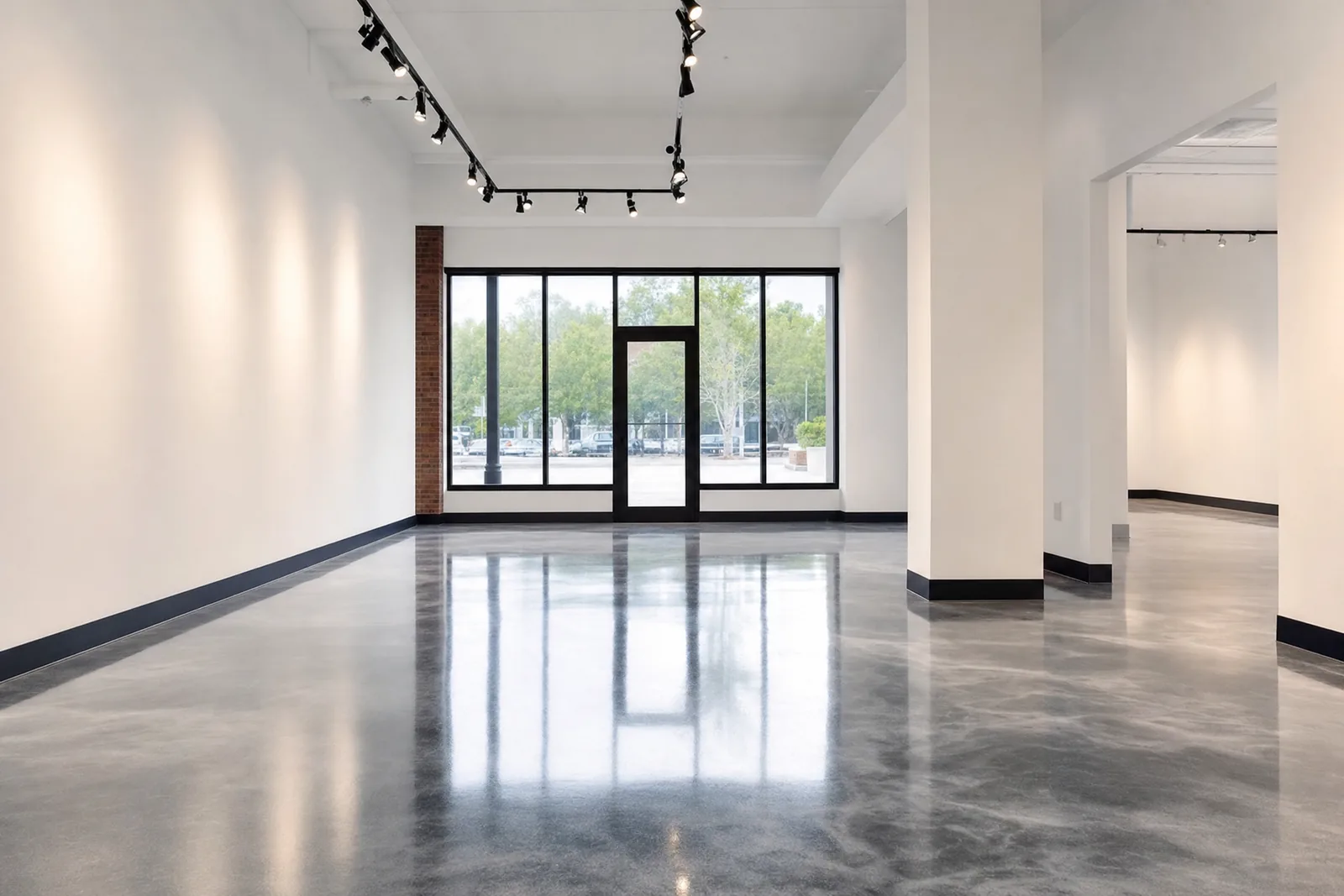
Lighting matters more than you expect
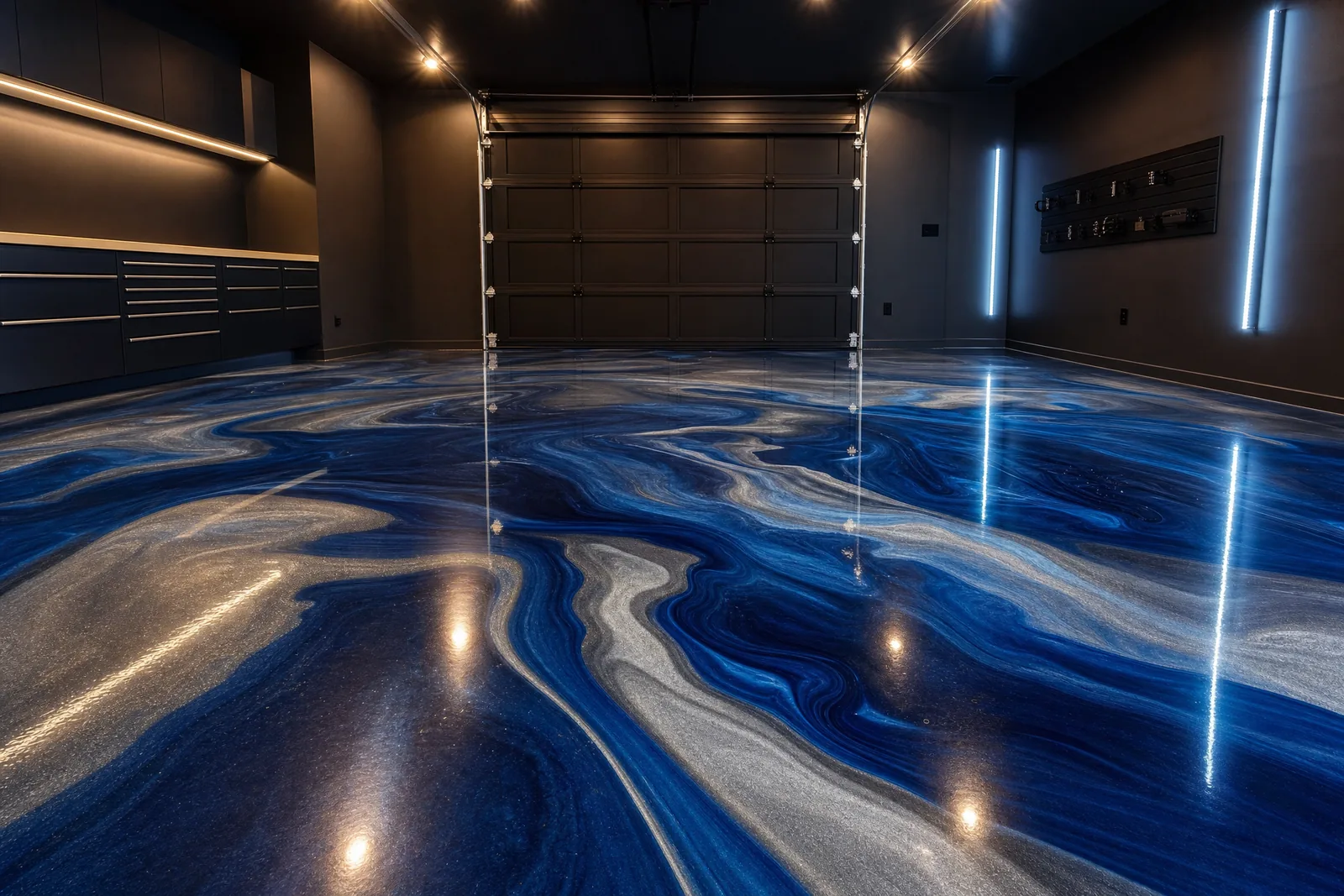
A metallic floor is a reflective surface, and it looks completely different under different light. Flat overhead fluorescent tubes wash it out. Directional or linear LED lighting rakes across the surface and makes the depth visible. If you are investing in a metallic garage floor, budget for the lighting at the same time — it is a much larger factor in the finished result than the colour choice.
Common questions
Can I pick exactly what the pattern looks like?
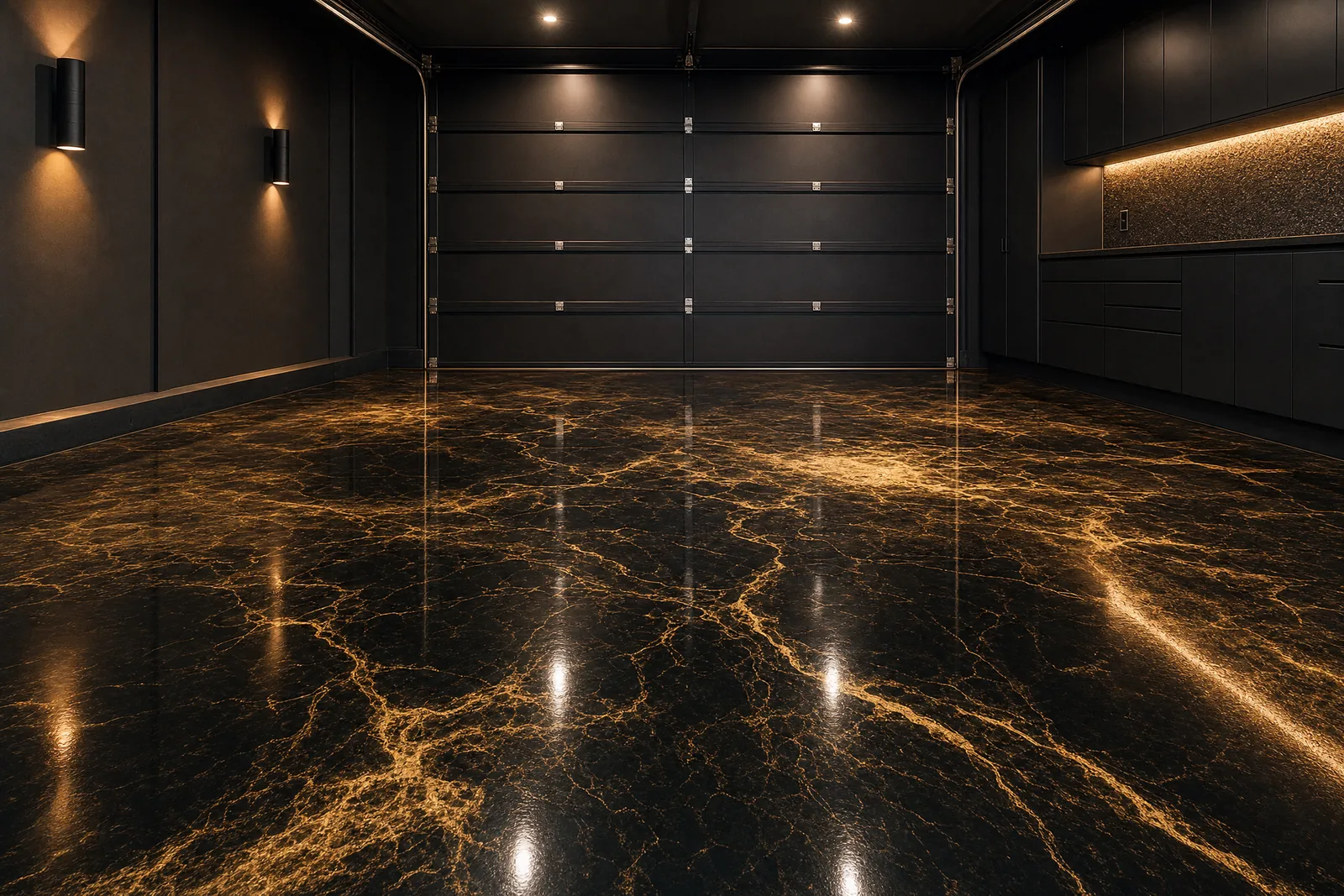
You pick the colours, the density of the veining, and the general character — tight and marbled versus broad and river-like. You don't pick the exact pattern, because the pigment movement is a physical process, not a print.
If you need a precisely repeatable result, a flake or solid system is the better choice.
Is a metallic floor slippery?
Wet, yes, more than a flake floor — it's a smooth surface. We can add a fine polymer grit to the topcoat, which knocks the gloss back slightly but gives real traction.
Worth doing in any garage where you'll be walking in from rain, or anywhere with mobility concerns in the household.
Does metallic cost more than flake?
Usually 20 to 40 percent more for a comparable area. The material is more expensive and the application takes longer and requires more skill. The gap widens on smaller floors, where labour is a bigger share of the total.
Ready for a floor that survives a Sierra winter?
Free on-site measure, honest assessment of your slab, and a written quote you can hold us to.