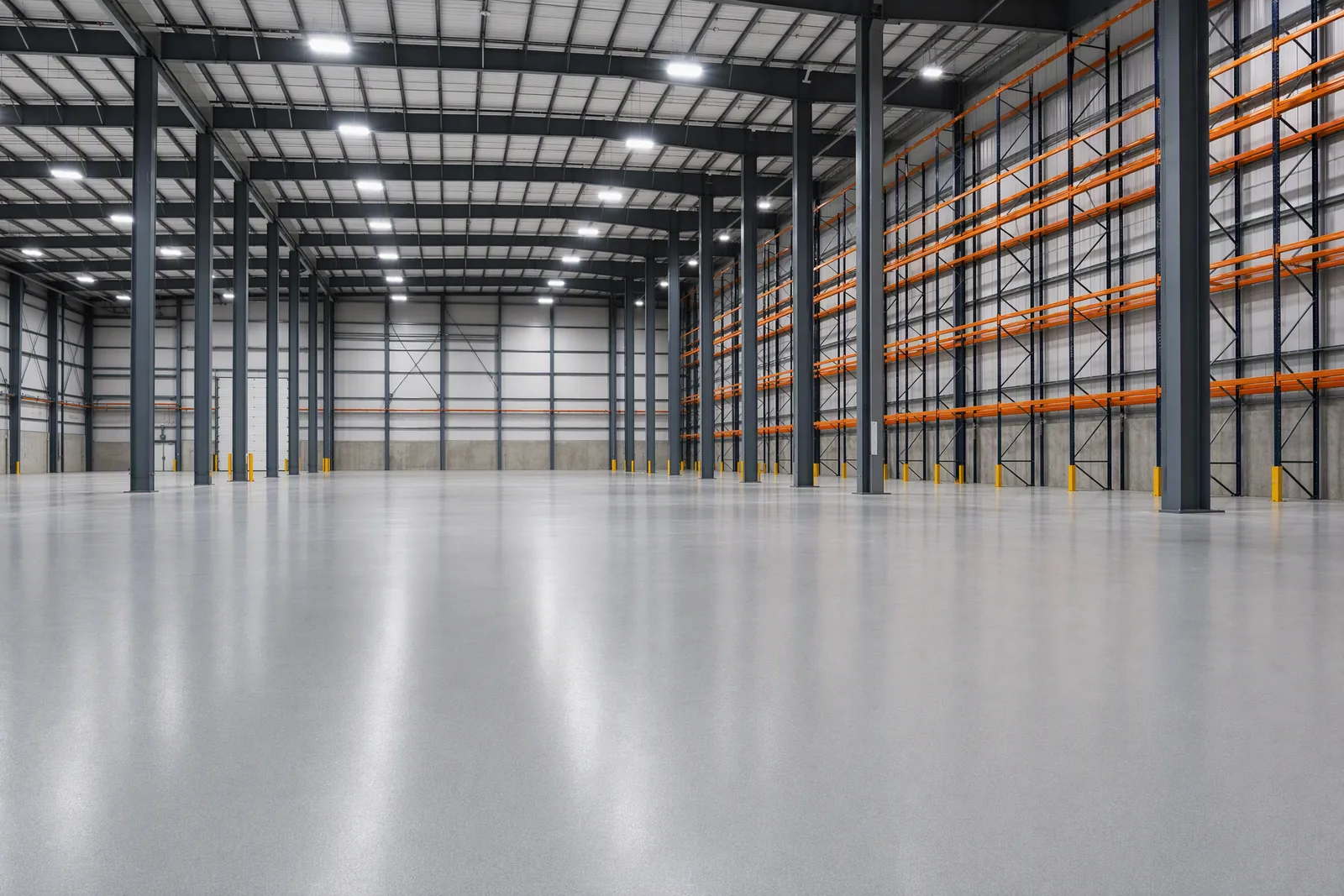
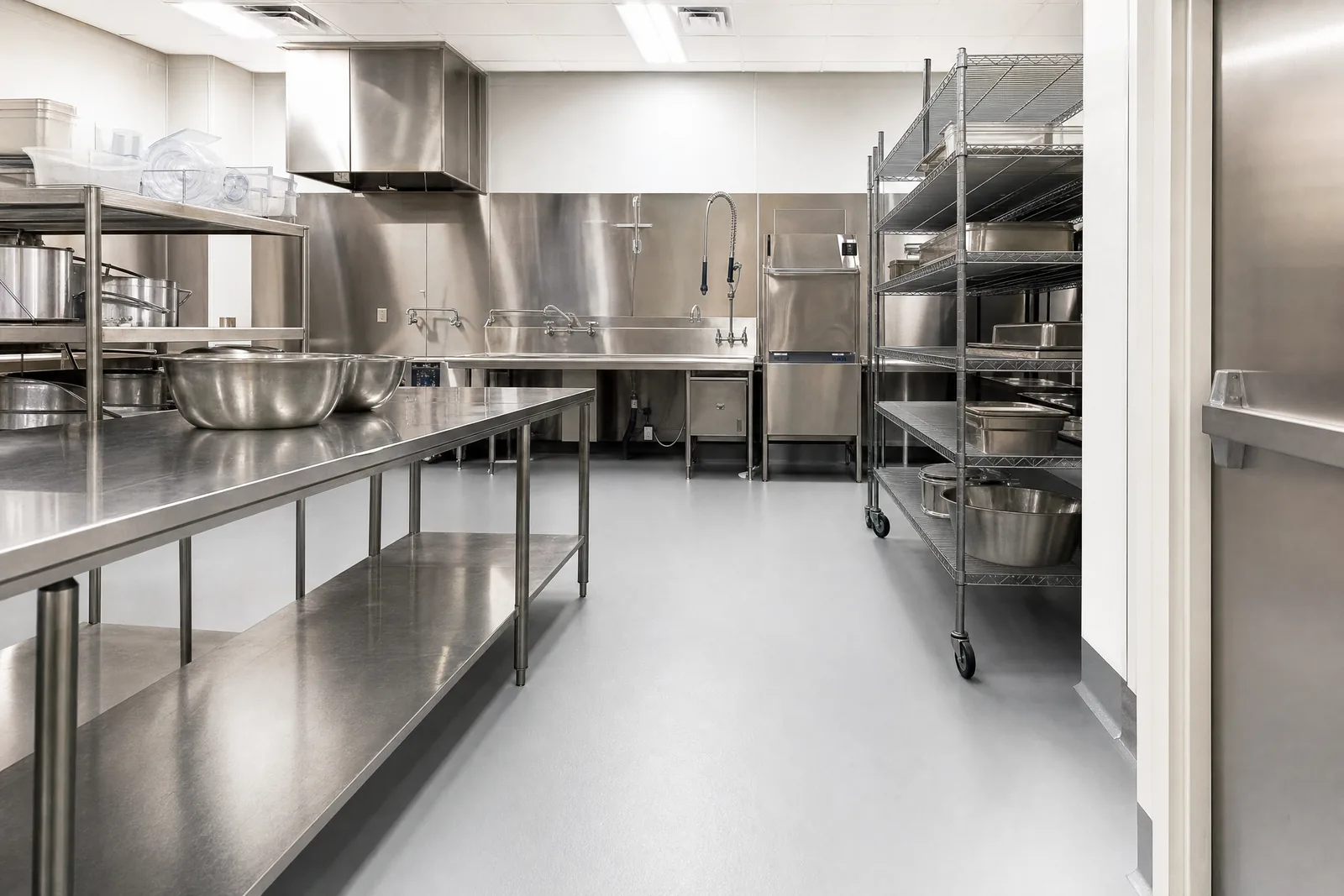
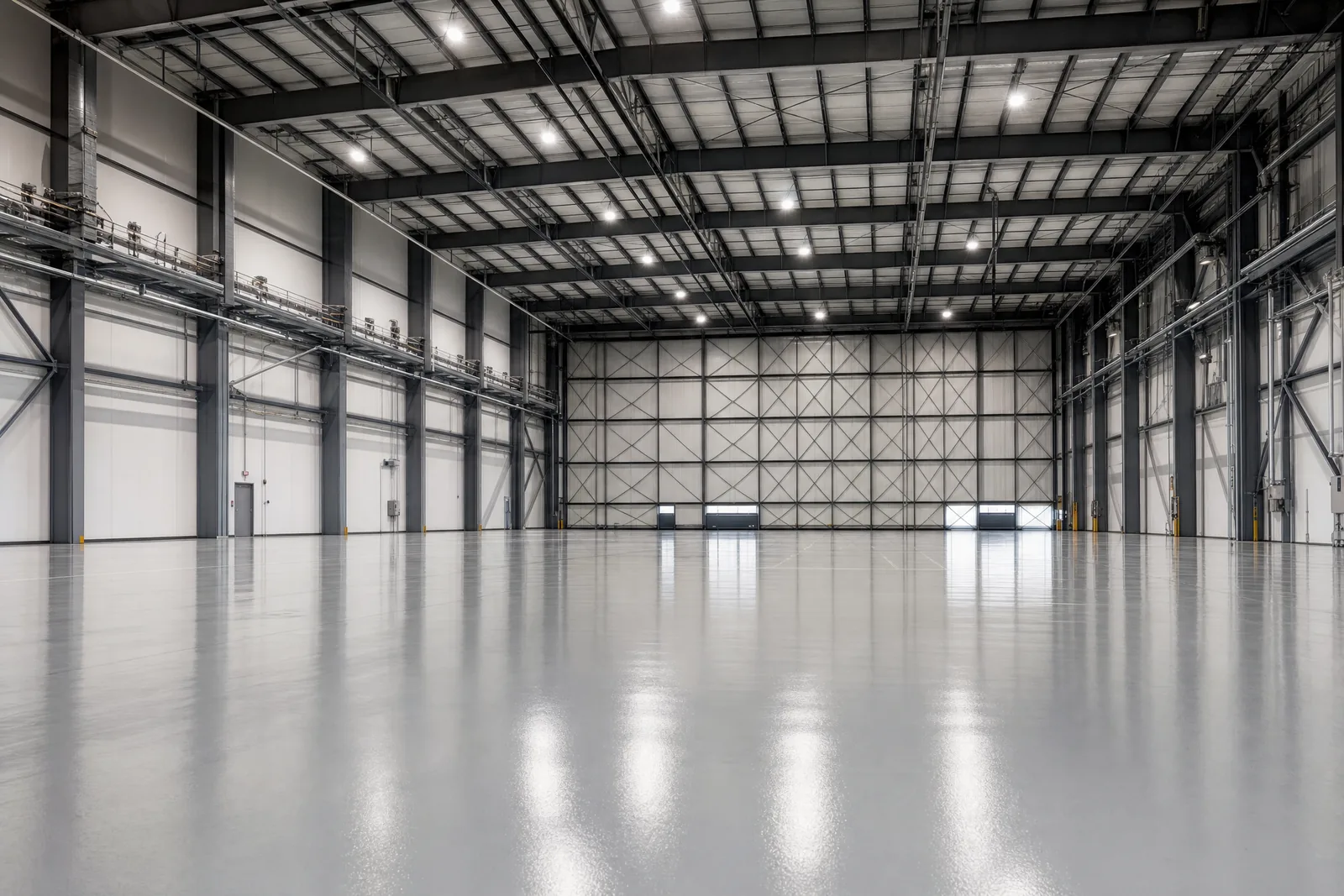
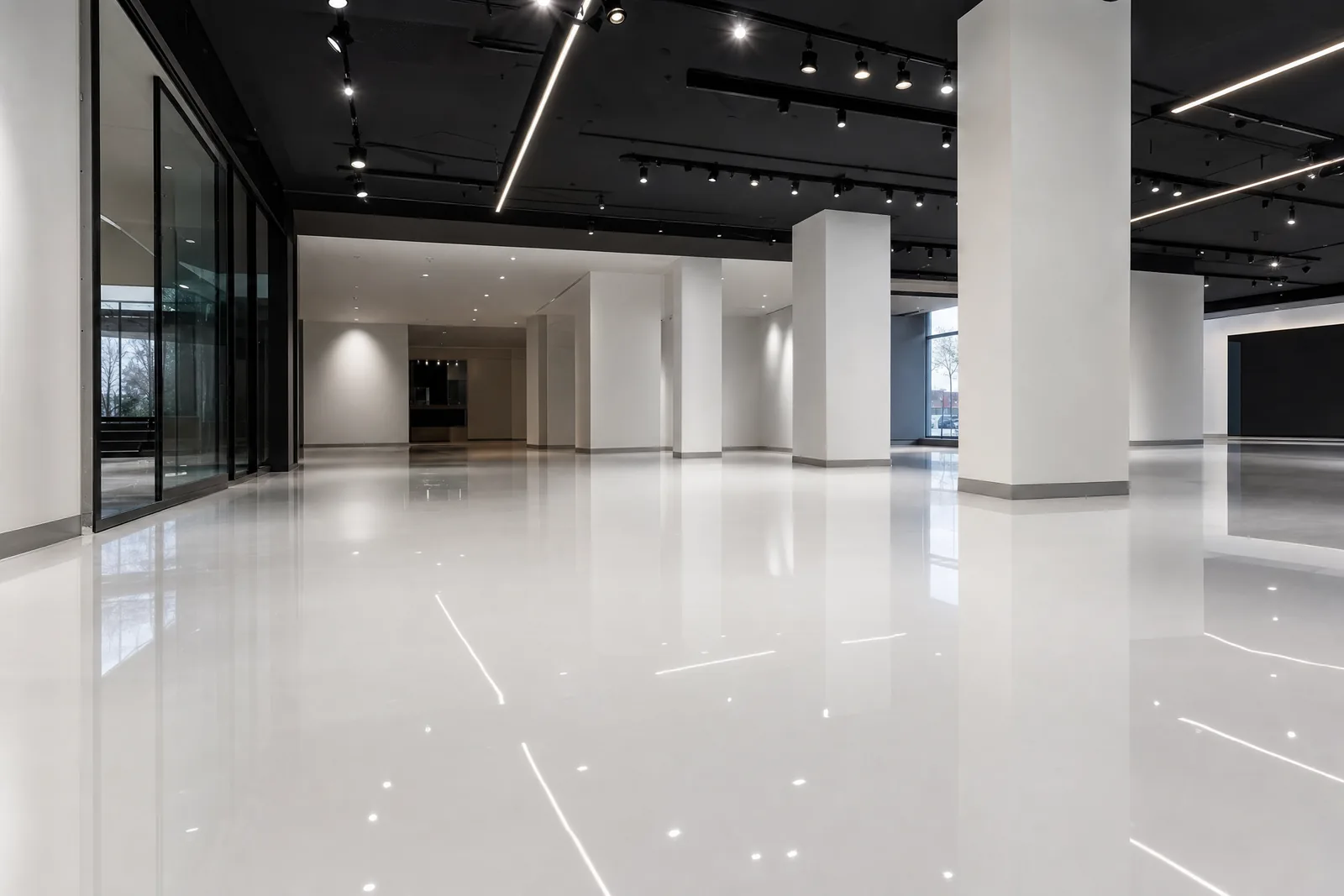
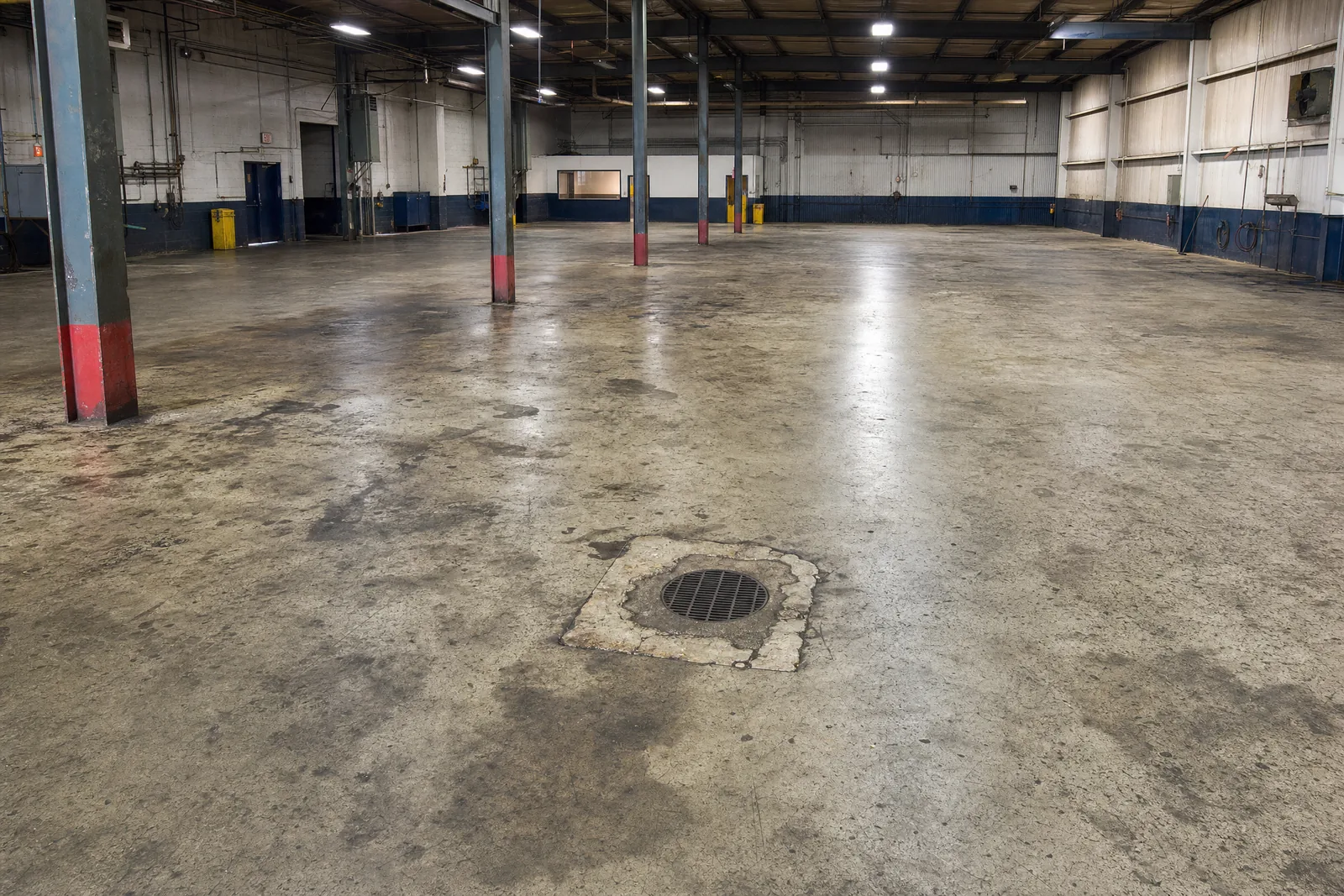
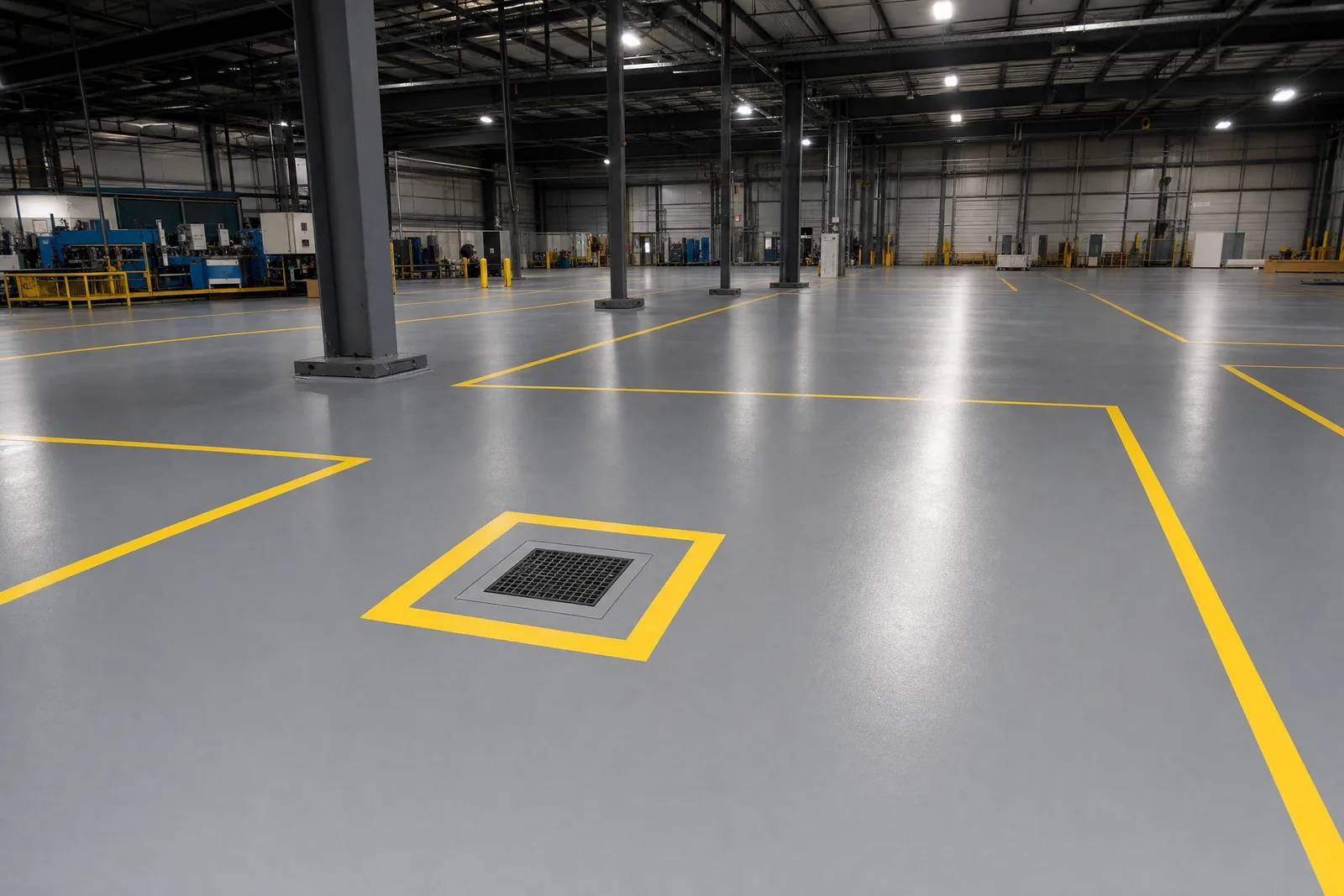
We coat warehouses, service bays, showrooms, commercial kitchens, hangars and light manufacturing space across Reno and the wider valley. The specification varies more than in residential work, because the floor has to meet a use case rather than a preference.
Sector notes
| Space | Typical spec | Main driver |
|---|---|---|
| Warehouse | Solid colour, striping | Forklift traffic, cleanability, marking |
| Auto service | Solid or flake, chemical-resistant topcoat | Oil, brake fluid, hot tyres |
| Commercial kitchen | Quartz broadcast, coved base | Slip resistance, health code |
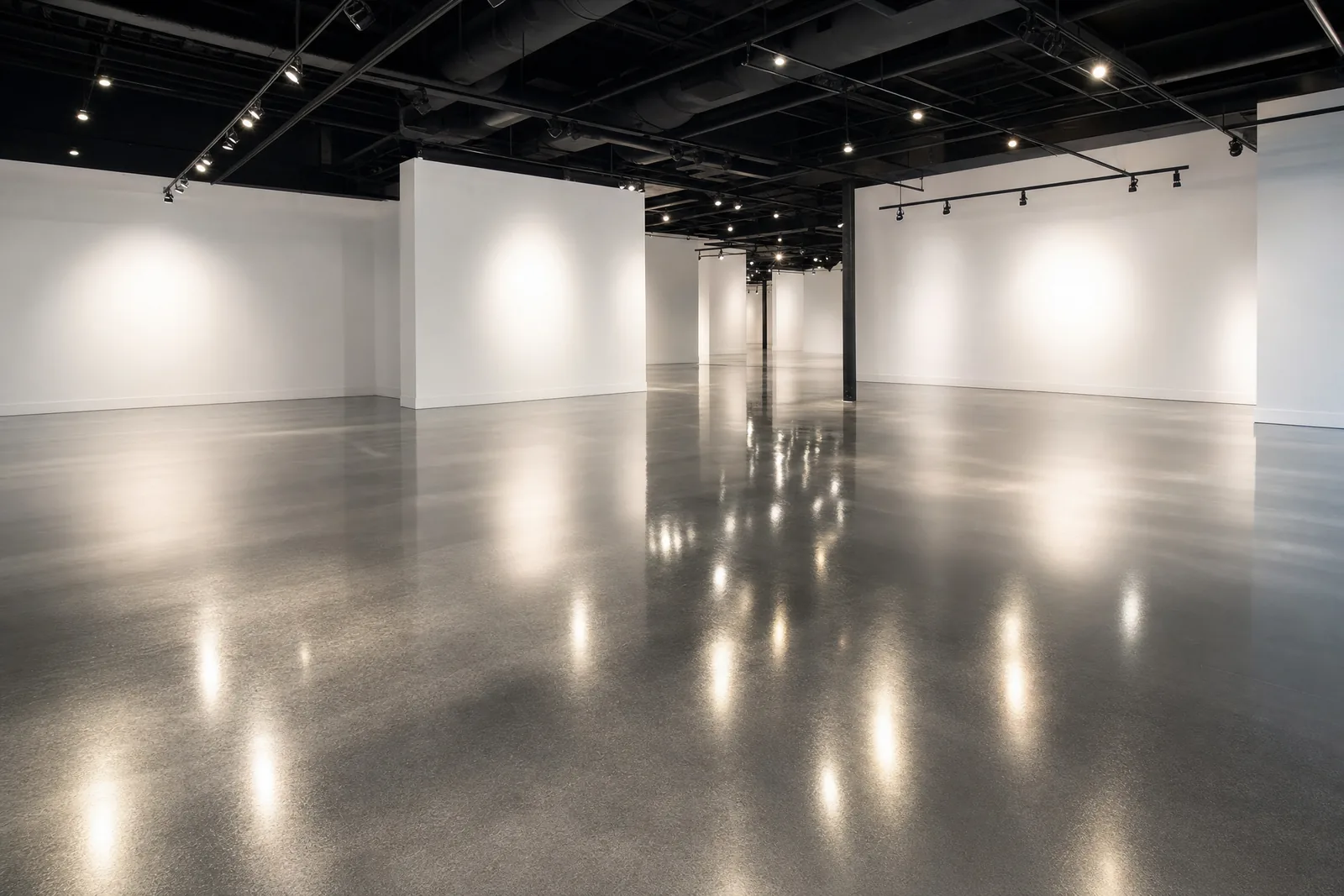
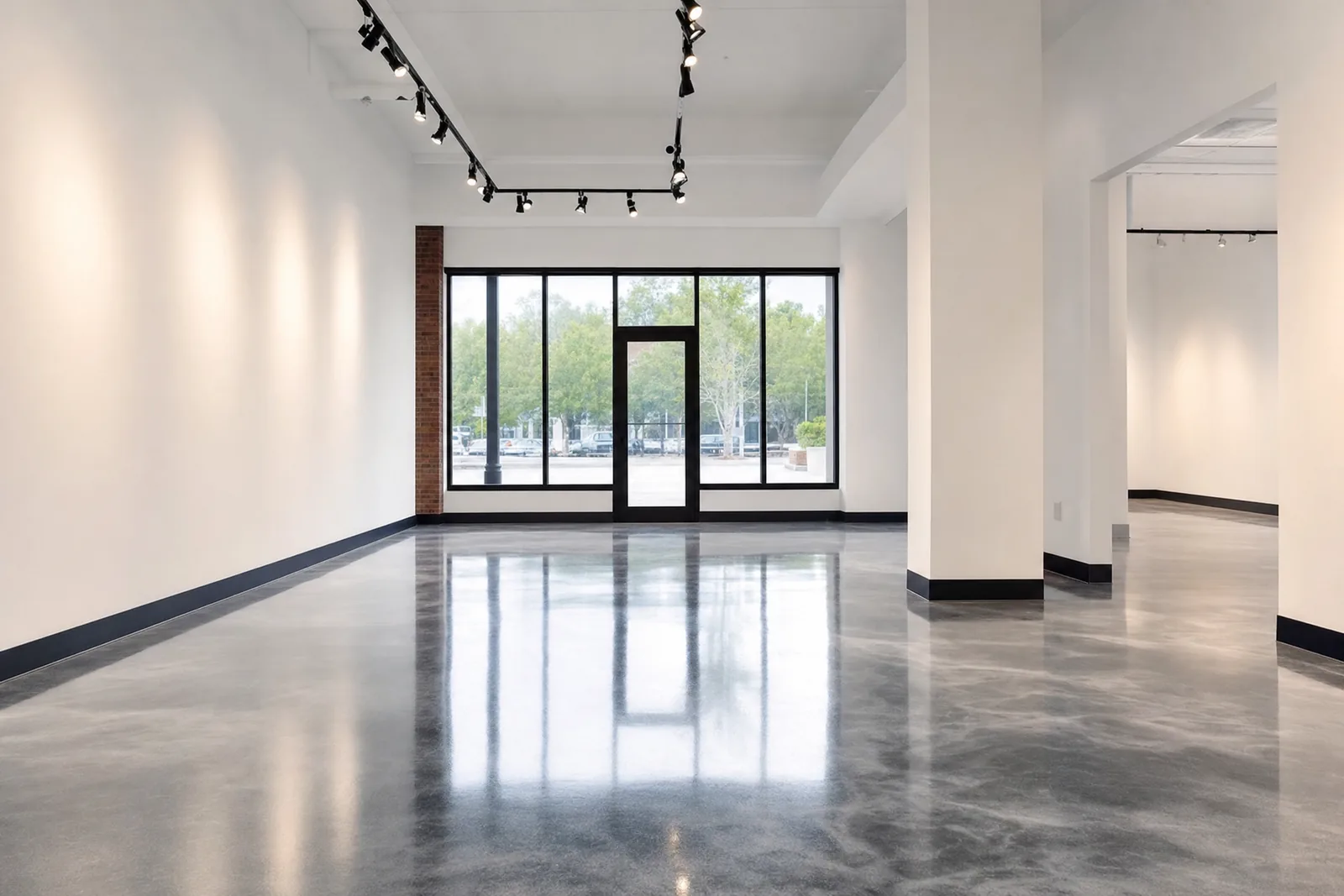
| Showroom | Metallic or high-gloss solid | Appearance under lighting |
| Hangar | Solid, fuel-resistant | Chemical exposure, large area |
| Gym / studio | Flake or solid, higher slip rating | Impact, traction, cleaning |
Downtime and phasing
Large floors get phased so you keep partial use throughout. Polyaspartic's fast cure is a real advantage here — a section can go from grinding to load-bearing in about 24 hours, where an epoxy build would take most of a week. We also work nights and weekends where that's the difference between coating and not coating.
What we need from you
- Access to the whole area, cleared of racking, stock and equipment
- Any specification you're required to meet (health code, slip rating, chemical exposure)
- Realistic detail on what gets spilled on the floor — this changes the topcoat
- Power, or notice that we should bring a generator
Specifying by chemical exposure
The most common commercial specification error is choosing by appearance and discovering the chemical resistance is wrong. Resin systems have genuinely different tolerances, and the substance that matters is usually not the obvious one.
| Exposure | Epoxy | Polyaspartic | Novolac epoxy |
|---|---|---|---|
| Motor oil, grease | Good | Good | Excellent |
| Brake fluid | Fair | Good | Excellent |
| Battery acid | Poor | Fair | Excellent |
| Jet fuel, avgas | Fair | Good | Excellent |
| Food acids, lactic | Fair | Good | Excellent |
| Hot water, steam | Poor | Fair | Good |
Tell us what actually gets spilled and how long it sits before anyone cleans it up. That second part matters more than the first — almost any coating survives a splash that gets wiped in five minutes, and almost none survives the same substance sitting overnight every night.
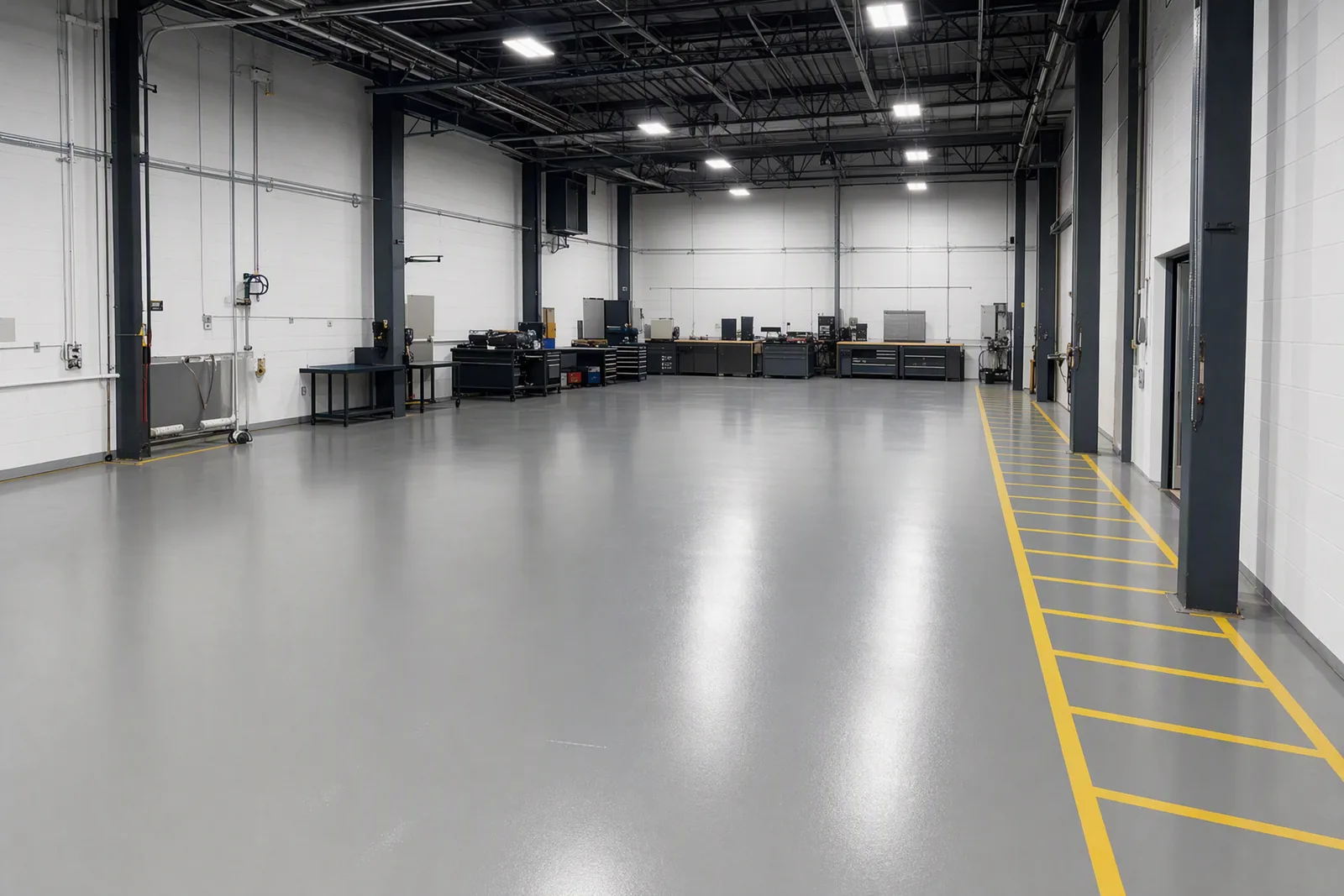
Phasing a large floor
Most commercial spaces cannot close, so large floors get sectioned. The practical constraints:
- Sections need a natural break line — a column line, a joint, a rack aisle — or the transition shows.
- Grinding is the disruptive phase. It is loud and it needs the section fully clear.
- Each section needs its cure window respected before load returns, which is where polyaspartic earns its cost in a commercial setting.
- Adjacent sections should be done consecutively rather than scattered, so you are not working around a patchwork.
A 20,000 square foot warehouse typically runs as four or five phases over two to three weeks, with the client retaining use of roughly eighty percent of the floor throughout.
What to have ready for a commercial quote
- Square footage and a floor plan if you have one
- Age and history of the slab, including any previous coatings
- What drives across it and how heavy
- What gets spilled and how quickly it is cleaned
- Any regulatory standard you must meet
- Hours the space can be unavailable
- Whether you need us named as additional insured
Bringing this to the first conversation shortens the process considerably and produces a quote that will not change later.
Common questions
Can you work outside business hours?
Yes. A large share of our commercial work happens nights and weekends, and it's usually the only way to coat a space that can't close.
It's worth flagging at the quote stage rather than after, because it affects crew scheduling more than it affects price.
How long before forklifts can run on it?
With a polyaspartic build, roughly 24 to 48 hours for light traffic and 72 for full load. Epoxy systems want closer to seven days before heavy point loading.
Rushing this is the most common cause of early failure on commercial floors — a loaded forklift wheel on a coating that hasn't reached full hardness will mark it permanently.
Do you handle safety striping and line marking?
Yes, laid into the coating rather than painted on top, so it wears at the same rate as the floor. We can work to your existing layout or help set one out.
We're not a compliance consultant — if you have a specific regulatory standard to meet, send it to us and we'll build to it.
Ready for a floor that survives a Sierra winter?
Free on-site measure, honest assessment of your slab, and a written quote you can hold us to.