Worn versus failing
The distinction decides the whole job.
| Worn (refresh) | Failing (remove) |
|---|---|
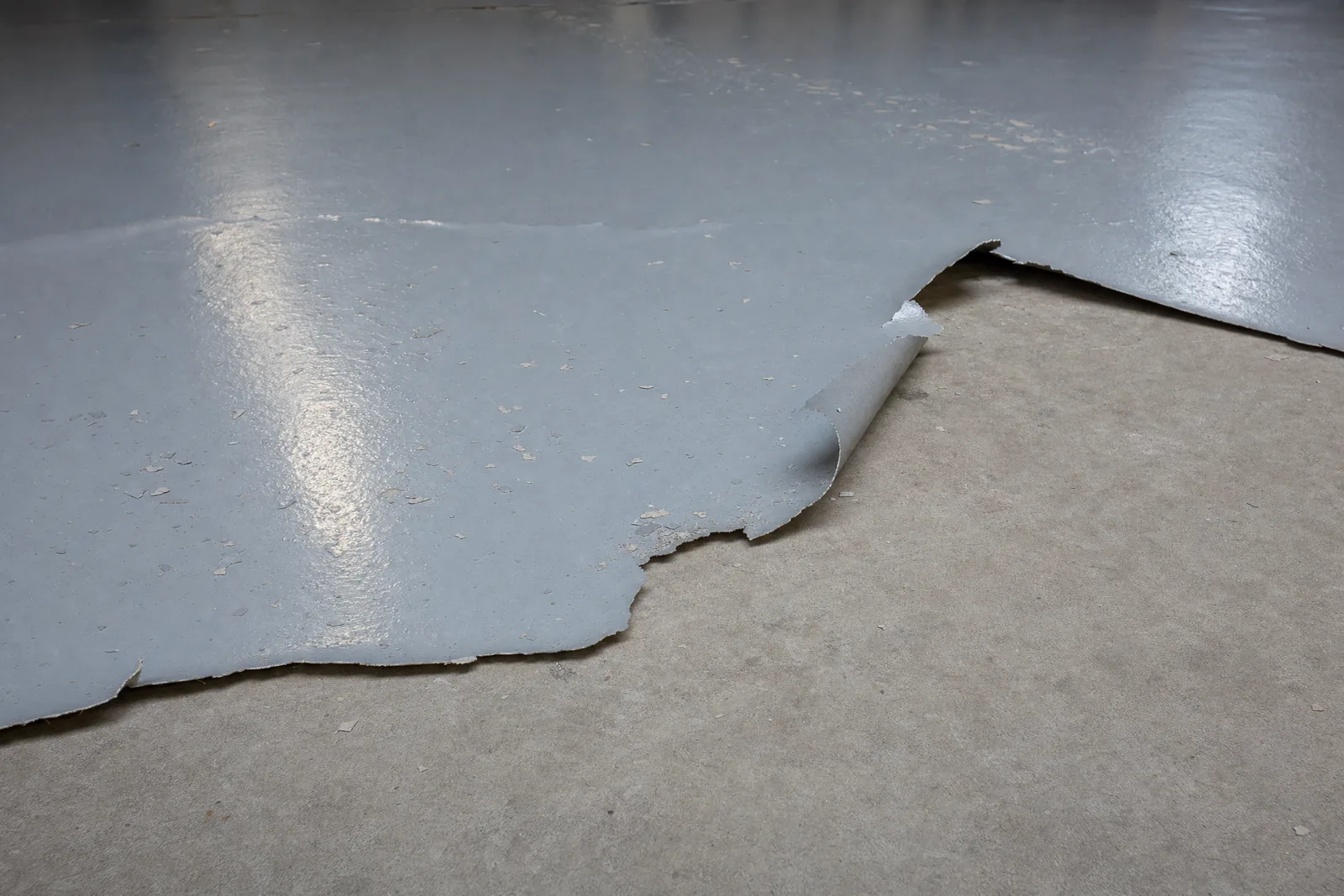
| Dull gloss in traffic paths | Lifting or curling at edges |
| Light scratching | Patches missing where tyres park |
| Some staining | Bubbles or blisters |
| Chips at the threshold | Hollow sound when tapped |
| Colour faded but bonded | Peels further under light pressure |
What a refresh involves
- Adhesion test across the floor to confirm the existing system is sound
- Deep clean and degrease
- Mechanical abrasion — usually a light diamond or screen pass
- Spot repair of chips and worn threshold edges
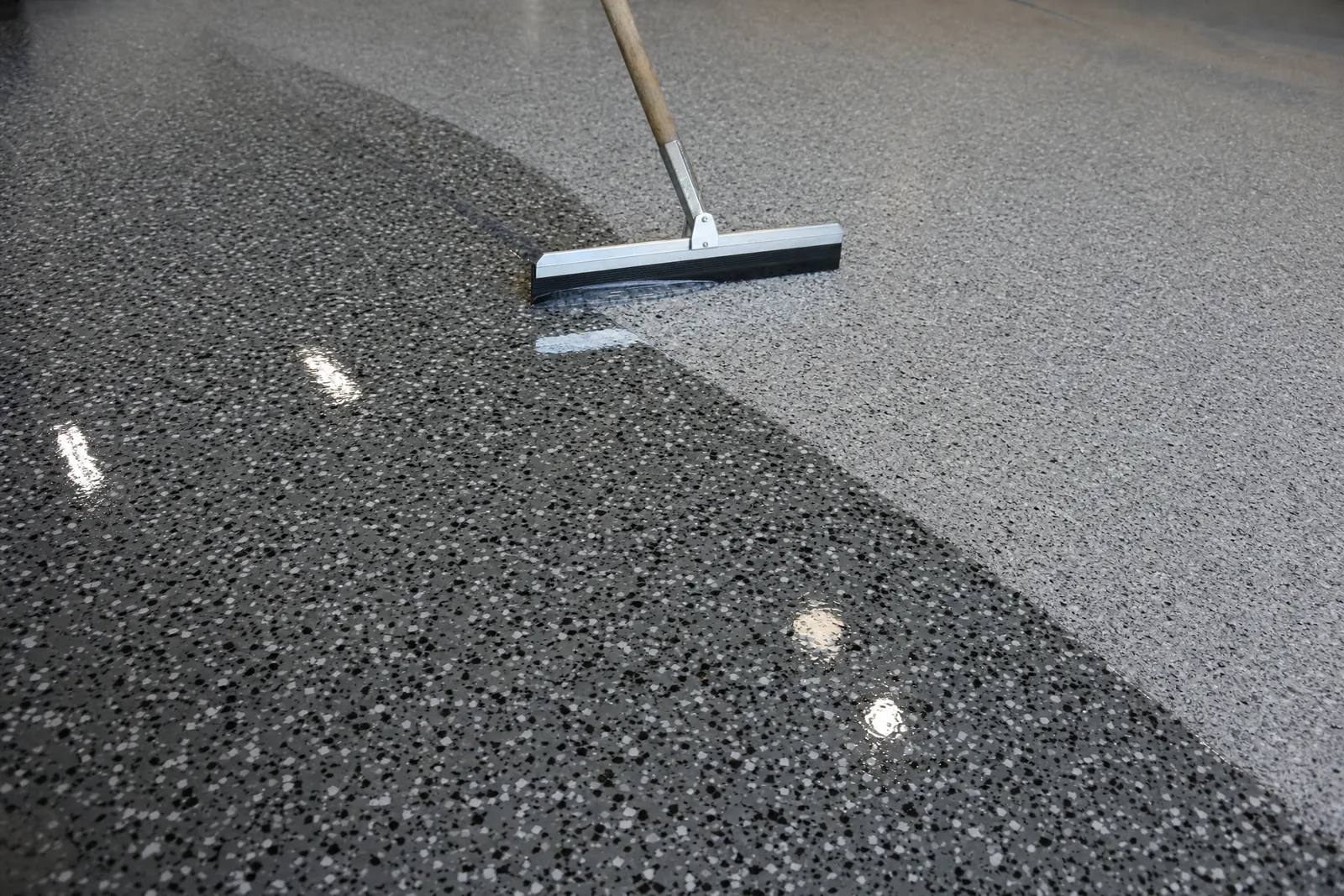
- New polyaspartic topcoat
Typically 40–60% of the cost of a new install, and often a single day.
Spot repair
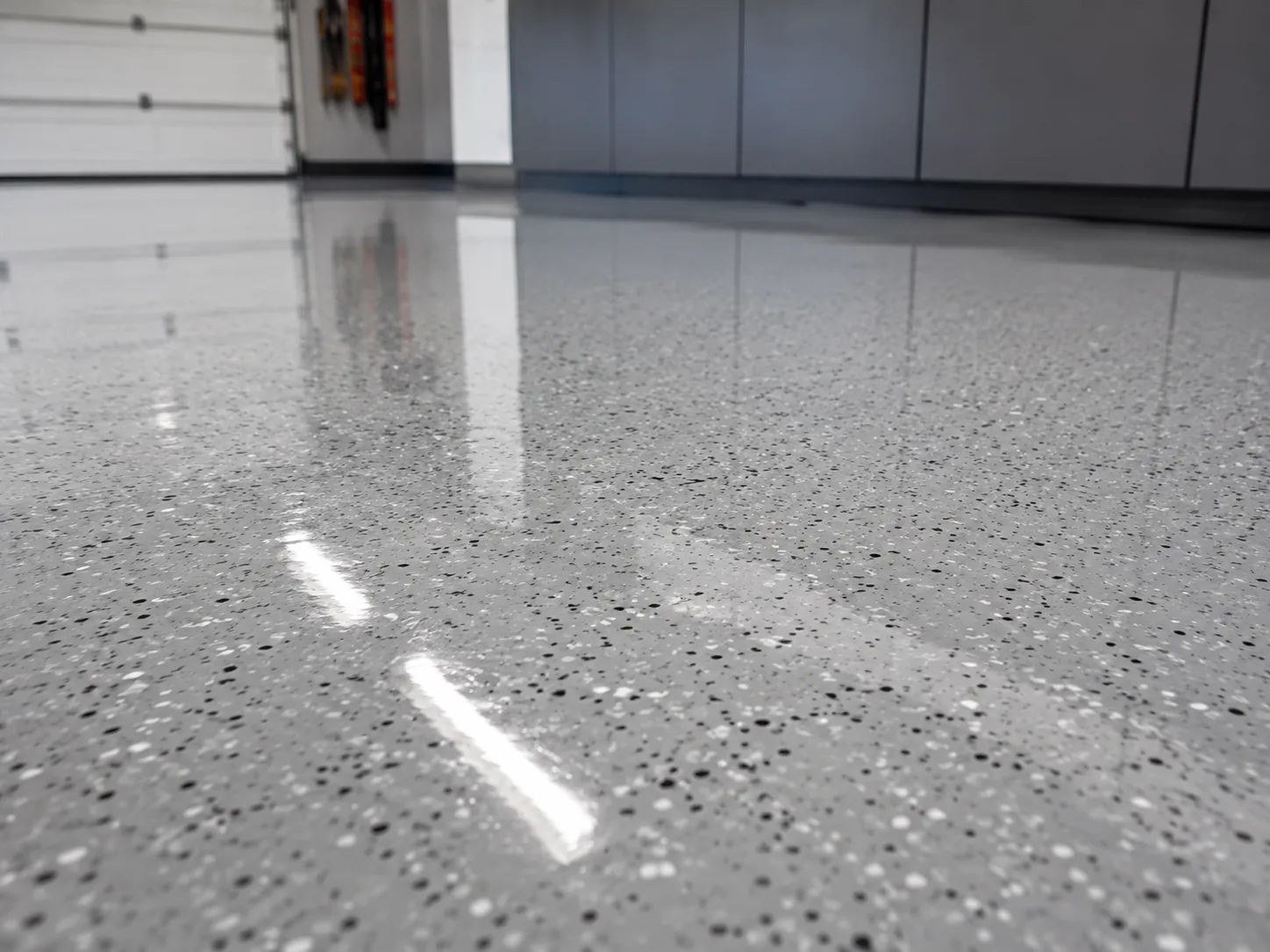
Isolated damage on an otherwise good floor can be cut out, re-prepped and patched. Be aware that colour matching an aged floor is imperfect — the surrounding coating has faded and the patch won't have. On a flake floor the chip pattern disguises this well. On a solid colour it's visible.
Testing adhesion before committing
Whether a floor can be recoated or must be removed comes down to whether the existing system is bonded, and that is testable rather than a matter of opinion.
- Sound the floor. Tap across it with a small hammer or a steel rod. Bonded coating sounds solid; debonded areas sound hollow and distinctly different.
- Cross-hatch and tape. Score a small grid through the coating, apply strong tape, pull sharply. Coating lifting out of the squares means poor bond.
- Pull test. For commercial work, a dolly is bonded to the surface and pulled with a calibrated gauge, giving an actual figure in psi. Over 200 psi is generally sound.
- Edge probe. At any lifted edge, press with a screwdriver. If it propagates easily, the failure is spreading.
We do the first two at every assessment. The results decide the quote, and we will show you.
What a topcoat refresh includes
| Step | Purpose |
|---|---|
| Deep clean and degrease | Contamination prevents the new topcoat bonding |
| Adhesion testing | Confirms the underlying system will hold |
| Mechanical abrasion | Light diamond or screen pass to profile the existing surface |
| Spot repair | Chips, worn threshold edges, minor damage |
| Vacuum and tack | Removes abrasion residue |
| New polyaspartic topcoat | Restores gloss, abrasion and UV resistance |
Typically one day and 40–60% of the cost of a new install. It is the best value in this trade and the most under-used option, mostly because people wait until a floor is failing rather than refreshing while it is merely tired.
When to refresh rather than wait
The right moment is when gloss has visibly dulled in traffic paths but before the colour coat is exposed. At that point you are replacing a sacrificial layer, which is what it is designed to be.
Wait until the flake or colour coat is wearing through and the job changes character entirely — now you are patching into a worn system with visible colour mismatch, or removing and starting again. For a residential garage, look at it around year ten.
Colour matching realities
Worth setting expectations. A topcoat refresh does not change colour at all, so there is no matching problem — if anything the floor looks better, because gloss returns and the colour reads richer.
Spot repairs are different. The surrounding floor has aged; a patch has not. On a flake floor the chip pattern disguises this well enough that most people cannot find the repair after a few months. On a solid colour floor it will be visible, and anyone telling you otherwise is overselling.
Common questions
How often should a garage floor be recoated?
A residential garage with a polyaspartic topcoat typically wants a refresh at 10 to 15 years. A commercial floor with forklift traffic might want one at 5 to 8.
The signal is gloss loss in traffic paths before you see actual wear-through. Recoating at that point is cheap; waiting until the colour coat is exposed is not.
Can you match my existing colour?
For a topcoat refresh, yes — we're applying clear over your existing colour, so it stays as it is (and usually looks better, since gloss returns).
For a patch, matching is approximate. Flake blends can be matched closely enough that the chip pattern hides the difference. Solid colours are harder because the original has faded.
Ready for a floor that survives a Sierra winter?
Free on-site measure, honest assessment of your slab, and a written quote you can hold us to.