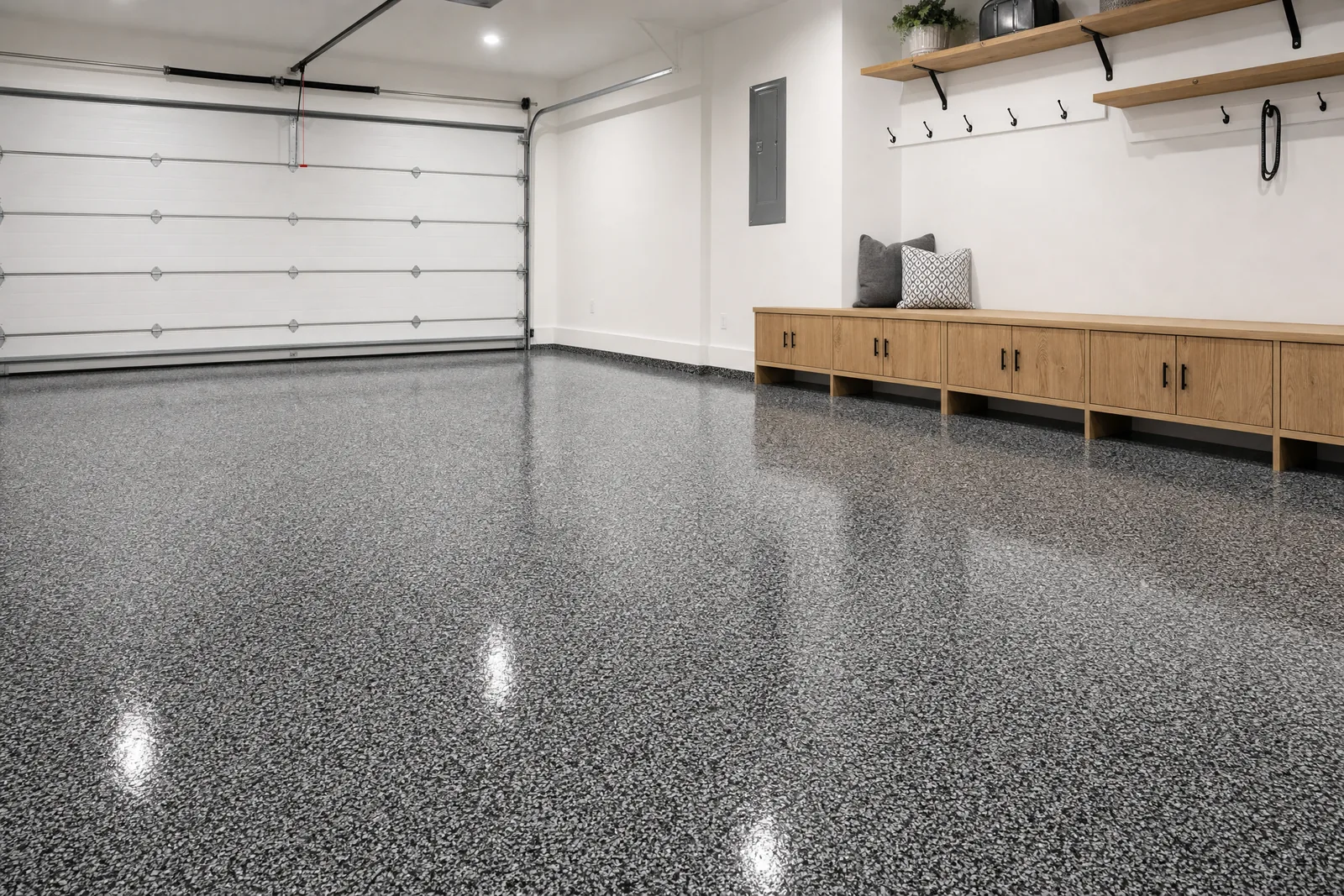
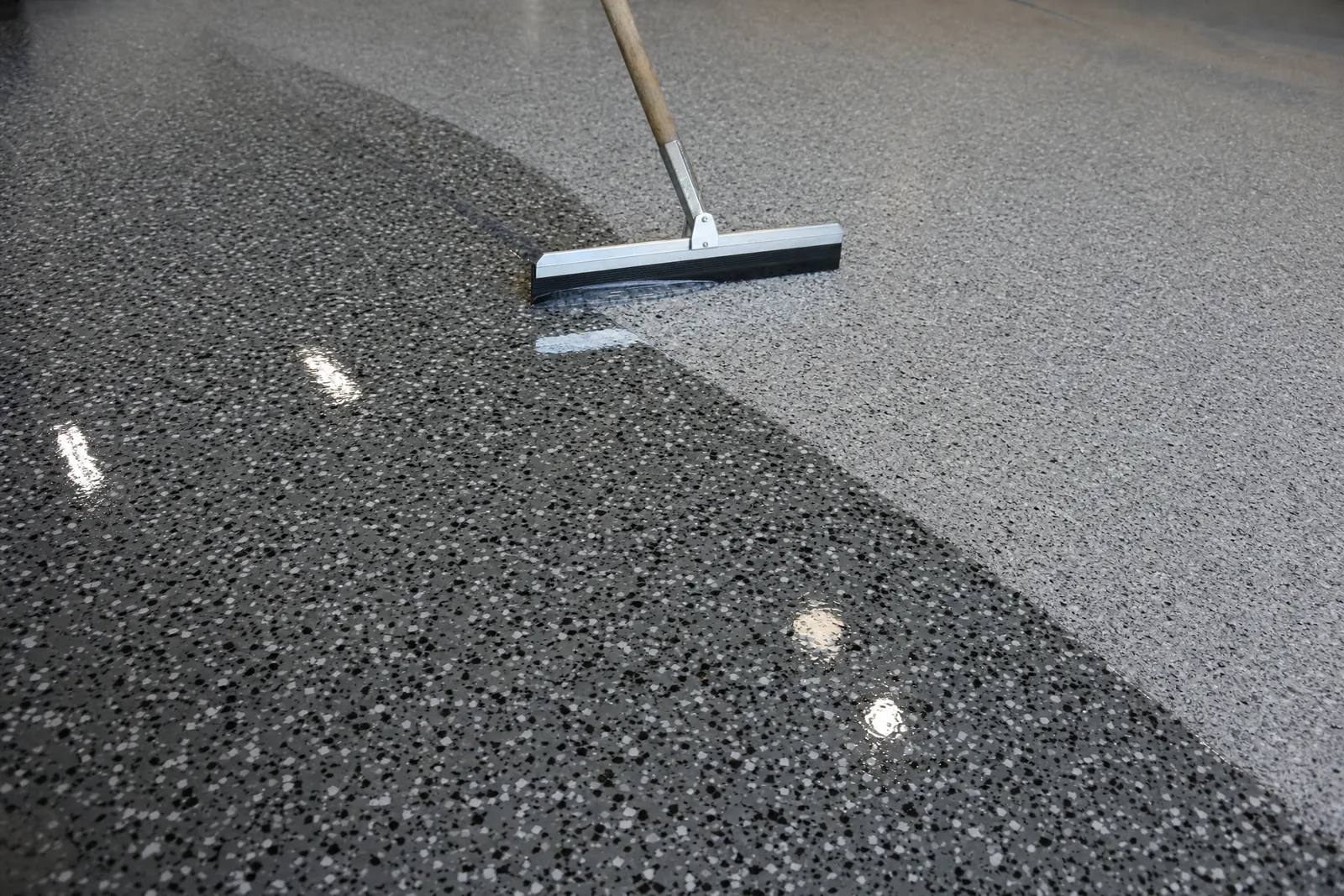
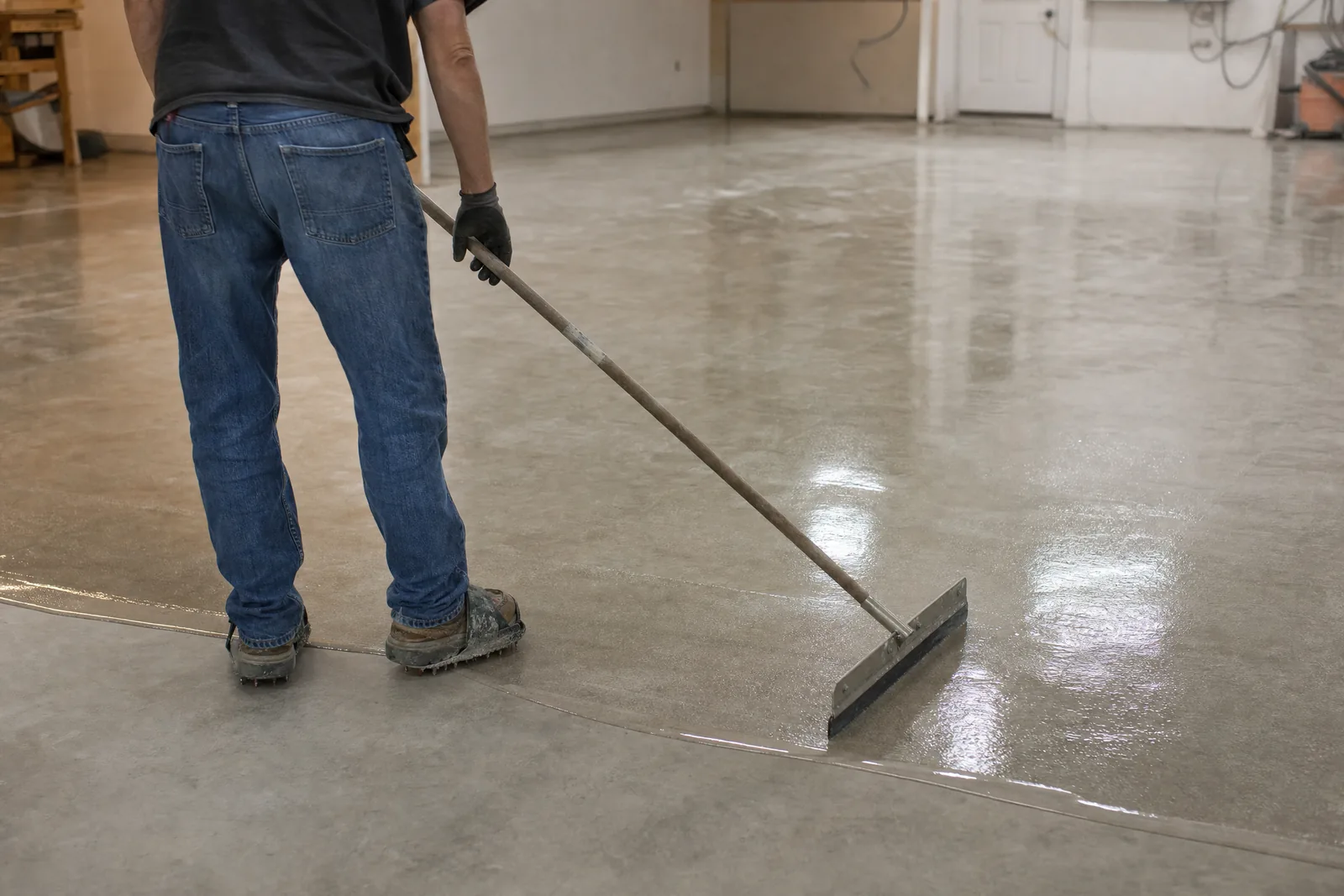
A flake system is a pigmented base coat, a broadcast of vinyl chips thrown into it while wet, and a clear topcoat over the result. The chips are the point. They do four things a solid color can't:
- Hide the slab. Patches, old crack repairs and colour variation disappear under a full broadcast. On a solid field, every one of them shows.
- Add grip. The chip edges create real texture underfoot, meaningfully better than sealed concrete when wet.
- Hide dirt. A blend with grey and black in it looks clean for weeks longer than a light solid.
- Add film build. Chips plus topcoat is a thicker, tougher system than a plain two-coat build.
Partial vs full broadcast
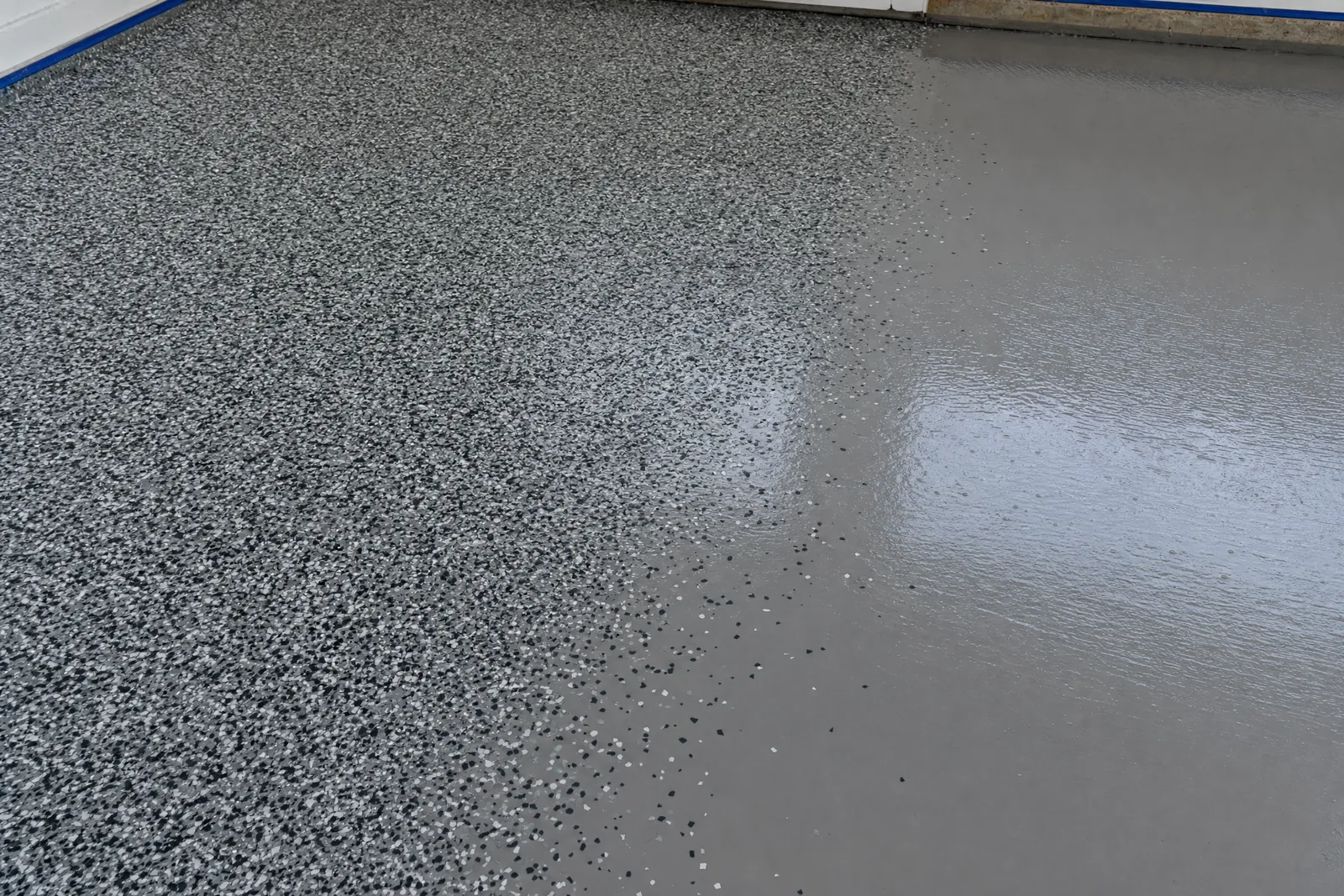
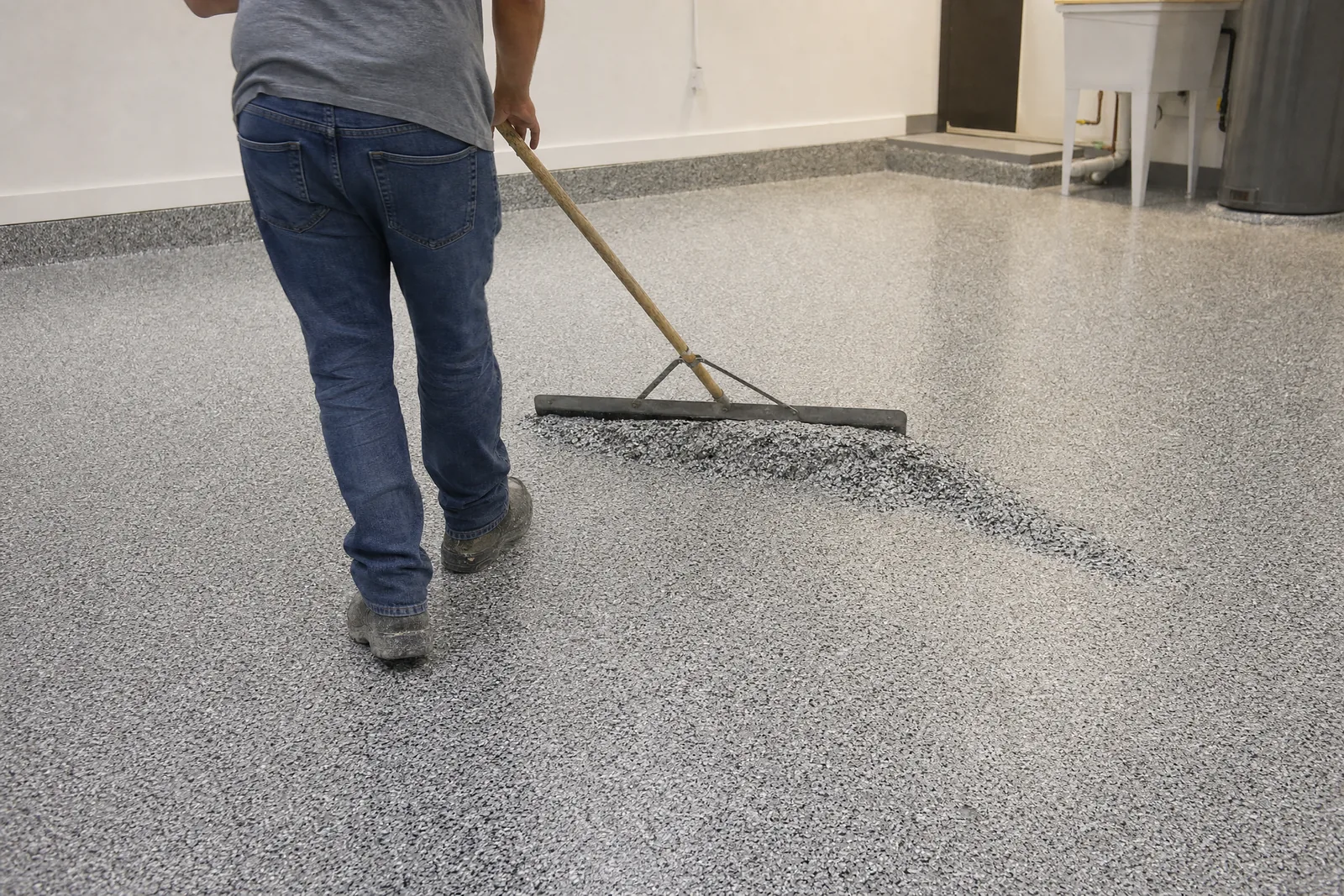
This is where cheap quotes hide. A partial broadcast scatters chips at maybe 30–50% coverage, leaving base color visible between them. It uses a fraction of the flake and looks fine on install day. A full broadcast goes to refusal — you keep throwing until the floor won't take any more — then excess is scraped off and recovered.
Full broadcast costs more in material and labor and is what we quote by default. If you are comparing bids, ask each contractor which one they mean. It is the single biggest hidden variable between two otherwise similar prices.
Chip size
Flake comes in sizes from 1/16" up to 1". Quarter-inch is the residential standard and what we use unless you ask otherwise. Larger chips read as more dramatic and more textured; smaller chips give a finer, more uniform, almost terrazzo-like field. Larger chips also need more topcoat to bury the edges, which is a cost consideration.
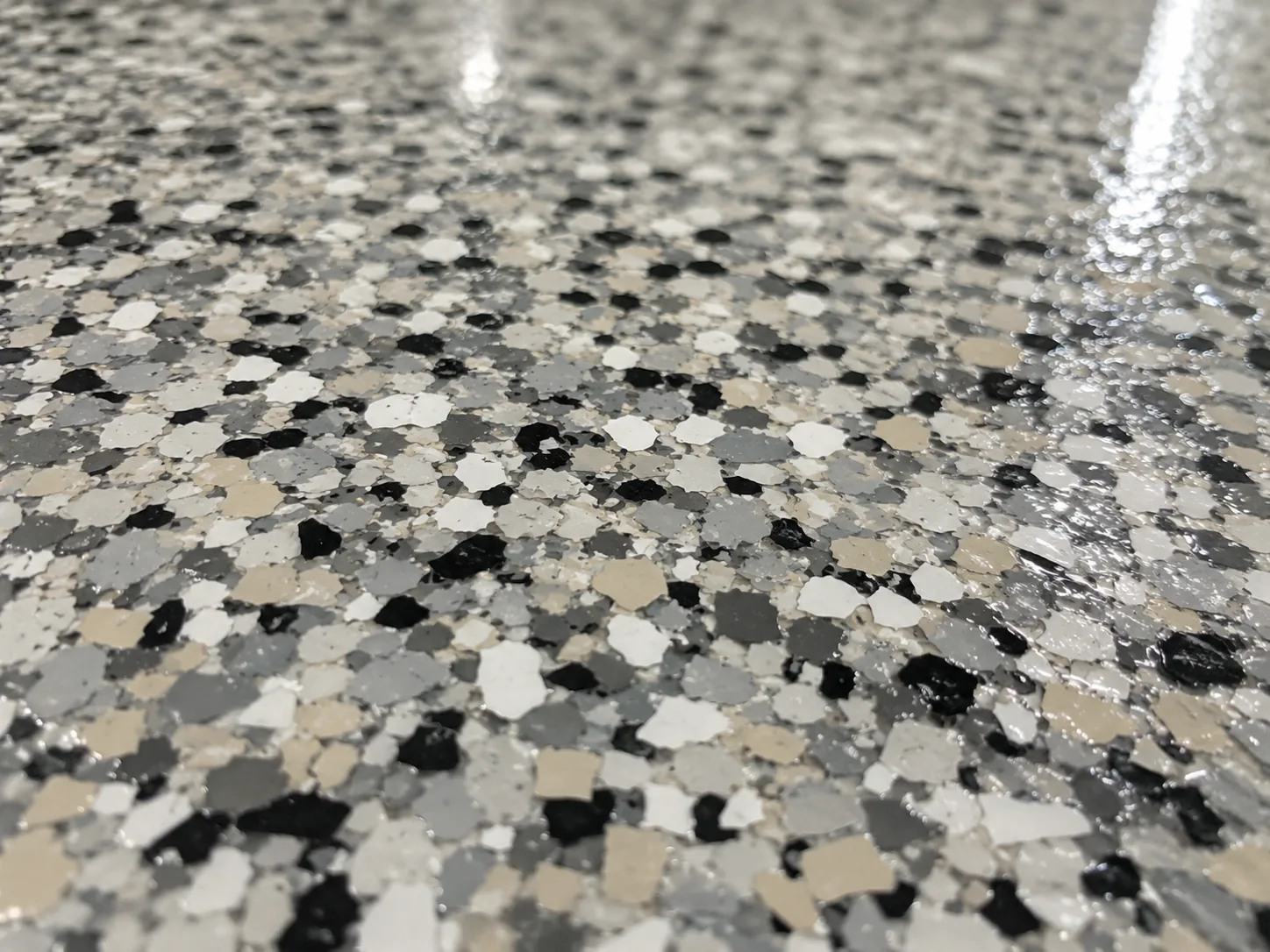
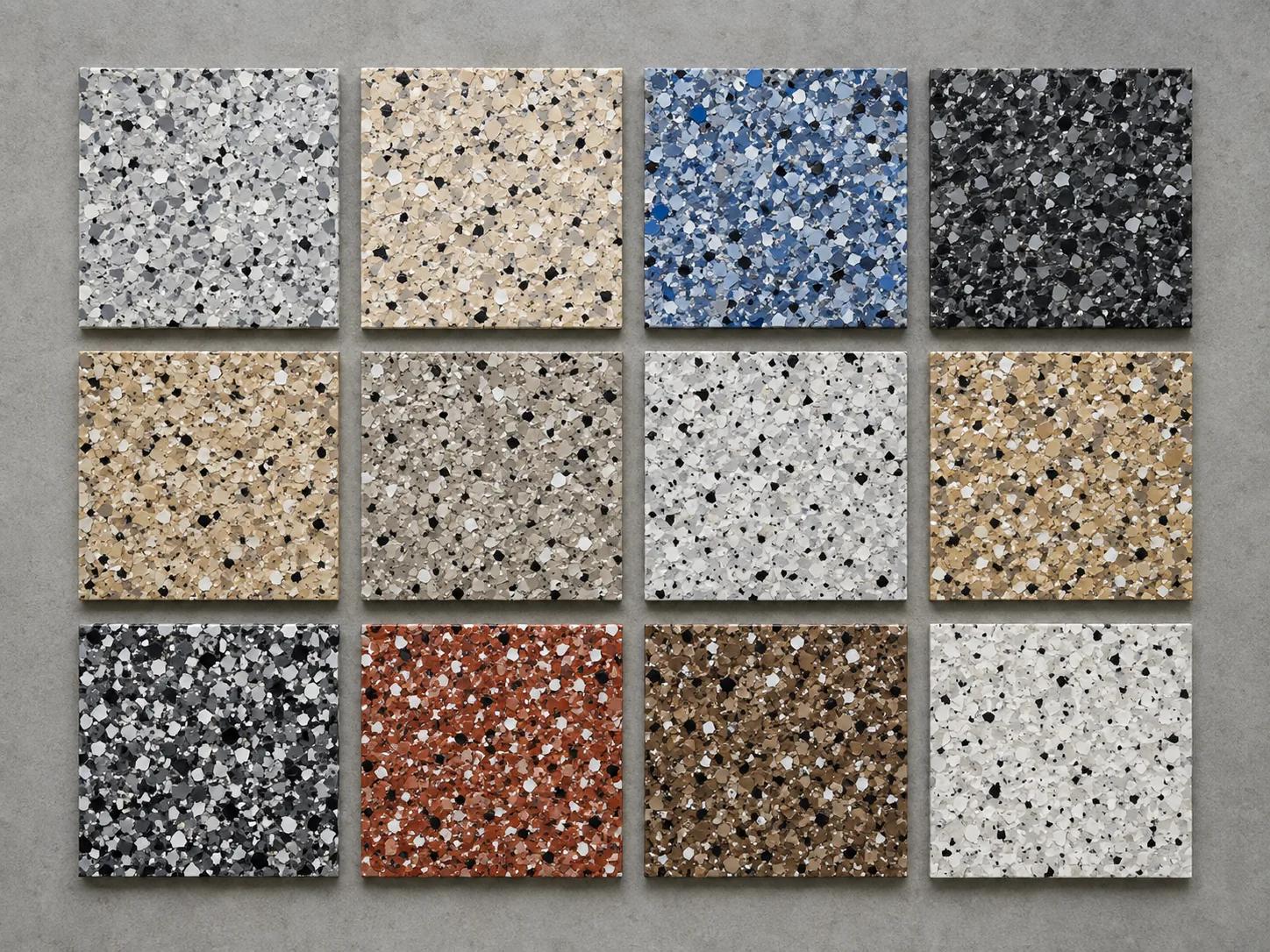
All available blends, photographed on real floors, are on the colours and flake blends page.
How much flake a floor actually takes
This is the number that separates quotes, and it is easy to check. A genuine full broadcast on a 450 square foot two-car garage consumes roughly 45 to 60 pounds of vinyl flake. A partial broadcast uses 15 to 25 pounds. The material cost difference is modest — perhaps $150 — but the labour difference is real, because full broadcast means scraping and vacuuming up the substantial excess afterwards.
You can ask a contractor how many pounds of flake they have allowed for your floor. It is a specific, verifiable question, and the answer tells you immediately which kind of quote you are holding.
Why full broadcast wears better
On a partial broadcast, the exposed base coat between chips is doing the work. Resin is softer than vinyl, so those exposed areas abrade first, and within a few years you get a visibly uneven surface where traffic paths have dulled and the chips stand slightly proud.
On a full broadcast the chips themselves form a continuous wear layer, with topcoat filling between them. Abrasion happens across vinyl rather than resin, and the wear is even. This is also why full broadcast floors hide scratches better — the visual noise of the chip pattern breaks up any single mark.
Chip size and what it does
| Size | Character | Best for |
|---|---|---|
| 1/16" | Fine, almost sand-like; reads as texture rather than pattern | Commercial, subtle looks, smaller spaces |
| 1/8" | Fine terrazzo effect; uniform from a standing height | Basements, gyms, modern interiors |
| 1/4" | The residential standard; clear pattern, good hiding power | Most garages |
| 1/2" | Bold, high contrast, distinctly decorative | Showpiece garages, feature areas |
| 1" | Dramatic; needs heavy topcoat to bury edges | Rare; specific design intent |
Larger chips need more topcoat to bury their edges, which is both a cost and a comfort issue — an under-buried 1" chip floor feels rough underfoot and holds dirt in the relief. If you want large chips, budget for the extra topcoat rather than accepting a thin one.
Blending your own
Standard blends are convenient but not compulsory. Flake is sold by individual colour, and any combination can be mixed to order. If you want your floor to pick up a specific cabinet colour or a wall tone, bring us the sample and we will blend to it.
Two practical constraints. First, a custom blend takes a lead time of about a week. Second, mixing more than four colours generally produces mud at a distance — the eye averages them into a single muddy tone. Three colours with one clear dominant is the reliable formula.
Common questions
How do I choose a flake blend?
Two practical filters before aesthetics. First, how much dust do you want to see? Blends with black and mid-grey hide it best; light beiges and whites show it most. Second, what colour are your walls and cabinets — the floor is the largest surface in the room and will dominate.
We bring physical sample boards to the quote. Photos on a screen are never quite right, and the difference matters on a surface this large.
Do the chips come loose over time?
Not on a correctly built floor. The chips are locked in by the base coat below and the clear topcoat above — they're encapsulated, not glued on the surface.
Loose chips mean either the topcoat was applied too thin to bury the edges, or the broadcast happened after the base coat had already started to set.
Is a flake floor harder to clean?
Slightly, versus a mirror-smooth solid floor — there's more surface texture for grit to sit in. In practice a dust mop and an occasional wet mop handles it, and the texture is the same thing giving you slip resistance.
If you want maximum cleanability, a solid or metallic floor is smoother. You trade grip for it.
Ready for a floor that survives a Sierra winter?
Free on-site measure, honest assessment of your slab, and a written quote you can hold us to.