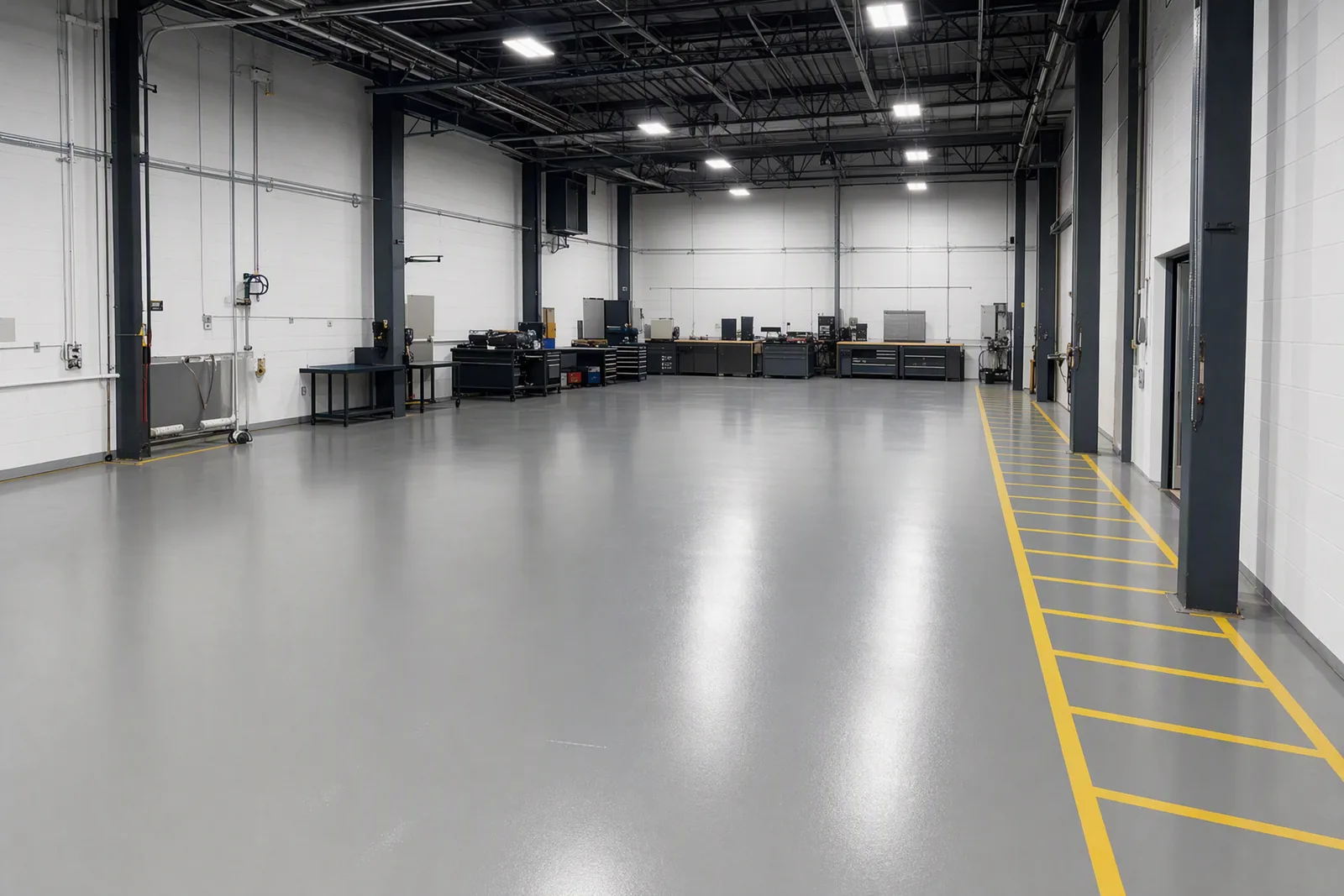
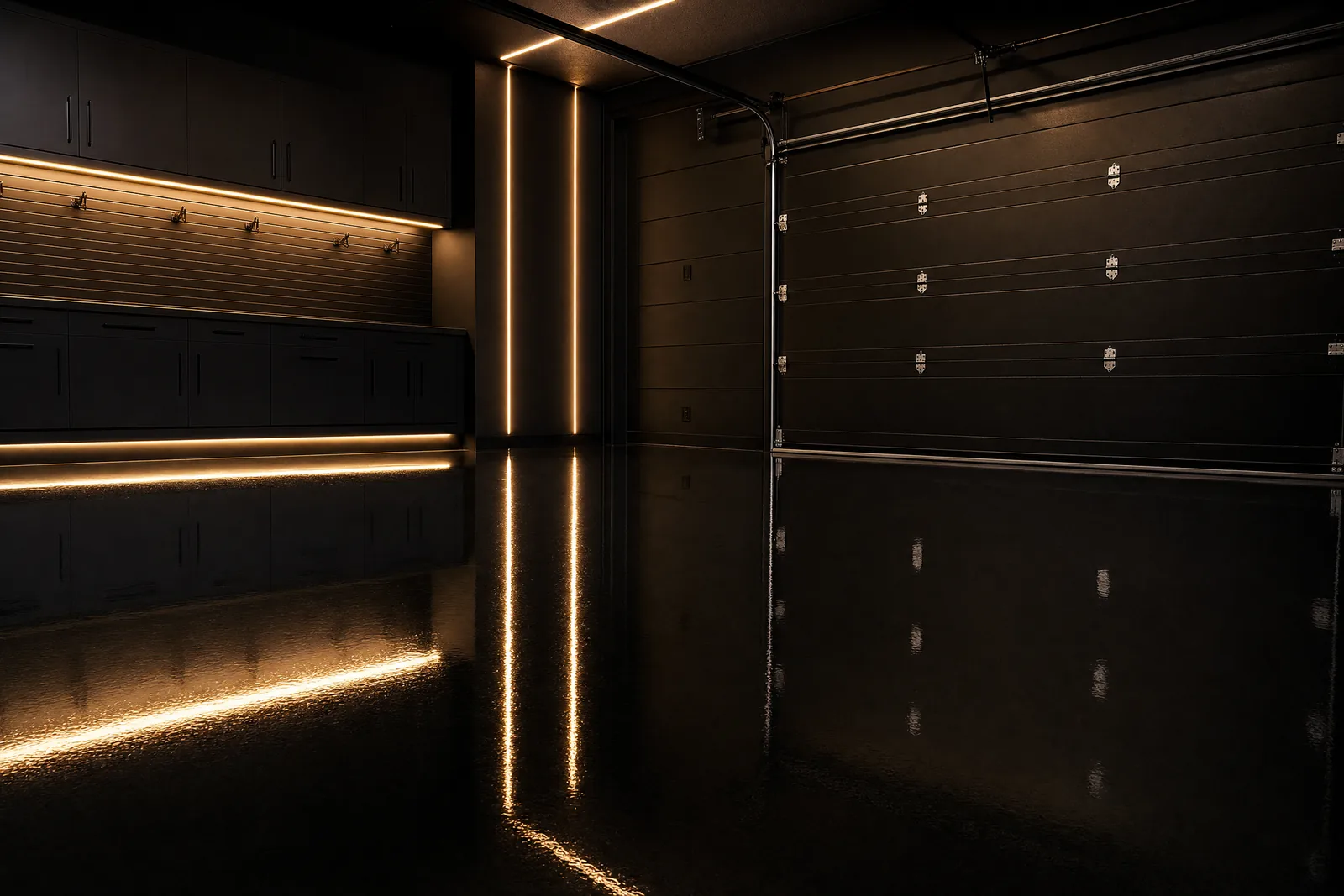
Solid colour is the simplest build: primer, pigmented body coat, clear topcoat. No broadcast. The result is smooth, easy to sweep and mop, and completely uniform.
Why it's mostly a commercial choice
A solid field hides nothing. Every crack repair, every patch, every low spot in the pour and every bit of dust is visible. In a warehouse or service bay, that's acceptable — often desirable, since a clean uniform floor with safety striping is easier to keep to standard and easier to inspect.
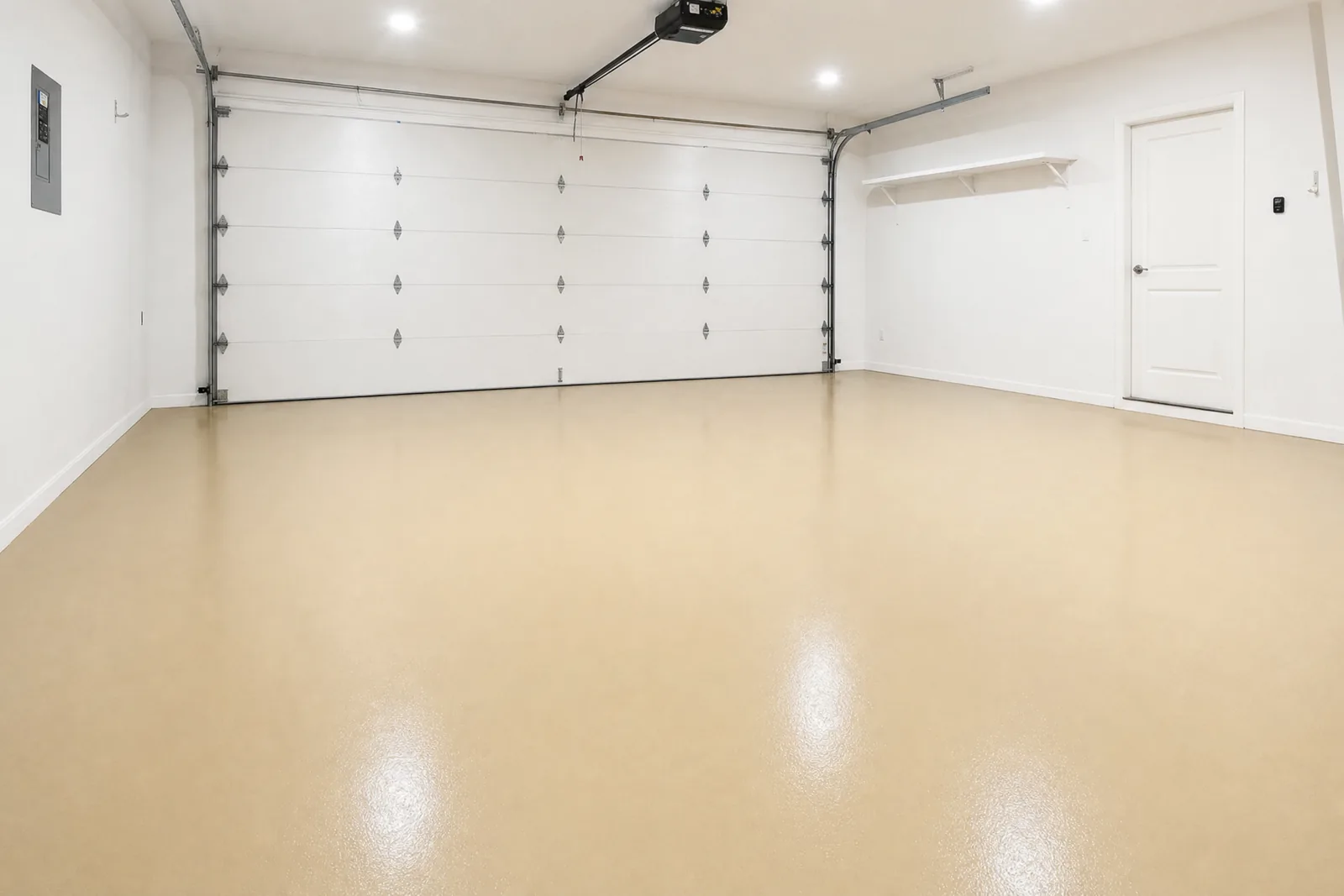
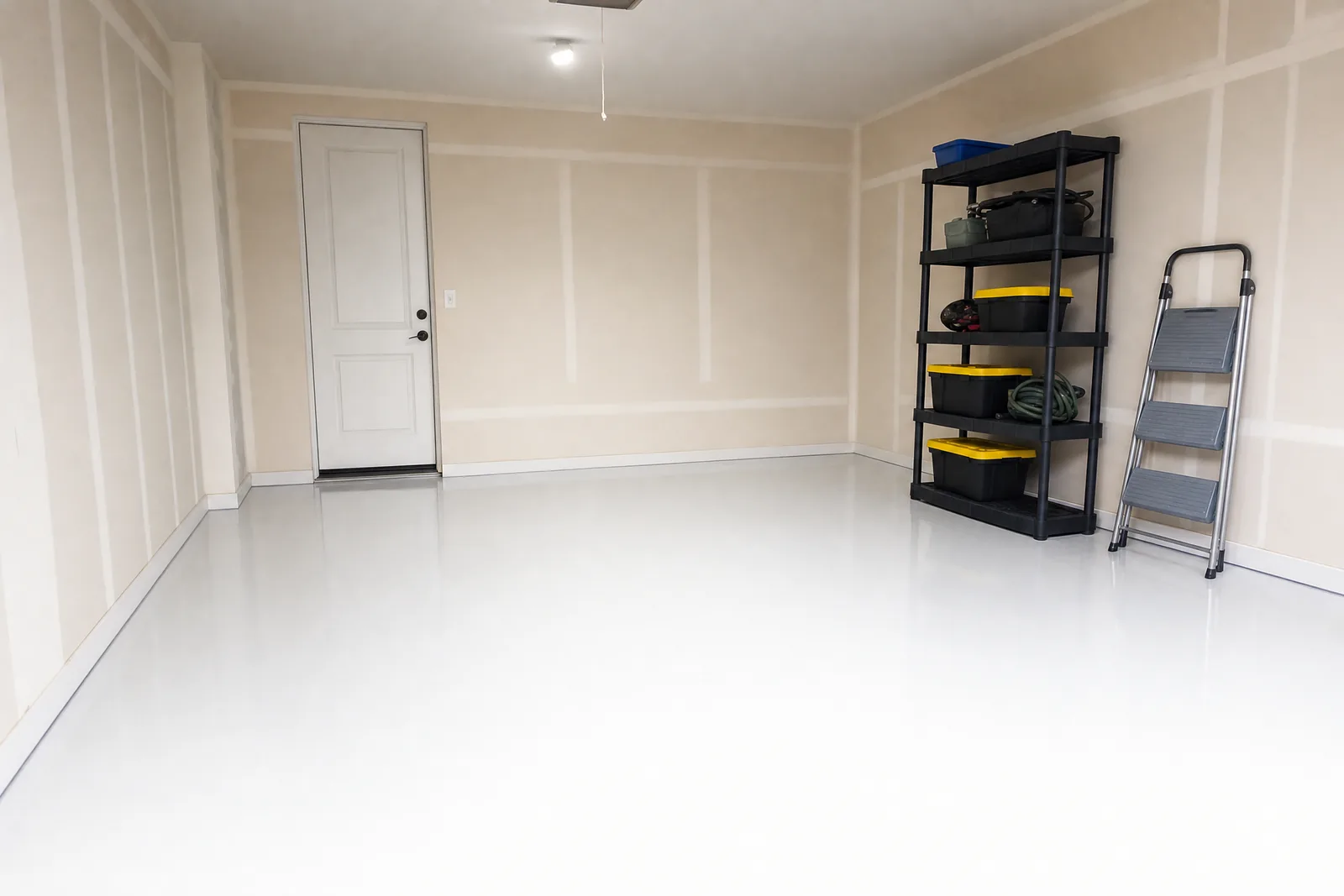
In a home garage, most people are happier with flake, which forgives the slab and hides day-to-day dust. We'll quote solid if you want it, but we'll say this at the measure.
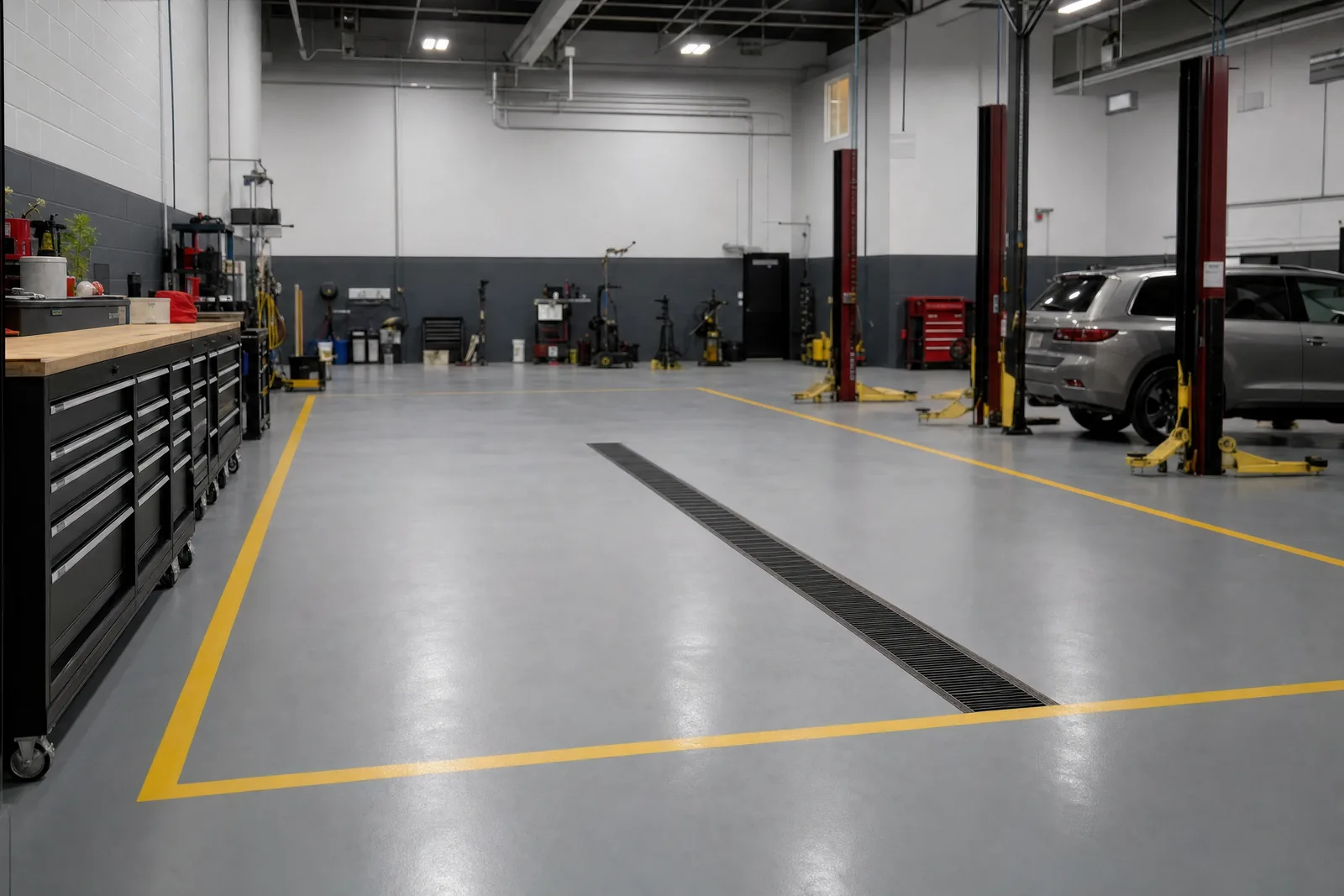
Safety striping and zone marking
Solid systems take crisp line work well: walkway boundaries, equipment footprints, keep-clear zones, bay numbering. We lay these into the coating rather than painting them on top, so they wear at the same rate as the floor instead of scuffing off within a year.
Why a solid floor shows everything
A uniform colour field gives the eye a reference. Any deviation — a slightly different sheen over a patch, a low spot holding a fractionally thicker film, a repair with different absorption — reads as a visible mark because there is nothing else competing for attention.
On a flake floor, the chip pattern is visual noise that swallows all of this. That is the single practical reason we steer damaged residential slabs toward flake and reserve solid colour for floors that are either in good condition or where uniformity is the actual goal.
Building for forklift traffic
Warehouse floors fail differently from garage floors. The load is concentrated, repeated, and frequently accompanied by turning — a loaded forklift pivoting in place puts enormous shear stress on a small area. Three things address it:
- Film build. 40 mils or more, typically a high-build epoxy body coat with multiple topcoats.
- Full cure before loading. Seven days for epoxy systems under heavy point loads. Rushing this is the most common cause of early commercial failure we see.
- Joint treatment. Wheel impact at joint edges is where warehouse floors chip first. Joints in traffic paths need armoured or semi-rigid filling rather than a soft sealant.
Line marking that lasts
Painted lines on top of a finished floor scuff off within a year under traffic. Lines laid into the system — applied between the body coat and the topcoat, so the clear seals over them — wear at the same rate as the surrounding floor.
The work is slower because every line is masked, applied and demasked before the topcoat goes down, and it means the layout has to be decided before install rather than after. It is worth planning for. Retrofitting properly sealed lines means recoating the whole floor.
Colour and light in a windowless space
Most warehouses and shops have no natural light, and floor colour has a measurable effect on how much artificial light you need. A light grey floor reflects meaningfully more than a dark one, and in a large space that difference shows up on the power bill as well as in how the room feels. The trade is visible dust. In most working spaces, going one shade lighter than instinct suggests is the right call.
Common questions
What colour holds up best?
Mid greys are the practical default — dark enough to hide tyre marks, light enough to keep the space bright. Very dark colours show dust badly; very light ones show everything else.
If the space has no natural light, going lighter buys you real usable brightness, and it's worth accepting a bit more visible dust for it.
Can you add slip resistance to a solid floor?
Yes. We broadcast a fine polymer or aluminium oxide grit into the topcoat. It knocks back the gloss slightly and is the standard approach for ramps, entries and any wet area on an otherwise smooth floor.
Ready for a floor that survives a Sierra winter?
Free on-site measure, honest assessment of your slab, and a written quote you can hold us to.