Driveway coatings are a smaller part of what we do than garages, and we're straightforward about why: the failure risk is higher. A driveway sees direct UV all day, surface temperatures that swing enormously between afternoon and night, hot tyres parked directly on it, and in some cases tree root movement underneath. Not every driveway is a good candidate.
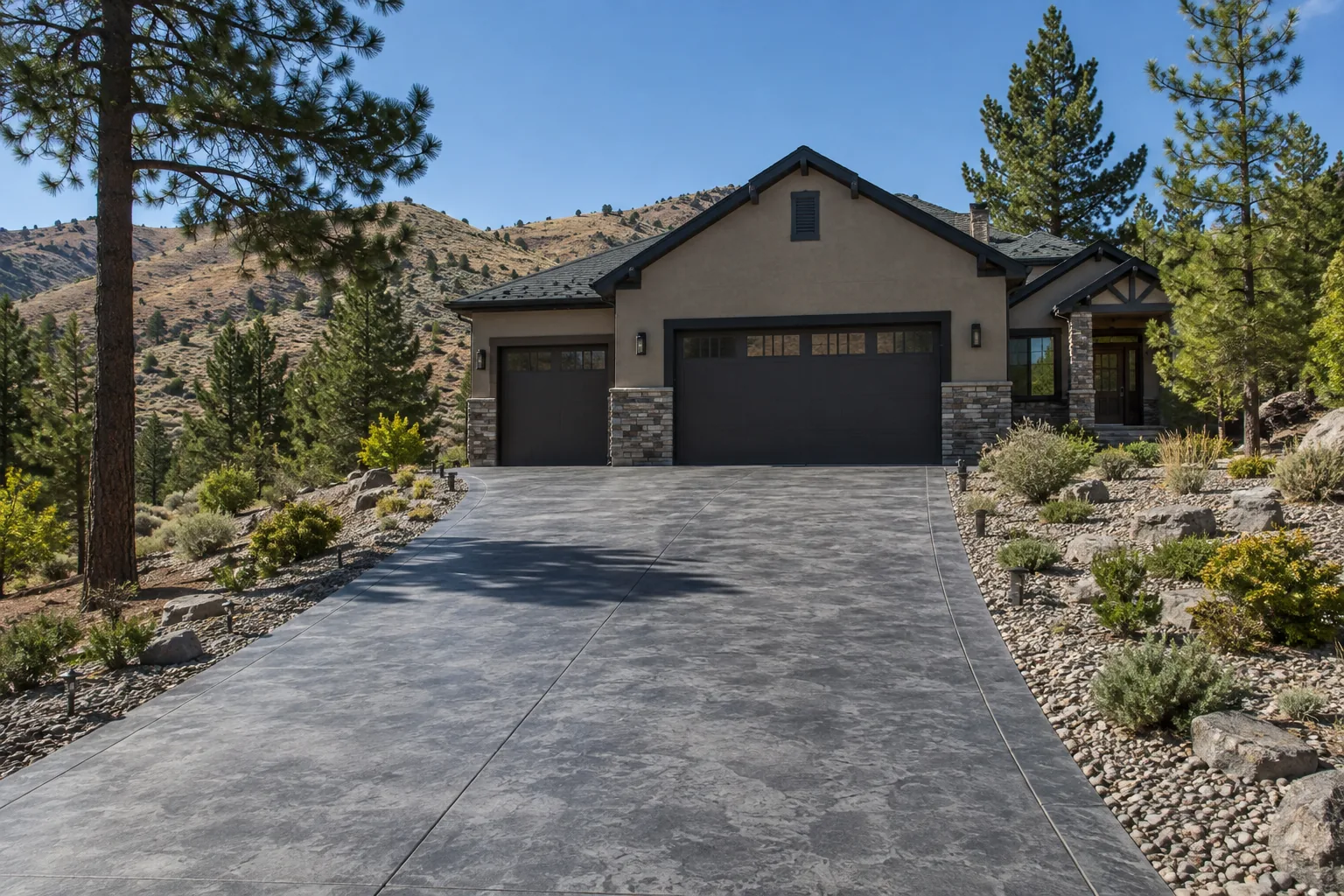
When it works well
- Sound, relatively young concrete with no active cracking
- Adequate drainage — water shouldn't pond anywhere
- An owner who wants decorative concrete rather than a plain slab
- Realistic expectations about maintenance and recoat intervals
When we'd say no
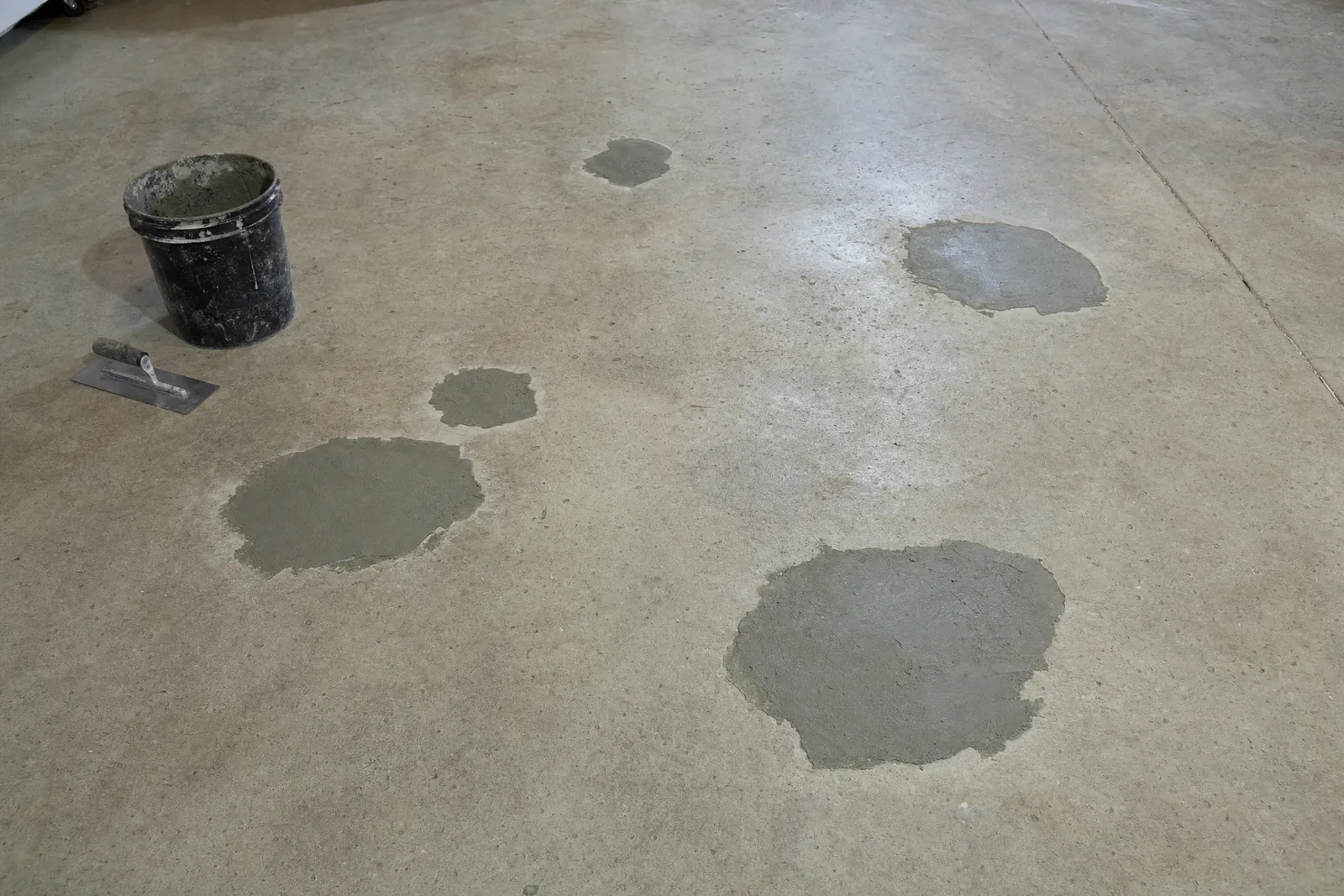
- Active settlement cracking or heaving
- Significant spalling across a large area — replacement is often better value
- A slab that ponds water after rain
Exterior coatings carry shorter warranty terms than interior work everywhere in the industry, ours included. Anyone offering identical terms inside and out is either not reading their own paperwork or not planning to honour it.
Why exterior work carries more risk
We are more cautious about driveways than any other surface we coat, and it is worth explaining why rather than just quoting higher.
- Direct freeze-thaw. No roof, no shelter. Eighty to a hundred cycles a winter working at the surface of the concrete.
- Plough brine and street runoff. A driveway takes not just what you track in but whatever the plough throws at the apron.
- Frost heave. Ground that freezes and lifts under an exterior slab moves it, and that movement is more pronounced outdoors than under a sheltered garage floor.
- Full UV, all day. Requires an aliphatic topcoat without exception.
- Water with nowhere to go. Ponding concentrates every one of the above at the low point.
None of this makes a driveway coating a bad idea. It makes candidate selection matter far more than it does indoors.
What we assess before quoting a driveway
- Crack survey. Any crack with vertical displacement or progressive widening is disqualifying until the cause is addressed.
- Drainage. We look at it after rain if we can, or run a hose. Ponding is a problem.
- Surface soundness. Widespread spalling means the top of the slab has failed, and coating over failed concrete relocates the problem rather than solving it.
- Slab thickness and reinforcement. Where we can determine it. A thin unreinforced driveway will keep cracking regardless of what goes on top.
- Trees and fill. Mature pines are common on older Reno lots, and root proximity combined with poorly compacted fill is the most frequent cause of driveway movement here.
Realistic expectations
An exterior coating on a sound slab with an aliphatic topcoat should give you six to ten years in this climate before it wants a recoat. That is genuinely shorter than an interior garage floor — Nevada freeze-thaw is unforgiving — and any contractor quoting the same life indoors and out is either inexperienced or optimistic.
The recoat itself is straightforward — clean, light abrade, new topcoat — and costs a fraction of the original. Planning for it as scheduled maintenance rather than treating it as failure is the right frame.
Alternatives worth considering
If your driveway is in poor condition, a coating may not be the best value. Two alternatives we will happily point you toward even though we do not do them: a polymer overlay or micro-topping adds genuine thickness and can correct minor surface deficiency, and replacement, while expensive, resets the clock entirely on a slab that is at the end of its life. We would rather say that than coat something that will disappoint you.
Common questions
How long does a driveway coating last here?
With an aliphatic topcoat and sound concrete underneath, roughly 7 to 12 years before it wants a recoat — and a recoat is a clean and topcoat, not a teardown.
That's genuinely shorter than an interior garage floor, and it's the honest number. UV and thermal cycling are relentless on an exterior slab in this area.
Can you coat over a stamped driveway?
Usually yes, if the stamped surface is sound and the pattern hasn't delaminated. We clean, profile and coat, and the texture carries through.
Where the colour hardener has worn off in traffic paths — which is very common on older stamped work — a coating is often the most economical way to bring it back.
Ready for a floor that survives a Sierra winter?
Free on-site measure, honest assessment of your slab, and a written quote you can hold us to.