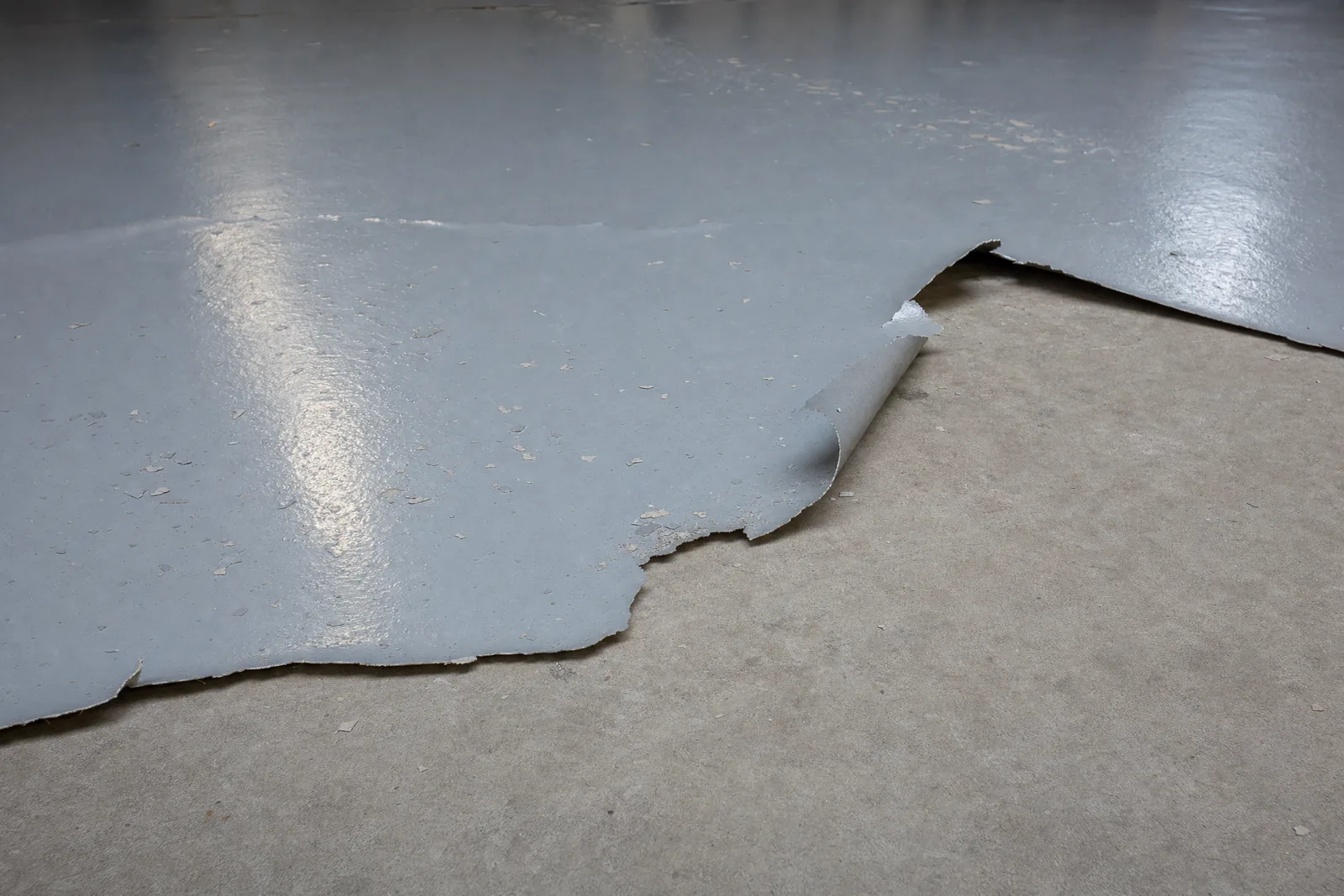
A new coating is only as good as what it is bonded to. If the existing floor is lifting anywhere, coating over it means your new floor is attached to a failing one. It will come off together.
What we assess first
- Adhesion. We score and pull-test in several locations. A coating that lifts cleanly with light pressure was never properly bonded.
- Extent. Isolated failure over a sound floor can sometimes be spot repaired. Widespread failure means full removal.
- Why it failed. This matters more than the removal itself. Moisture blistering, hot tire pickup and simple prep failure look different and lead to different fixes.
Removal methods
| Method | Used for | Notes |
|---|---|---|
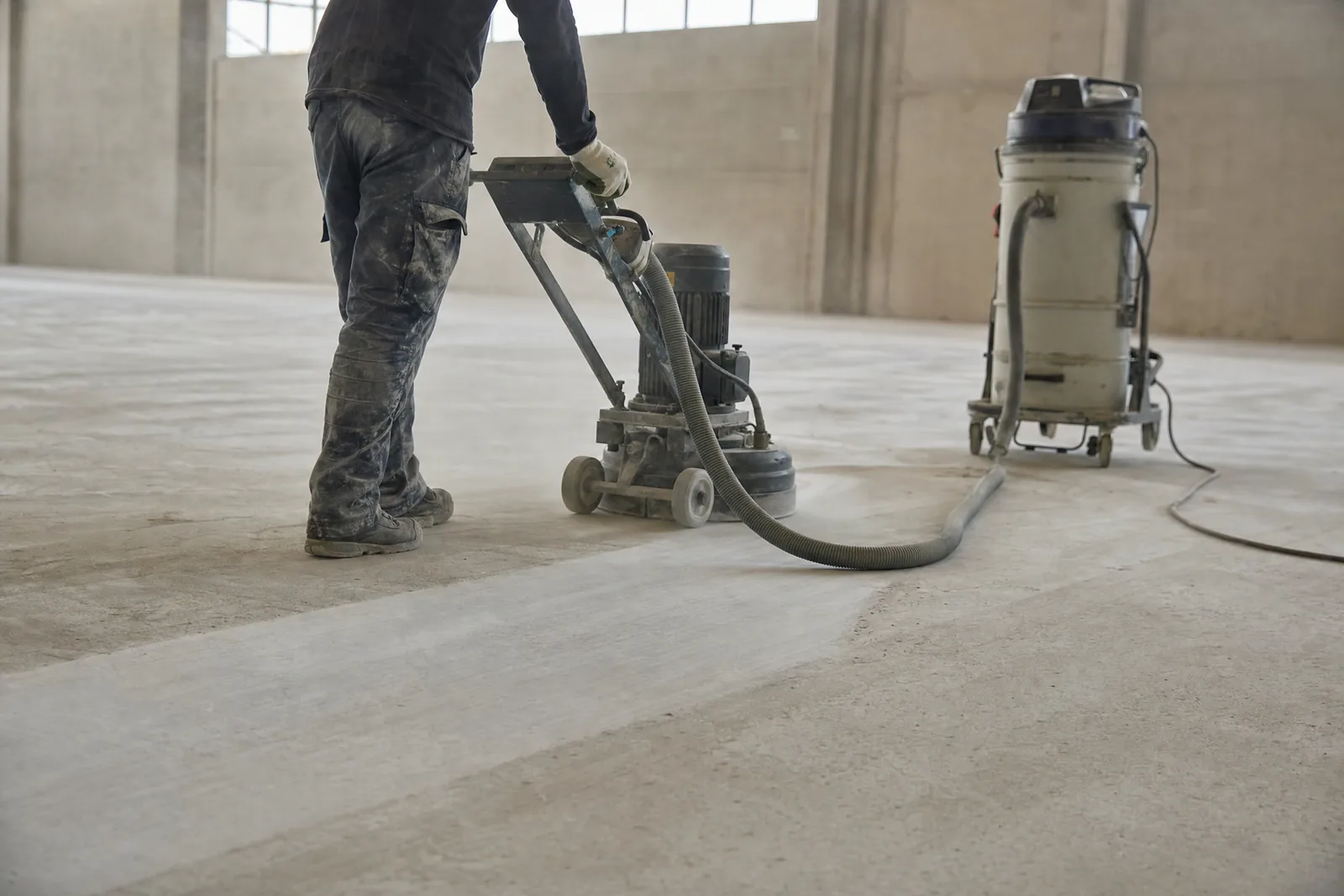
| Diamond grinding | Thin coatings, DIY kits | Most common; also produces the new profile in one operation |
| Shot blasting | Large commercial areas | Fast over big square footage, aggressive profile |
| Scarifying | Thick high-build systems | Removes material fast, needs grinding afterward to refine |
| Chemical stripping | Rare, small areas | Messy, slow, introduces moisture; we avoid it |
Why removal costs what it does
Removing a failed coating typically adds 30–60% to a job versus a bare slab, and occasionally more. Tooling wears fast against resin, the debris has to be collected and disposed of, and the slab underneath frequently needs repair once it's exposed. When you get a quote that seems high for a "simple recoat," this is usually why.
If you're considering a DIY kit, read DIY kits vs professional installation first. The kit itself is not the problem. The prep it asks you to do is.
Diagnosing before removing
The removal itself is mechanical work. The diagnosis is what determines whether the replacement floor lasts, and skipping it means repeating the original mistake with better equipment.
| Failure appearance | Root cause | What must change |
|---|---|---|
| Lifts in sheets, clean concrete underneath | No mechanical profile | Proper diamond grind to CSP 3 |
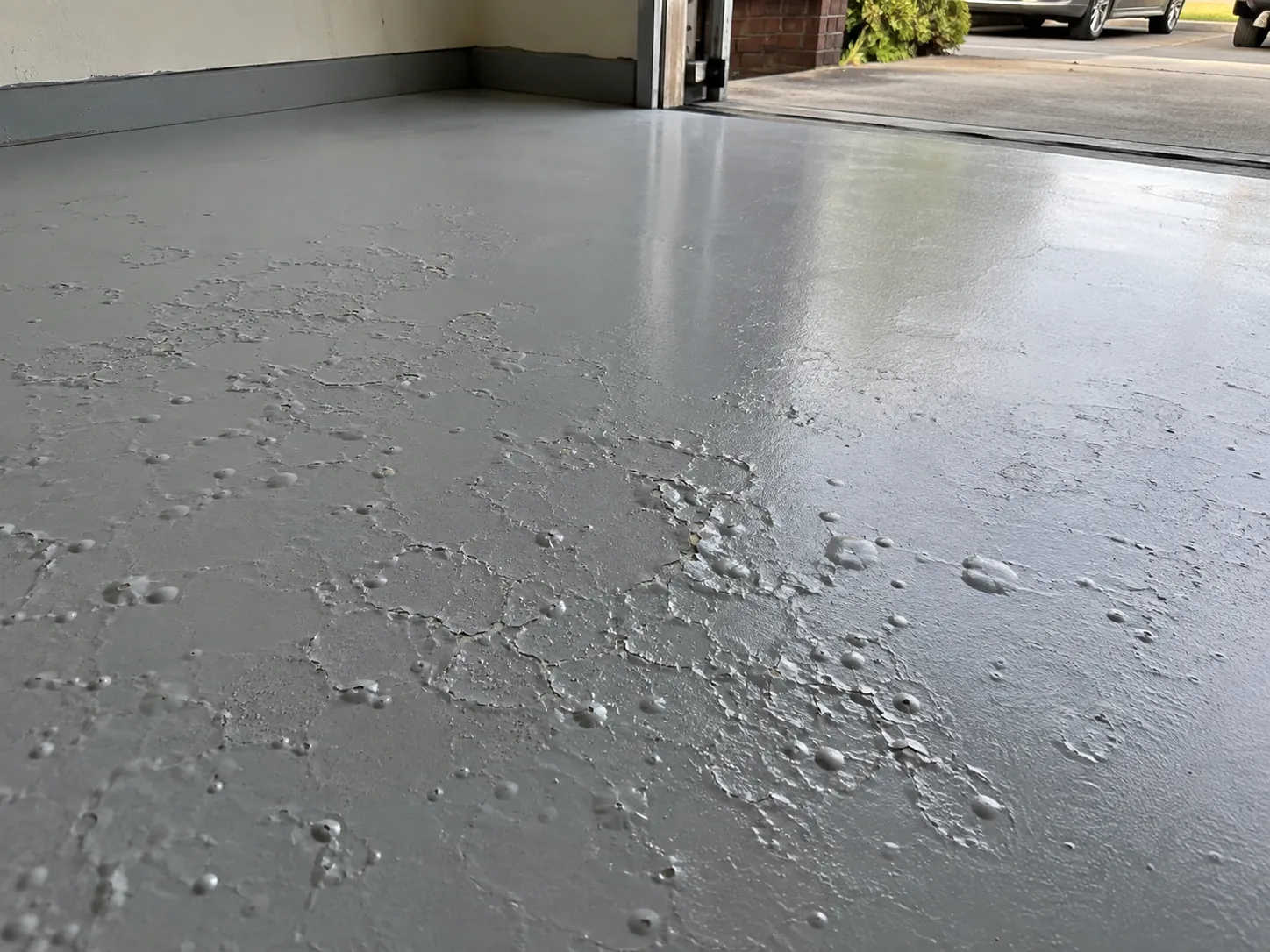
| Round blisters across the field | Moisture vapour drive | Test, then mitigating primer or address the source |
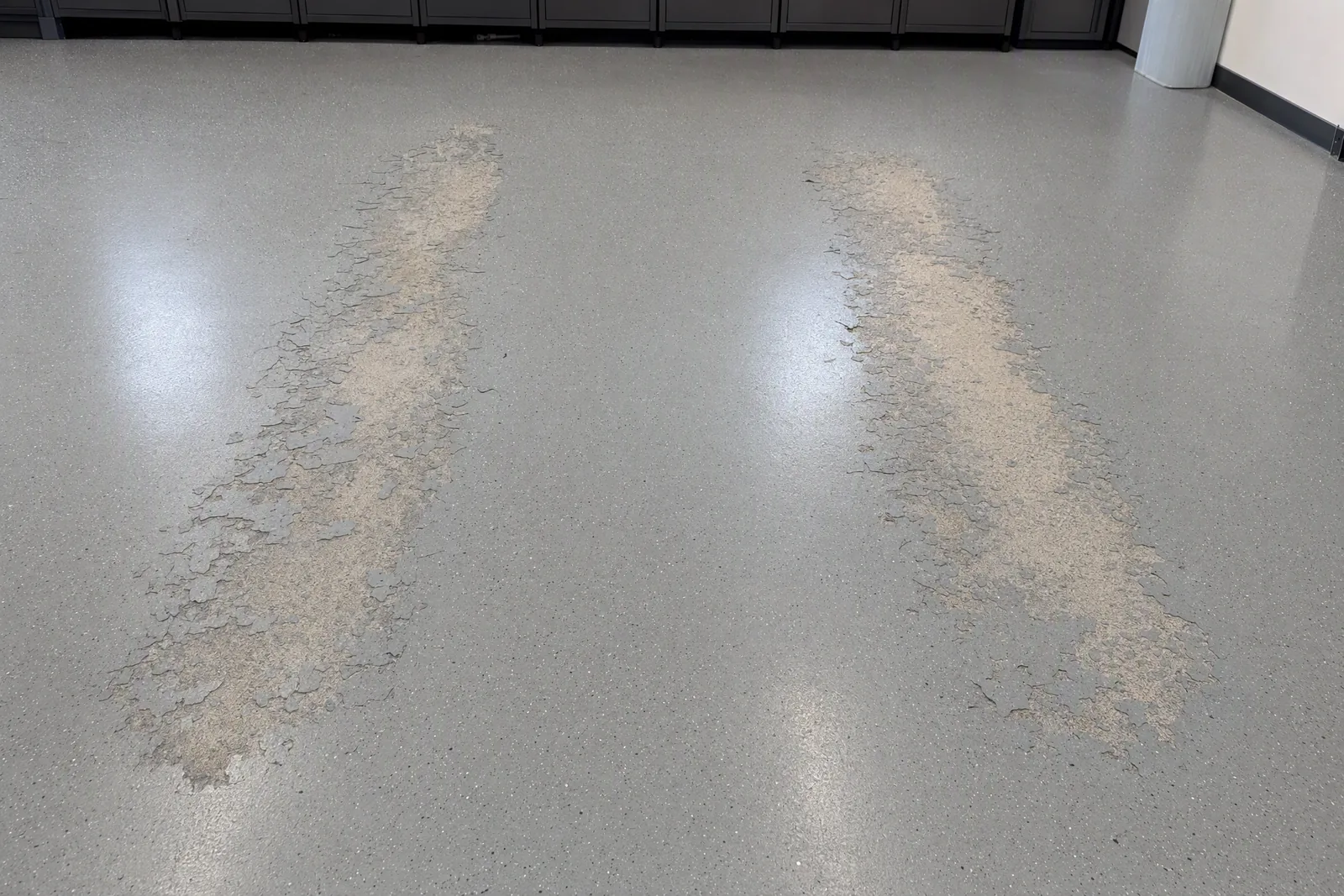
| Missing in tyre-shaped patches | Hot tire pickup | Correct product, full cure before parking |
| Failed only at edges and perimeter | Edges never ground | Hand grinding the full perimeter |
| Soft, tacky, never fully hardened | Off-ratio mix or cured too cold | Correct mixing discipline, temperature control |
| Cracks reappearing in the same lines | Active substrate movement | Structural assessment first; coating cannot fix it |
What removal actually involves
A failed coating rarely comes off uniformly. Areas that were well bonded fight; areas that were not come away in sheets. That inconsistency is what makes removal slow — the crew is constantly changing approach across a single floor.
Resin also loads up diamond tooling. Rather than cutting, the tooling glazes over with melted coating and stops working, which means frequent stops to dress the tools or swap to specialised coating-removal tooling. This is the main reason removal costs what it does.
Once it is off
The slab underneath has usually been sealed for years, which means it has not weathered or worn in the same way an exposed slab would. Two things commonly turn up:
- Trapped moisture. If the failure was moisture-driven, the slab is likely still wet. It needs time to dry and then testing before anything new goes down.
- Damage that the coating was hiding. Cracks, spalls and previous poor repairs that were coated over rather than fixed.
We build a contingency into removal quotes for this reason, and we tell you what it covers. A removal quote with no allowance for what is found underneath is a quote that will change.
When removal is not worth it
Occasionally the honest answer is that the slab is not worth recoating. Widespread spalling where the top layer has failed, or a slab with active structural movement, means you would be spending significantly on preparation for a floor that has a compromised foundation. In those cases we say so, and we would rather lose the job than take it.
Common questions
Can you just coat over my peeling floor?
No, and any contractor who says yes is planning to be gone before it fails. A coating bonds to the surface directly beneath it — if that surface is lifting, yours lifts with it.
Partial removal is sometimes possible where failure is genuinely isolated and the rest passes an adhesion test. We'd rather do that than a full teardown when it's justified.
How do I know if my floor is failing or just worn?
Worn looks like dulling, light scratching, or a loss of gloss in traffic paths — that's cosmetic and often fixable with a topcoat refresh.
Failing looks like bubbling, lifting at edges, patches missing where tyres sit, or areas that sound hollow when you tap them. Try pressing a corner of any lifted edge with a screwdriver: if it peels further with light pressure, it's a bond failure.
Ready for a floor that survives a Sierra winter?
Free on-site measure, honest assessment of your slab, and a written quote you can hold us to.